.png)
 3 hours ago
19
3 hours ago
19
4 min readNew DelhiMar 3, 2026 05:30 AM IST
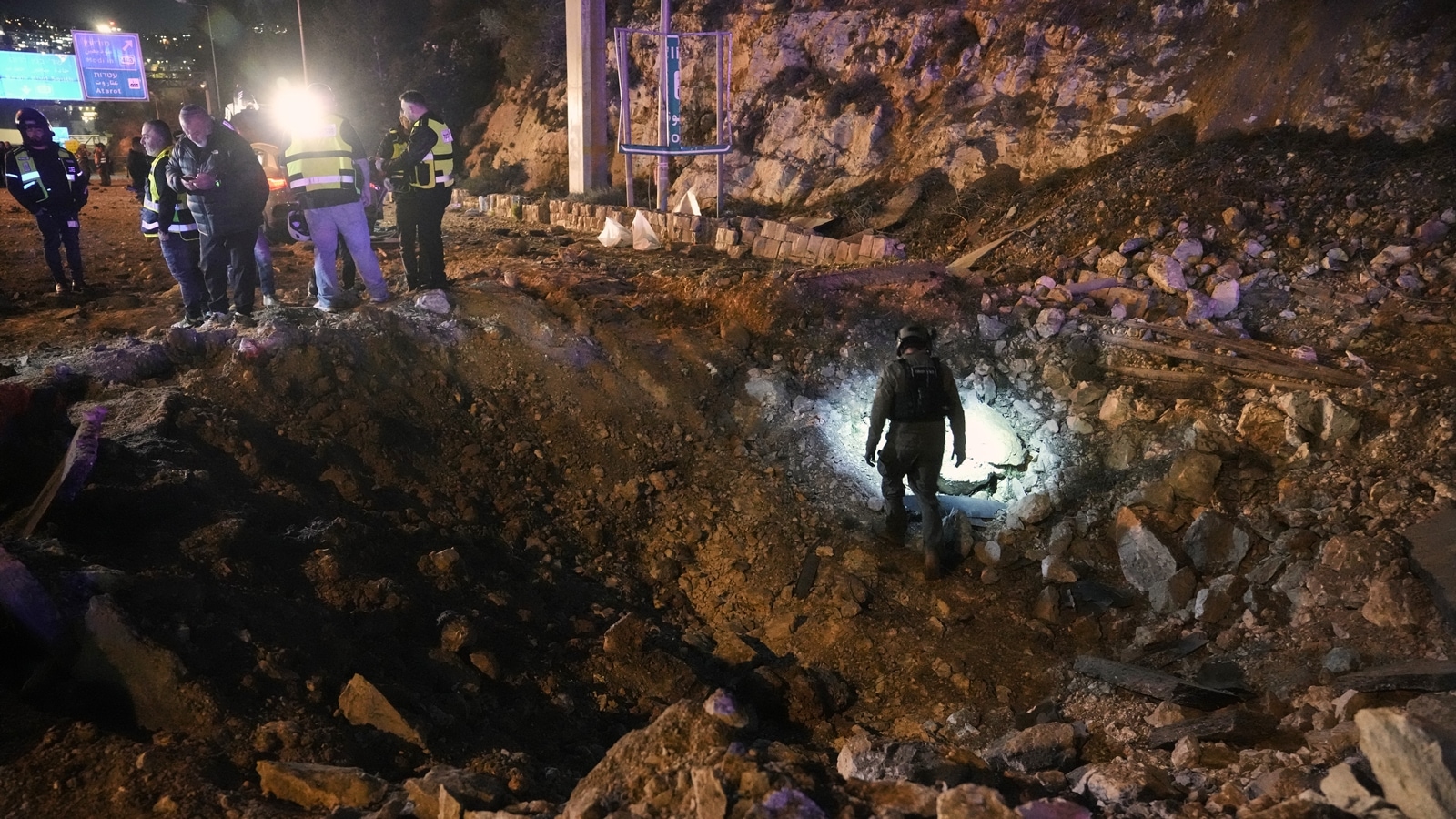 Israeli security forces inspect a road damaged in an Iranian missile strike, in Jerusalem. (AP)
A day after he spoke to UAE President and Abu Dhabi ruler Sheikh Mohamed bin Zayed Al Nahyan, Prime Minister Narendra Modi held phone conversations Monday with the rulers of Bahrain and Saudi Arabia and, without naming Iran, condemned the attacks on their countries and thanked them for looking after the Indian community “in these difficult times”.
The condemnation of the attacks signals that Delhi has chosen to speak for the Gulf countries, India’s strong regional partners.
Modi also spoke to the King of Jordan Abdullah II. Jordan made peace with neighbour Israel in 1994, the second Arab country after Egypt in 1979.
“Conveyed our deep concern at the evolving situation in the region. We reaffirm our support for peace, security and the well-being of the people of Jordan. I thanked him for taking care of the Indian community in Jordan in this difficult hour,” he said after his conversation with King Abdullah II.
Bahrain, Saudi Arabia and the UAE host US military personnel. Home to the US Naval Forces Central Command and the Fifth Fleet, Bahrain has been targeted by the Iranian military. In Saudi Arabia, the Prince Sultan air base, south of Riyadh, is a major site for US air defence assets. The Al Dhafra air base in Abu Dhabi is used by the US Air Force.
Following his phone conversation with Saudi Crown Prince Mohammed bin Salman, Modi, in a post on X, said “Discussed the evolving situation in West Asia with Crown Prince and PM of Saudi Arabia, HRH Prince Mohammed bin Salman. India condemns the recent attacks on Saudi Arabia in violation of its sovereignty and territorial integrity. We agreed that the earliest restoration of regional peace and stability is of utmost importance. I thanked him for looking after the well-being of the Indian community in these difficult times.”
He said he had “a productive telephone conversation” with Bahrain King Hamad bin Isa Al Khalifa. “India condemns the attacks on Bahrain and stands in solidarity with its people in this difficult hour. I thank him for the steadfast support extended to the Indian community in Bahrain.” A day earlier, after speaking to UAE President Sheikh Mohamed bin Zayed Al Nahyan, he said India strongly condemned the attack on UAE and supported “de-escalation, regional peace, security and stability”.
Story continues below this ad
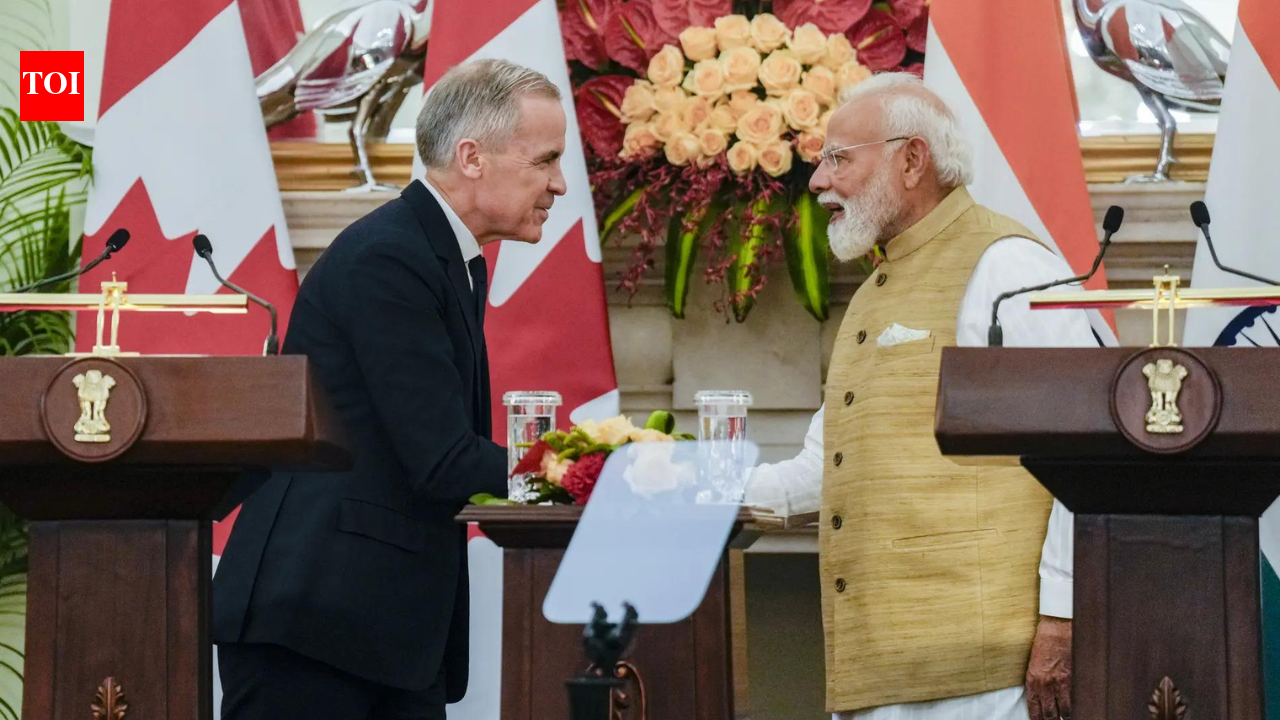
On Monday, after meeting Canadian counterpart Mark Carney in New Delhi, Modi expressed “deep concern” over the “current situation” in West Asia, and said India supports the resolution of all disputes through dialogue and diplomacy.
“India’s position on the many ongoing tensions in the world has been clear. We have always called for maintaining peace and stability. And when two democracies stand together, the voice for peace becomes even stronger.”
“The current situation in West Asia is a matter of deep concern for us. India supports the resolution of all disputes through dialogue and diplomacy. We will continue to work with all countries to ensure the safety of all Indian citizens in the region,” he said.
His comments came hours after he spoke to Israeli Prime Minister Benjamin Netanyahu late Sunday night. Modi was in Israel on February 25 and 26. Within 40 hours of his departure, the US and Israel began attacks on Iran.
Story continues below this ad
Tagging Netanyahu’s X handle, Modi said, “Had a telephone call with PM Benjamin Netanyahu to discuss the current regional situation. Conveyed India’s concerns over recent developments and emphasised the safety of civilians as a priority. India reiterates the need for an early cessation of hostilities.”
External Affairs Minister S Jaishankar has also spoken to his counterparts in Iran, Israel, Saudi Arabia, UAE, Qatar, Oman, Bahrain and Kuwait.

Shubhajit Roy, Diplomatic Editor at The Indian Express, has been a journalist for more than 25 years now. Roy joined The Indian Express in October 2003 and has been reporting on foreign affairs for more than 17 years now. Based in Delhi, he has also led the National government and political bureau at The Indian Express in Delhi — a team of reporters who cover the national government and politics for the newspaper. He has got the Ramnath Goenka Journalism award for Excellence in Journalism ‘2016. He got this award for his coverage of the Holey Bakery attack in Dhaka and its aftermath. He also got the IIMCAA Award for the Journalist of the Year, 2022, (Jury’s special mention) for his coverage of the fall of Kabul in August 2021 — he was one of the few Indian journalists in Kabul and the only mainstream newspaper to have covered the Taliban’s capture of power in mid-August, 2021. ... Read More
Stay updated with the latest - Click here to follow us on Instagram
© The Indian Express Pvt Ltd






 English (US) ·