.png)
 2 hours ago
18
2 hours ago
18
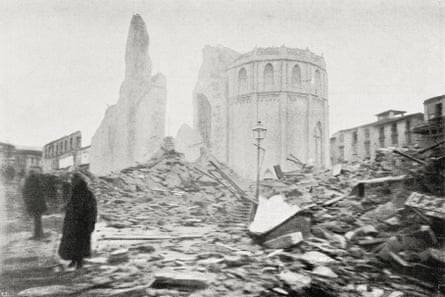
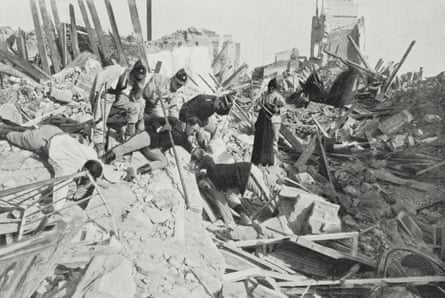
On 28 December 1908, the city of Messina was struck by what is still considered the deadliest natural catastrophe in modern European history. In just 37 seconds, a 7.1-magnitude earthquake killed half its population and levelled much of the city.
Along with homes, churches and monuments, invaluable historical sources and documents were lost, including works by Messina’s greatest son, Antonello da Messina, the artist widely credited with transforming the course of Renaissance art.
In the space of half a minute, a city’s memory and that of one of the greatest painters in history was buried alongside its people.
Last Monday, the Italian government quietly secured a rare Renaissance masterpiece at auction in New York, spending $14.9m on an Ecce Homo by Antonello. The painting, sold at Sotheby’s, is an intensely human portrait of the suffering Christ, believed to have been completed about 1460.
Museums across Italy are now holding their breath as the culture ministry deliberates over where the work will be displayed. Among the frontrunners are Milan’s Pinacoteca di Brera and Venice’s Gallerie dell’Accademia – heavyweights of the Italian museum circuit. Yet the decision could ultimately fall in favour of the Museo di Capodimonte, whose southern setting would underscore the Neapolitan dimension of the painter’s legacy.
Strikingly absent from the shortlist is Messina – the Sicilian port city where Antonello was born and where many art historians argue the painting’s return would carry the greatest symbolic force.
Since the acquisition, a political tussle has flared over whether the Ecce Homo should be shown in Messina. For local officials, bringing the canvas home would be an act of historical redress – a partial restoration of what catastrophe once swept away.
“Antonello is a son of Messina; he belongs to this land,” said Valentina Certo, an art historian and author of an illustrated children’s book entitled The Workshop of Antonello da Messina. “Here is the district where he worked with his son, Jacobello, and his grandsons Antonello and Pietro de Saliba. Bringing this Ecce Homo back here would be important for the city, because it would help stitch back together a fragment of the memory and historical identity of Messina – a city first devastated by an earthquake in 1783 and then by the seismic catastrophe of 1908, when a large part of our heritage was lost.”
Photograph: DEA/Biblioteca Ambrosiana/De Agostini/Getty Images
Before the devastating earthquake of 1908, Messina ranked among the most important and dynamic cities in southern Italy. Curved around its natural, sickle-shaped harbour – the ancient Zancle – the city bore the imprint of centuries of trade and cultural exchange. Elegant palazzos lined its streets, historic churches anchored its neighbourhoods.
Its theatres, convents and civic buildings testified to a city that was not merely mercantile, but intellectually alive. Writers, scholars and artists passed through its port. Among them was Caravaggio, who stayed between 1608 and 1609 while fleeing Rome after being accused of murder.
The earthquake levelled much of the historic centre and claimed approximately 80,000 lives – about 57% of the population – while in nearby Reggio Calabria a further third of the city, about 40,000 people, perished. What survived was not only physically diminished, but stripped of much of the cultural memory that had once made Messina a Mediterranean crossroads.
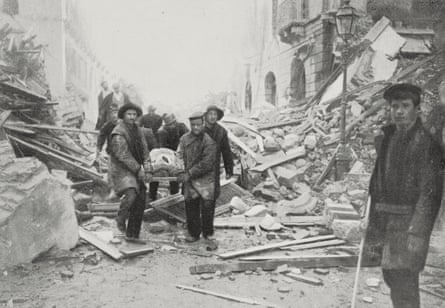
“After the earthquake, many of Antonello’s works were allegedly lost or stolen,” said Lelio Bonaccorso, a graphic novelist, illustrator and Messina-based art expert. “When we speak of Antonello da Messina, we are speaking of one of the greatest artists of the Renaissance. Many credit him with introducing oil painting to Italy – a technique already established in Flemish art. It was this innovation that allowed Renaissance painters to achieve new softness in their figures, those delicate glazes and subtle shadings across the face.”
Certo added: “He was a painter of extraordinary stature. On panels measuring only a few centimetres, he could render his subjects with astonishing detail.”
The Ecce Homo acquired by Italy in New York is a “tiny” panel painting in tempera and oil, measuring just 19.5cm by 14cm. Painted on both sides, it depicts Christ crowned with thorns on one face and Saint Jerome set against a rocky landscape on the other.
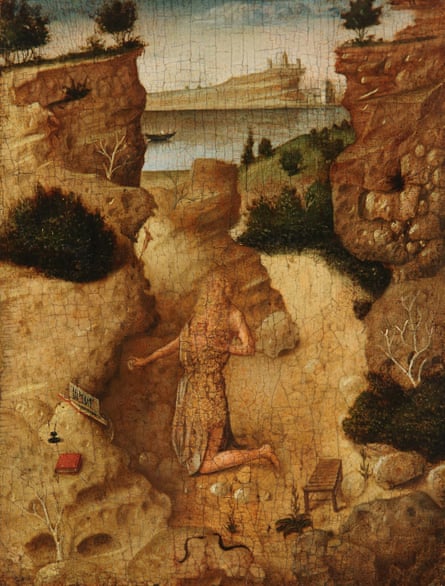
After the purchase, Italy’s culture minister, Alessandro Giuli, described the painting as “unique in the landscape of 15th-century Italian art” and a cornerstone in efforts to expand and enhance the national cultural heritage.
Giuli did not say where the work would be displayed, but ministry sources and media reports suggest the Ecce Homo is destined for the Museo di Capodimonte – a prospect that has angered Sicilian art critics, who argue it should return to the island. Fewer than 40 paintings by Antonello are known to have survived.
After the acquisition, the regional Democratic party lawmaker Fabio Venezia formally questioned the Sicilian government, urging it to press for the painting’s return.
Contacted by the Guardian, Sicily’s regional culture assessor, Francesco Scarpinato, confirmed he had opened discussions with the culture ministry, which holds final authority.
On the island, frustration continues to simmer over decisions taken in Rome, long accused of neglecting Sicily’s vast cultural wealth. Venezia said: “Bringing the work back here would restore it to the historical and geographical context that produced it. To recover these works is to begin healing the wound of Sicily’s scattered artistic heritage.”
For cultural advocates, more than art is at stake. Bringing an Antonello back to Sicily would be a quiet act of redress – a way of reclaiming, at least in part, what disaster and decades of misrule once stripped away.







 English (US) ·