.png)
In the weeks around the 2026 annual meeting of the American Society of Clinical Oncology, my phone kept buzzing with alerts about GLP-1 drugs and cancer. The headlines were everywhere — from NPR and The Washington Post to Substack and heated exchanges on social media — all circling the same claim: Ozempic might lower the risk of cancer.
Behind those headlines is a real wave of studies, involving millions of patients. I'm a physician and clinical epidemiologist, and my team and I design and interpret these same kinds of studies that test what widely used drugs actually do.
The excitement around the idea that GLP-1 drugs can prevent cancer is running well ahead of the evidence. Not wrong, necessarily. Just not yet earned.
Cancer is among the hardest things to study, because it is not one disease but more than a hundred. Breast cancer, lung cancer and blood cancers are not variations of the same disease; each has its own distinct biology and its own mix of genetic, environmental and behavioral risks.
A single drug never gets one verdict on how it affects cancer. It gets a hundred, raising the risk of some, lowering it for others and leaving most untouched.
The early cancer concerns
Before the current buzz that GLP-1 drugs could reduce cancer risk, the worry ran in the opposite direction: that they might raise cancer risk.
Researchers were originally concerned about thyroid cancer. Studies in rodents found that Ozempic caused thyroid C cell tumors, which is why U.S. regulators added a black box warning in June 2026 to the drug that advises against its use among those with a personal or family history of related conditions.
Get the world’s most fascinating discoveries delivered straight to your inbox.
But rodents are not people. Human thyroid C cells are less sensitive to GLP-1 drugs compared to rodent C cells because they have far fewer GLP-1 receptors. Long-term studies in monkeys did not show the same abnormal thyroid cell growth seen in rodents.
A 2025 analysis of data from 93 clinical trials found no clear link between taking certain GLP-1 drugs and thyroid cancer. European regulators reached the same conclusion in 2023 after reviewing available research on GLP-1s.
Pancreatic cancer was another concern. Here, too, researchers found no consistent increased risk from taking GLP-1 drugs in a 2025 analysis of data from 62 studies.
The reassurance is real but provisional. These drugs are young, and cancer can take decades to surface.
The cancer story turns on its head
GLP-1 drugs, once scrutinized for possibly causing cancer, are now being discussed as drugs that might prevent or even treat cancer.
A 2024 study of more than 1.6 million people with Type 2 diabetes found lower rates of 10 out of 13 obesity-related cancers in people treated with a GLP-1 drug compared to insulin.
A 2025 study of about 87,000 adults found that overall cancer rates among those who started a GLP-1 drug were roughly 17% lower, with the clearest reductions in endometrial and ovarian cancers as well as a type of brain cancer called meningioma. The risk of kidney cancer was 38% higher among patients taking GLP-1 drugs, though larger studies are needed to confirm its significance.
Dr. Sutton talks GLP-1 drugs and reduced cancer risk - YouTube
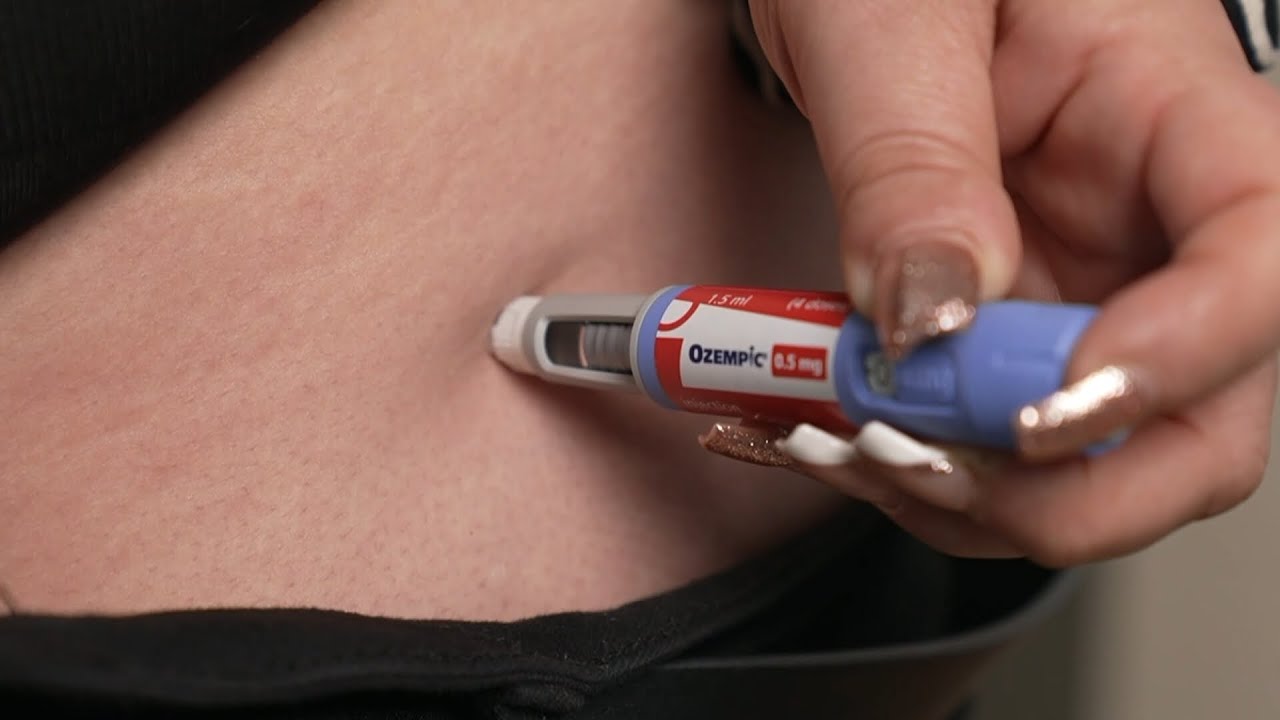
A 2026 study of more than 110,000 women undergoing breast imaging found a roughly 30% lower risk of breast cancer among those who use GLP-1 drugs compared to those who do not.
Researchers are also studying how GLP-1 drugs affect a patient's chances of surviving cancer. Among more than 6,800 colon cancer patients in a 2024 study, around 16% of the 103 on a GLP-1 drug died within five years compared to 37% of those who were not taking one. A study presented at the 2026 American Society of Clinical Oncology reported a 34% lower risk of death across six cancer types for those taking GLP-1 drugs.
Why the evidence is so easy to misread
While these findings are exciting, studies on the effects of GLP-1 drugs on cancer risk have three features that make them especially easy to misread.
The first is healthy user bias. People who start a GLP-1 drug tend to be healthier and wealthier than those who do not. A person with obesity who has insurance, sees doctors regularly and can afford Ozempic is far more likely to start the drug than someone with the same height and weight who lacks those advantages.
Healthy user bias is very difficult to scrub out of observational studies, which compare people as they are treated in real life rather than assigning the drug at random. The very advantages that made it possible to receive a GLP-1 prescription, not the drug itself, may be what lowered a patient's cancer risk.
The second is the choice of the comparison drug. To understand the effect of a drug, it has to be measured against something else. What it's measured against will shape the results of the study. The 2024 study reported that patients taking GLP-1 drugs saw large reductions in cancer risk compared to those taking insulin. But comparing patients on GLP-1 drugs with patients taking the diabetes drug metformin showed no clear reduction in cancer risk.
Insulin is reserved for patients with more advanced diabetes, a condition that is itself a risk factor for cancer. In these studies, patients on insulin start out with a higher risk of cancer. Measured against a group at higher risk of developing cancer, almost anything can look protective. The apparent benefit came from the comparison drug, not the GLP-1 drug.
The third is timing. It is not so much another source of bias as a clue that other biases may be at work. Cancer can take decades to develop, yet most GLP-1 studies follow people for only a handful of years. In some studies, the apparent cancer benefits of GLP-1 drugs show almost immediately. But prevention doesn't work that quickly. A drug that truly lowered the risk of developing cancer would show its effect gradually as fewer tumors surface over time, not within the first few months of taking a drug.
When cancer risk appears to drop almost as soon as a patient starts treatment, the speed is not a magical triumph of GLP-1 drugs. Rather, in my view, it is the tell: People who start these drugs were already at lower cancer risk, and the GLP-1 drugs are getting credit for that preexisting advantage.
Moreover, almost all of this research comes from a handful of high-income countries, even as uptake of these drugs is increasing globally and the burden of cancer has disproportionately grown in lower-income countries. The idea that GLP-1s may reduce cancer risk for much of the world is being inferred from data generated almost entirely in a few rich ones.
What do randomized trials show?
The cleanest way around these study biases is randomized trials, which by design make comparison groups alike from the start.
Available clinical trials tell a quieter story than the headlines. Two 2025 meta-analyses, which pool data from multiple studies — one covering 50 trials and a second covering 48 — found little evidence that GLP-1 drugs either raise or lower cancer risk.

There are many GLP-1 brands available for consumers.
(Image credit: Iuliia Burmistrova via Getty Images)
The findings of these meta-analyses are generally more reliable than those of observational studies because their total amount of data increases their statistical power. Despite their strengths, these analyses inherit the limitations of the trials they include. Most of the trials in these 2025 studies had a short follow-up of a year or two and recorded too few cancer cases to settle the question.
Randomized clinical trials designed to answer the question of whether GLP-1 drugs affect cancer risk would need to enroll tens of thousands of people and follow them for many years. Short of that, the next best evidence will come from observational studies designed to emulate randomized trials.
Until then, the idea that GLP-1 drugs lower cancer risk is a hypothesis worth testing but not a conclusion to act on.
The bottom line
Based on the available evidence, the clearest conclusion is the reassuring one: GLP-1 drugs do not appear to raise overall cancer risk. However, more ambitious claims that GLP-1s actively prevent cancer or improve survival after diagnosis remain unproven.
Suppose GLP-1s do have an effect on cancer risk. Researchers still would not know where that effect comes from: weight loss itself, broader improvement in metabolic function, or a more direct effect on inflammation, the immune system or tumors.
The surest thing I can say is also the least satisfying: It's still too early. These drugs are far younger than the cancers they are being credited with preventing.
This edited article is republished from The Conversation under a Creative Commons license. Read the original article.





 English (US) ·