.png)
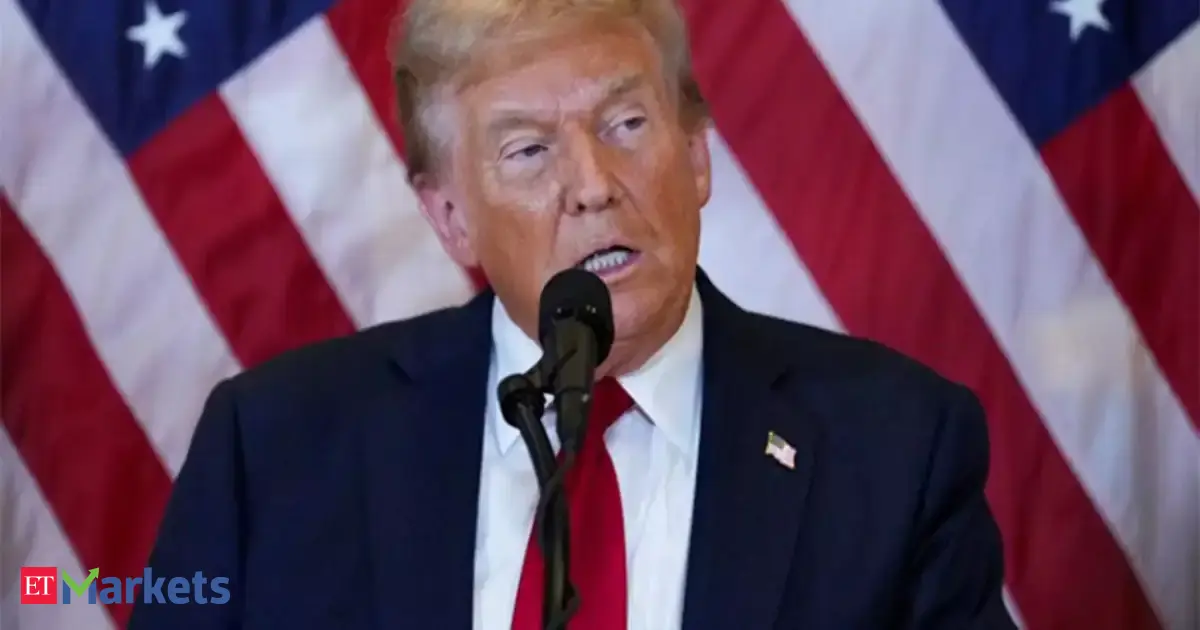
US President Donald Trump speaks during a press conference in the Brady Press Briefing Room of the White House in Washington, DC, on Feb. 20, 2026.
Mandel Ngan | AFP | Getty Images
The U.S. Supreme Court on Friday struck down much of President Donald Trump's "reciprocal" tariffs, which were invoked based on the International Emergency Economic Powers Act.
But the White House leader didn't take the decision lying down. Hours later, Trump announced on Truth Social that he'd be leveraging a new act, Section 122, to impose 10% tariffs globally — and, one day later hiked them to 15%. For critics of tariffs, it looks like the situation has moved one step forward, two steps back.
Indeed, U.S. importers are still paying the now-illegal "reciprocal" tariffs on goods, reported CNBC's Lori Ann LaRocco, because the U.S. Customs and Border Protection hasn't updated its system to remove duty charges. And refunding importers the estimated $175 billion collected from tariffs is going to be a "mess," as Supreme Court Justice Brett Kavanaugh put it in his dissent.
There have already been geopolitical repercussions of the ruling, too. India will be delaying its planned trade visit to Washington, D.C., to evaluate the implications of the ruling, a source told CNBC.
U.S. markets on Friday, however, did cheer the tariff ruling, with major indexes rising. Shares of Amazon, which sources a bulk of its stock abroad, jumped nearly 2.6%. But futures fell Sunday night stateside.
Elsewhere, the U.S. and Iran will be having their next round of talks on Thursday in Geneva, according to an AP report, citing Oman's foreign minister. A deal was not reached during the previous discussion because Washington and Tehran had different ideas on what sanctions relief could look like, an Iranian official told Reuters.
Even as we begin Monday already with a flurry of tariff and geopolitical developments, all eyes will be trained on one event this week: Nvidia's earnings, out Wednesday stateside, which comes amid some tumult in the artificial intelligence sector. Investors will hope CEO Jensen Huang can provide some insight into not just the sector's spending, but how AI is being deployed — and is being used to augment, or supersede, other services.
What you need to know today
Fourth-quarter U.S GDP missed estimates, rising at an annualized rate of 1.4%, lower than the Dow Jones estimate of a 2.5% increase. Separately, the core personal consumption expenditures price index rose 3% in December, up 0.2 percentage point from November.
Key takeaways from the Supreme Court decision: The economic impact is expected to be limited; inflation could be muted in the near term; it might provide tailwind to markets; tariff refunds will likely be messy. Last, and most crucially, tariffs aren't going away.
U.S. trading partners cautiously welcomed the ruling, as leaders from France, U.K. and the European Union reacted to a reduction in tariffs. However, they expressed concerns that tariffs could still come in other forms, which would continue making the situation "murky" for businesses.
Major U.S. indexes rose Friday. For the week, the S&P 500 is up 1.1%, the Dow Jones Industrial Average closed 0.3% higher and the Nasdaq Composite added 1.5%. The pan-European Stoxx 600 climbed 0.84%, with all major bourses in the green.
[PRO] Is the 'Magnificent Seven' trade over? U.S. markets were propelled to new heights in recent years largely on the back of that group of stocks. But five out of the seven are negative year to date. Analysts break down why their performance has been mediocre.
And finally...
Chaos, confusion and $200 billion dreams: What I saw at India's AI summit
India hosted one of the world's biggest AI events this week, but it was marred by chaos and confusion, apparently not the message it's trying to send as it strives to become a leading artificial intelligence player.
Despite the drama, U.S. tech firms in particular couldn't resist the temptation of the Indian market, talking up the country's AI potential and making a number of announcements.
— Arjun Kharpal




 English (US) ·