.png)
 1 hour ago
10
1 hour ago
10
It’s been over 46 years since Shoba’s tragic death, but the indelible mark she left as an actor shines on. She lived in this world for only 17 years, and during this brief period, she not only scaled great heights as a performer but also endured significant life struggles that eventually forced her to take an extreme step. However, Shoba’s story didn’t end with her demise… It wasn’t hers alone to begin with; it was also her mother’s. In a way, it can be said that Shoba’s story was an extension of her mother Prema Menon’s, and vice versa. Maybe that was also why Prema couldn’t survive long in a world without her baby girl.
Prema’s entry into cinema
Although Prema is widely known as “Shoba’s mother,” she herself was an actor who appeared in over 70 movies. While Prema didn’t grow into the kind of actor/star her daughter became, she wasn’t an obscure artiste. According to the late renowned film journalist Chelangatt Gopalakrishnan, Prema’s entry into Tinseltown came courtesy of her uncle, legendary author SK Pottekkatt. While her family was struggling financially following her father’s death, Pottekkatt brought poet-filmmaker Bhaskaran and producer TK Pareekutty to her home to introduce them to her, Gopalakrishnan wrote in his book, Malayala Cinema: Charitram Vichitram. They instantly liked Prema and cast her in their upcoming Neelakuyil (1954), the first Malayalam film ever to win a National Award.
Must Read | Amma Ariyan: John Abraham’s 40-year-old classic still feels urgent
Helmed by Bhaskaran and Ramu Kariat, Neelakuyil was based on a story by noted author Uroob and challenged the social evils of the caste system, untouchability, feudalism, and gender injustice. At the 2nd National Film Awards, it earned the now-discontinued All India Certificate of Merit and the President’s Silver Medal for Best Feature Film in Malayalam. Along with Sathyan, Miss Kumari, and Bhaskaran, Prema portrayed one of the central characters and earned significant praise for her performance.
Prema’s rise to fame
She then played key roles in the Bhaskaran-Uroob duo’s Rarichan Enna Pauran (1956) and Nairu Pidicha Pulivalu (1963), delivering noteworthy performances. In a career spanning 28 years, she appeared in about 77 movies, including Moodupadam (1963), Shakuntala (1965), Rakthapushpam (1970), Inquilab Zindabad (1971), Sindooracheppu (1971), Poompaatta (1971), Taxi Car (1972), Paalkkadal (1976), Swapnadanam (1976), Sankhupushpam (1977), Ormakal Marikkumo (1977), Velluvili (1978), and Padmatheertham (1978).
Interestingly, she and Shoba shared the screen in movies such as Inquilab Zindabad, Sindooracheppu, Taxi Car, Aaradi Manninte Janmi (1972), and Ormakal Marikkumo. Lahari (1982) marked Prema’s final film appearance.
Also Read | Debut in Mohanlal film, fame at 14, but Saleema’s career never took off; she recently battled cancer
Story continues below this ad
Shoba’s birth and debut as child actor
While she was gradually making a footing in the industry, Prema and her husband, KP Menon, became parents to a little girl, Mahalakshmi, on September 23, 1961. The little one entered the world of cinema at the age of four through the Savitri-starrer Tamil film Thattungal Thirakkapadum (1966). She subsequently made her Malayalam debut in director P Venu’s Udhyogastha (1967), where she was credited as “Baby Shoba” for the first time.
Shoba’s rise in cinema was almost meteoric. She won the Kerala State Film Award for Best Child Artist in 1971, and then, pretty much grew up in front of the camera, slowly transitioning from child actor to leading lady. According to Manorama Online, she played a lead role for the first time at the age of 15 in Ramu Kariat’s Dweepu (1977). The same year, she appeared opposite Kamal Haasan in the Malayalam film Ormakal Marikkumo, directed by KS Sethumadhavan. During this time, she was also active in Tamil.
Shoba bags National Award
Randu Penkuttikal, Uthrada Rathri, Ulkadal, Ekakini, Bandhanam, Oru Veedu Oru Ulagam, Mullum Malarum, Oru Vidukadhai Oru Thodarkadhai, Azhiyatha Kolangal, and Shalini Ente Koottukari were among the titles where she delivered spectacular performances, winning the hearts of both Malayalam and Tamil audiences. While she bagged the Kerala State Film Award for Second Best Actress for Ormakal Marikkumo in 1977, Shoba won the Kerala State Film Award for Best Actress in 1978 for Ente Neelakasham.
She clinched the National Film Award for Best Actress at the age of 17 for her performance in director Durai’s Pasi (1979). She also worked in a couple of Telugu and Kannada films.
Story continues below this ad
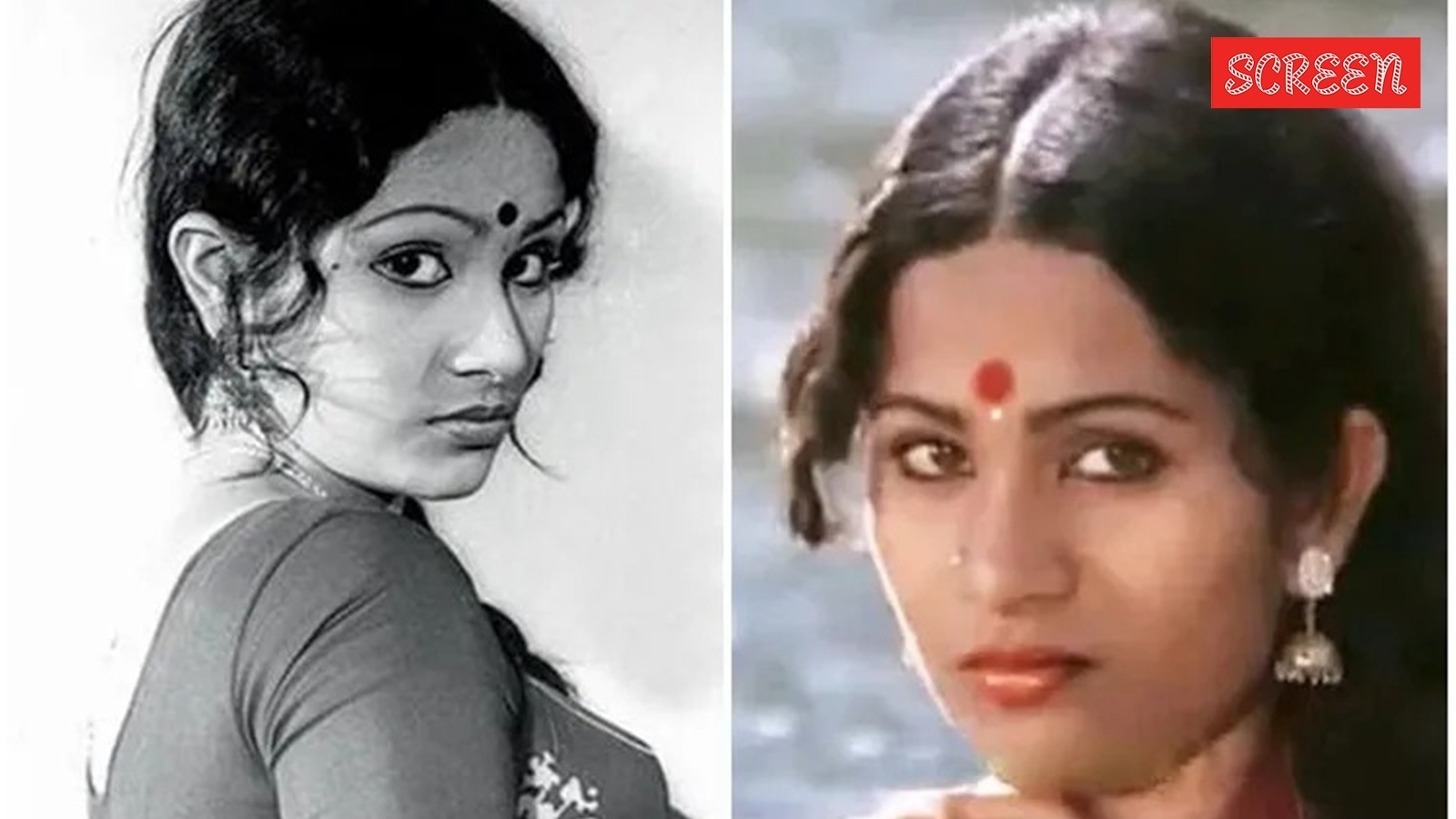 Shoba’s rise in cinema was almost meteoric. (Credit: IE Malayalam)
Shoba’s relationship with Balu Mahendra
Although she was soaring, Shoba was going through intense emotional insecurity. During this time, she grew close to director-cinematographer Balu Mahendra. Though he was already married and about 23 years older than her, Shoba fell for his compassion, which came as a light at the end of the tunnel for her amid the pressures in personal and professional life. They eventually tied the knot.
However, Prema opposed this union, reportedly believing that Shoba’s relationship with a married man — a father to a child, for that matter — would ruin her life and future. Shoba was torn between her mother and her husband. Yet, she believed that Balu would leave his first wife, Akhileshwari, and his son, Shanki, for her. But that did not happen, and this apparently scarred her emotionally. Within weeks of winning the National Award, she ended her life by hanging herself on May 1, 1980.
Prema, however, wasn’t ready to believe that it was a suicide. According to India Today, she wrote to the then-Prime Minister Indira Gandhi alleging “foul play.” She accused Balu Mahendra of making “colossal financial demands” on her. The then-Tamil Nadu Governor, Prabhu Das Patwari, ordered the police to conduct a thorough probe. However, investigations reportedly ruled out foul play as the cause of death.
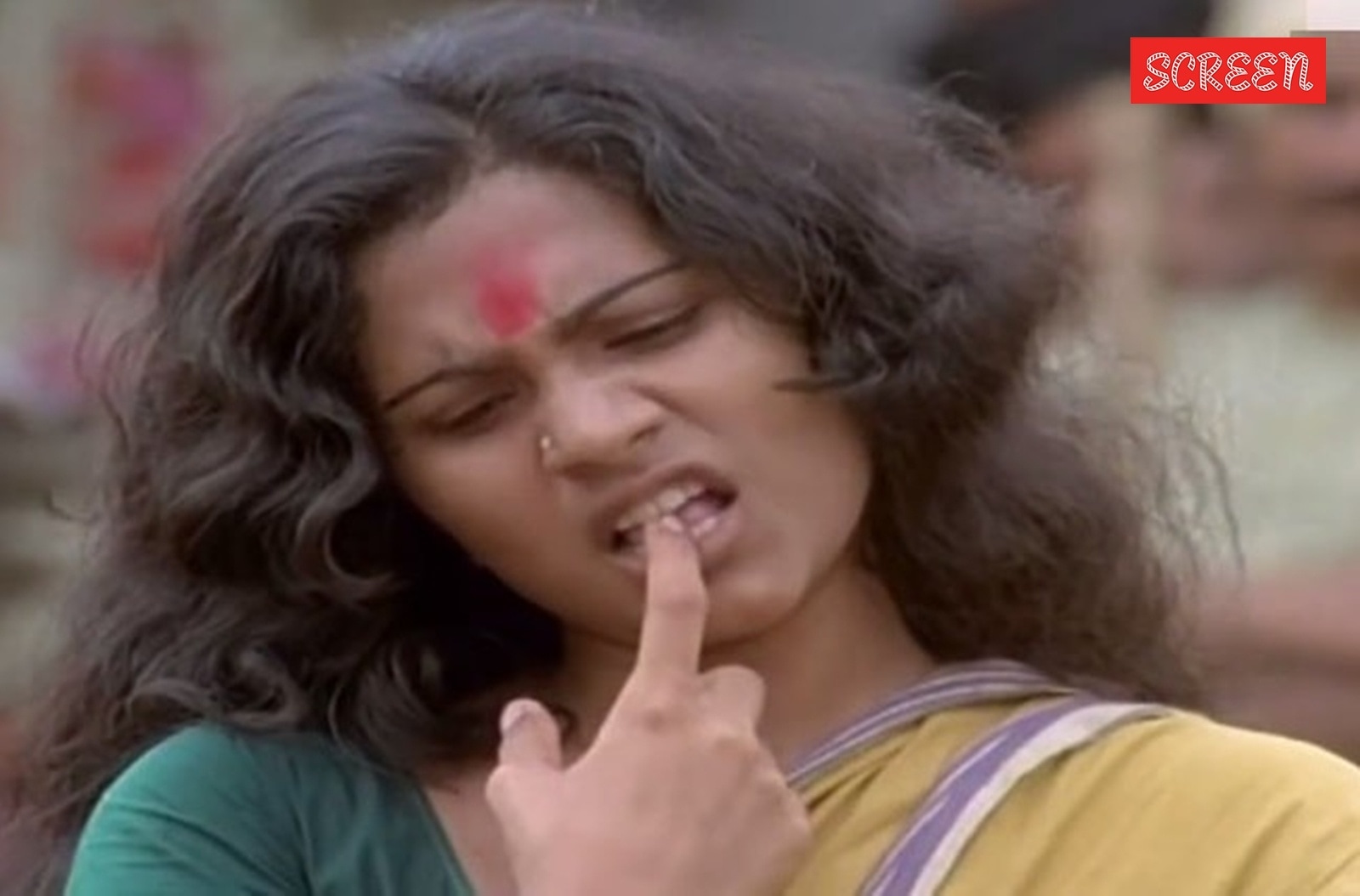 Shoba in Mana Voori Pandavulu. (Credit: 20cmoviestars.weebly.com)
KG George’s Lekhayude Maranam Oru Flashback
In the meantime, filmmaking legend KG George made Lekhayude Maranam Oru Flashback (1983). Loosely based on Shoba’s life, death, and her relationship with Balu Mahendra, the film also chronicled the grey areas of the film industry and how South Indian cinema exploited its women. George reportedly wrote in his autobiography, “There is no dispute that it was Shoba’s suicide that prompted me to make Lekhayude Maranam Oru Flashback. However, I do not claim that the film is exclusively about Shoba’s tragic end. Rather, it reflected the ‘suicide syndrome’ that has always been prevalent in the film industry.”
Story continues below this ad
The movie was essentially created by absorbing the essence of lives in Kodambakkam (once the hub of the South Indian film industry) and hence, cannot be viewed merely as the story of Shoba, Balu Mahendra, and Prema. The movie and its central characters contained traits of many individuals George encountered in Kodambakkam. However, writer Anu Pappachan mentions in her book Penthira: Malayala Cinemayile Pennungal that the audience, unfortunately, failed to perceive these nuances. She noted they fell into generalisations and sought the origins of Lekha’s mother solely in the real-life Prema.
ICYMI | Mohanlal, Dulquer Salmaan’s onscreen mother lost elections, become goldmine for trolls
“The gossip columns and rumours of that era were the reasons why this unscrupulous ‘mother’ in Lekhayude Maranam Oru Flashback — portrayed as immersing herself in the glitz of cinema and yielding to every compromise, and even sacrificing her own daughter’s life — was read as a mirror image of Prema. Consequently, the true essence of Prema’s life as an actor was rendered irrelevant within this tragic and mysterious narrative.”
Prema dies by suicide
Prema’s fight to ensure justice for her daughter didn’t last long. She was devastated by Shoba’s death. According to Vanitha, she used to serve rice in front of a large photo of Shoba in their house and act as if she were feeding her daughter. She couldn’t bring herself to believe that Shoba had gone. On April 5, 1984, Prema Menon died by suicide.
Story continues below this ad
Disclaimer: If you or someone you know is going through a difficult time, experiencing intense emotional insecurity, or having thoughts of self-harm, please know that you are not alone and that help is readily available. Professional guidance and compassionate support can make a meaningful difference.
HELP IS A CALL AWAY MENTAL HEALTH HELPLINE NUMBERS
AASRA Contact: 9820466726 Email: aasrahelpline@yahoo.com Timings: 24×7 Languages: English, Hindi
Snehi Contact: 9582208181 Email: snehi.india@gmail.com Timings: 10am – 10pm, all days Languages: English, Hindi, Marathi
Fortis MentalHealth Contact: 8376804102 Timings: 24×7; All days Languages: Achiku, Assamese, Bengali, Dogri, English, Gujarati, Hindi, Kannada, Konkani, Malayalam, Marathi, Punjabi, Rajasthani, Tamil, Telugu, Urdu
Story continues below this ad
Connecting NGO Contact: 9922004305, 9922001122 Email: distressmailsconnecting@gmail.com Timings: 12pm – 8pm; All days Languages: English, Hindi, Marathi
Vandrevala Foundation Contact: 18602662345 Email: help@vandrevalafoundation.com Timings: 24×7 Languages: Hindi, Marathi, Gujarati and English



 English (US) ·