.png)
 1 hour ago
17
1 hour ago
17
Nearly two decades into the film industry, Divyendu has built one of the more unconventional trajectories in mainstream Hindi cinema. From a brief, blink-and-miss appearance in Aaja Nachle, backed by Yash Raj Films, to becoming a recognisable face with Luv Ranjan’s Pyaar Ka Punchnama, and eventually breaking the mould with Prime Video’s blockbuster Mirzapur, he has come a long way. But the larger question remains: has he really come a long way? Has the industry fully tapped into his potential? Divyendu himself appears to think otherwise. In an exclusive conversation with SCREEN, he says:
“I still have a lot to give, definitely. I understand it’s a commercial industry and there are a lot of things at play. But very honestly, I just want the whole system of our film industry to work more on merit. If only the system can work on merit, we can have people who can give some more and take the industry forward. And I would like to believe that I could be one of those people who can contribute towards taking our cinema forward. So, I’m still hungry for a lot more.”
But another larger question remains: has Divyendu increasingly been confined to characters cut from the same cloth, parts that carry a familiar emotional and psychological DNA, especially after the sweeping success of Mirzapur? He, however, sees the conversation as far more layered than the idea of simple typecasting. “Initially, when I started getting all the comedy roles, the boy-next-door, happy-go-lucky guy and everything I was okay with it. But somewhere it started troubling me because I felt I had a lot more to give. See, there are two kinds of people. One would say, ‘Okay, I have struggled so much to get here, let me now consolidate my position,’ and avoid taking unnecessary risks with their career. But I’ve always had this urge to become a different person, play a different character, and be part of different worlds and stories.”
He added, “Like you said, I broke the mould, thankfully, with Mirzapur. But what Mirzapur also did was open a lot of doors for me, where filmmakers could see that here’s a guy who can do both this and that. Now, I can’t really command my audiences to like this and not like that. That wouldn’t be fair to them. I play my characters, and whatever they connect with more, they’re naturally going to talk about more. And yes, I do get certain kinds of roles that may belong to a similar genre, but I make sure the characters themselves are not too similar. At the same time, I can only choose from the best of what I’m offered.”
Also Read | Glory: Pulpy boxing drama suffers from an identity crisis as it keeps gaslighting its own narrative
Divyendu & daddy issues
A recent example of Divyendu bringing a distinct emotional texture to a character that exists within a familiar framework can be seen in the new Netflix series Glory. In the series, he once again plays a son, Dev, grappling with (daddy issues) unresolved tensions with his father Raghubir, played by Suvinder Vicky. On paper, the role may evoke shades of Munna Tripathi from Mirzapur, especially with both projects being helmed by Karan Anshuman. Yet Divyendu approaches Dev with a markedly different internal consciousness, lending the character a vulnerability and restraint that stand apart from his earlier work.
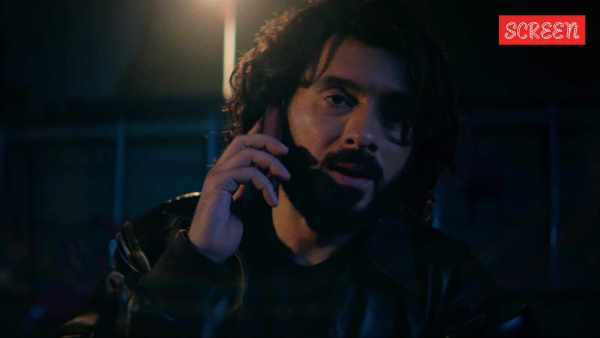 Divyenndu in a still from Glory.
Speaking about the recurring father-son dynamic in Anshuman’s writing, he says with a laugh, “This theme of father-son relationships interests Karan a lot. Why he picks me every time he has a certain father-son relationship that isn’t in a very good space, that I don’t know. I’ve never given him any sort of hints regarding that.” He added, “For Dev also, in Glory, I knew one thing: it wasn’t a formula he was going for. Like, ‘Okay, we did something in Mirzapur, let’s try that again.’ This time around, it was coming from a very personal space somewhere. It didn’t feel like I’d been there before. Yes, it could be… how do I say this… it could be the same continent, but a different country.”
Story continues below this ad
Reflecting on one of the show’s most affecting scenes, where Dev expects an apology from his father, only to instead hear him speak about his own inherited trauma, Divyendu explains why the moment resonated so deeply with him. “One of my favourite scenes from the whole series. It’s just so beautifully written and constructed, when the father starts sharing his side of the story. You have to understand, Dev is not a very emotionally mature person. At the same time, when the father is talking about maybe his own baggage, it’s the last thing Dev wants to hear right now. He gets even more disturbed because right now he needed that pat on the shoulder from his father, to say, ‘Yes, dude, I messed up and let me just say sorry,’ maybe hug you, and say maybe I could have been a better father. But instead, you’re telling me that you also had a problematic father and so on and so forth. So Dev is not that mature a person who would understand generational trauma right now.”
Responsibility and introspection
While Glory allows moments of vulnerability to surface in Dev, contemporary screens continue to be dominated by hyper-masculine male protagonists driven by rage and violence, often without consequence or introspection. Asked about this growing trend, Divyendu views it less as a permanent cultural shift and more as a passing phase. “I feel it’s more of a phase than anything else. I think a lot of it also comes from the baggage with which Indian men have been raised in Indian society. We’ve been conditioned a certain way, not to express ourselves. So yeah, right now it’s the flavour of the season. But I just want one thing, not to alienate actors or filmmakers from society, because we all come from society. So whatever we are doing right now is also what society is feeling and wants to project right now.”
At the same time, he believes such storytelling must come with a degree of responsibility and self-awareness. “We also have to ask ourselves responsibly: why do we think we are standing here? Is it a self-worth issue right now, that we want to present ourselves as ultra macho, ultra male? Because it’s also coming with a lot of stylization and background score. It’s not realistic, so to say. I just hope we don’t start seeing it merely as an opportunity to make similar kinds of films to make more money out of it.”
Also Read | Does Undekhi glorify vengeful, gun-wielding men? Harsh Chhaya says ‘they may outrun the law, but not life’
Story continues below this ad
‘OTT became a big numbers game’
In the same vein, when asked about the OTT revolution of the last decade, a movement he helped shape with Mirzapur, Divyendu reflects on both its promise and its eventual dilution. “I think where we could have been, should have been, we have not reached there. I think we lost our way somewhere in the middle. The whole thing started as a very merit-based platform, where people from different parts of our country could come with stories, different characters, and different worlds. And audiences were more than happy to accept them and become part of these stories. But I think this very quickly became a big numbers game, and we started diluting the whole thing.”
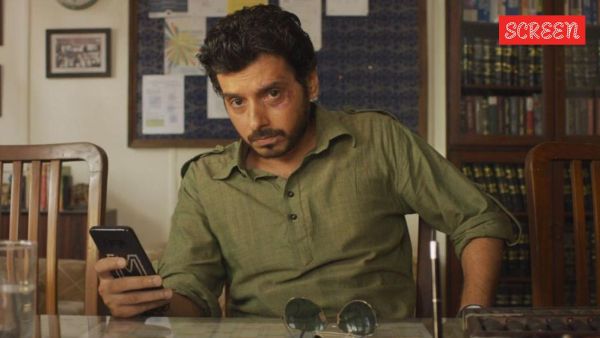 Mirzapur The Film will release later this year
‘Mirzapur film is going to be paisa vasool’
But speaking of the next major leap in the OTT space, Mirzapur: The Film, slated for a theatrical release later this year, will see Divyendu return to his iconic character on the big screen. For the actor, the project is unapologetically rooted in audience gratification. “It’s coming to the big screen. This one’s for the fans. They’ve given us so much love, which is beyond anything, beyond comprehension, rather. So this one is for them. We are coming bigger, better, and on a much larger canvas. Mirzapur is going to be that one full-on paisa vasool film, as you call it. And whatever we’ve done, whatever I’ve shot, I think we’ve justified moving from the OTT screen to the big canvas.”
At the same time, he believes the film could become an inflection point in how the industry perceives streaming properties and their cinematic potential. “And I think it could mark a very important sort or, what do you call it, it may revolutionize the way we look at OTT right now. Because I think more and more shows will try to move to the big screen if this becomes a major experiment for our industry. It’s going to open one big revenue door.”
‘Would love to direct someday’
When asked whether he sees himself stepping behind the camera someday, Divyendu responds with cautious optimism. “I would love to direct one day. I mean, that’s one of my dreams. And I’m still looking for a genre which excites me the most. I think it’s the thriller, slow-burn sort of world that excites me. But at the same time, there are a lot of things. I think there is a Stanley Kubrick in me. No, no… I think I’m just joking… But because he’s my all-time favourite director. That guy would just pick a genre and master it. So I think somewhere I’m living in this misunderstanding that I can do everything, and the confusion is what should I do first.”
Story continues below this ad
In the same breath, he admits that he hopes to eventually return to theatre, the medium where his journey first began. “Theatre, definitely yes. But whenever I go back, I want to go back with full respect and not just do part-time theatre, like go for two hours, do a rehearsal, and come back. Because theatre is magical. Always a first love.”




 English (US) ·