.png)
.png) 3 hours ago
14
3 hours ago
14
Pakistan cricket team captain Salman Ali Agha was grilled by journalists from his home country in a testy press conference after the team was eliminated from the running in the Super 8 stage, which meant that for the fourth time in as many years, Pakistan had failed to qualify for the semi-finals of an ICC event.
In the aftermath, Agha faced a firing squad of journalists from his country, who asked him questions like whether he was ‘dummy captain for coach Mike Hesson’ and ‘if he would step down himself or wait for the Pakistan Cricket Board to sack him’.
Here’s a look at the two confrontational questions (and Agha’s measured responses to them):
Question: “It is very disappointing that the Pakistan team has been knocked out. You showed great intent playing at number three during the Sri Lanka and Australia series, but this entire tournament hasn’t gone well for you as a batter either. Do you think you will step down from the T20 captaincy yourself, or should the Cricket Board remove you?”
Salman Ali Agha: “You are absolutely right. I played quite well at number three during the Sri Lanka and Australia series, but I couldn’t deliver the kind of performance in this World Cup that I should have. Aside from Sahibzada Farhan, I don’t think we played well as a batting unit throughout the tournament. Regarding the decision [on captaincy], I think any decision made right now would be emotional. We will go back, take a few days, and then whatever decision needs to be made will be made.”
WATCH: Salman Ali Agha faces journalists
Question: “The biggest debate in this T20 World Cup was about Babar Azam playing at number four. Some said he should, others said he shouldn’t. A week ago, your head coach Mike Hesson said in a press conference that we have better batsmen than Babar for the first six overs, and we don’t need him after 10 overs—which only leaves a four-over window. Do you think you utilized Babar correctly? Secondly, Mike Hesson appoints and removes captains; he has a major say in selection and the playing XI. When he gives statements like that, do you feel he is dominating too much and portraying you as a ‘dummy captain’?”
Story continues below this ad
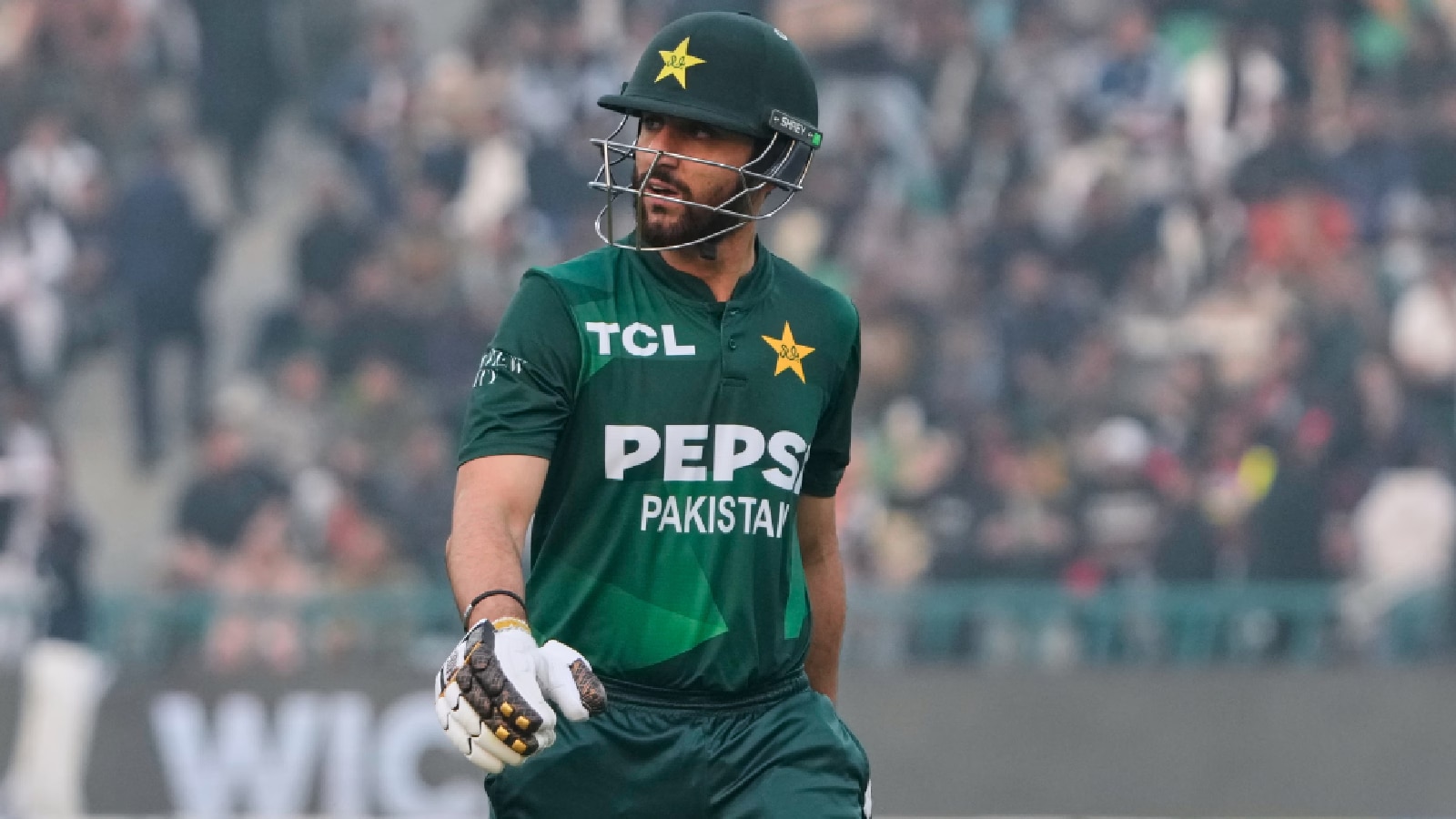 File image of Pakistan cricket team captain Salman Ali Agha. (Photo: AP)
Salman Ali Agha: “The problem is, if I don’t answer this, you’ll take it as disrespect. But listen to me—when a team is formed, it’s a team game. It isn’t based on one person’s decision. It’s a collective decision made by all the stakeholders. As for Babar, he had a different role in this World Cup. At number four, he is an experienced batter. We needed a batsman in the middle order who could provide stability and prevent the collapses we often face. He had a specific role. When you come to a World Cup, you define the players’ roles beforehand. That was his role, and that is where we envisioned him.”
Agha also said that he, as the captain of the team, took responsibility for the debacle. Playing in their final game of the Super 8 against Sri Lanka, Pakistan managed to score 212 for 8, and needed to restrict Sri Lanka to 147 or below to make it to the semis. But they could only win by a five-run margin which sealed their exit.
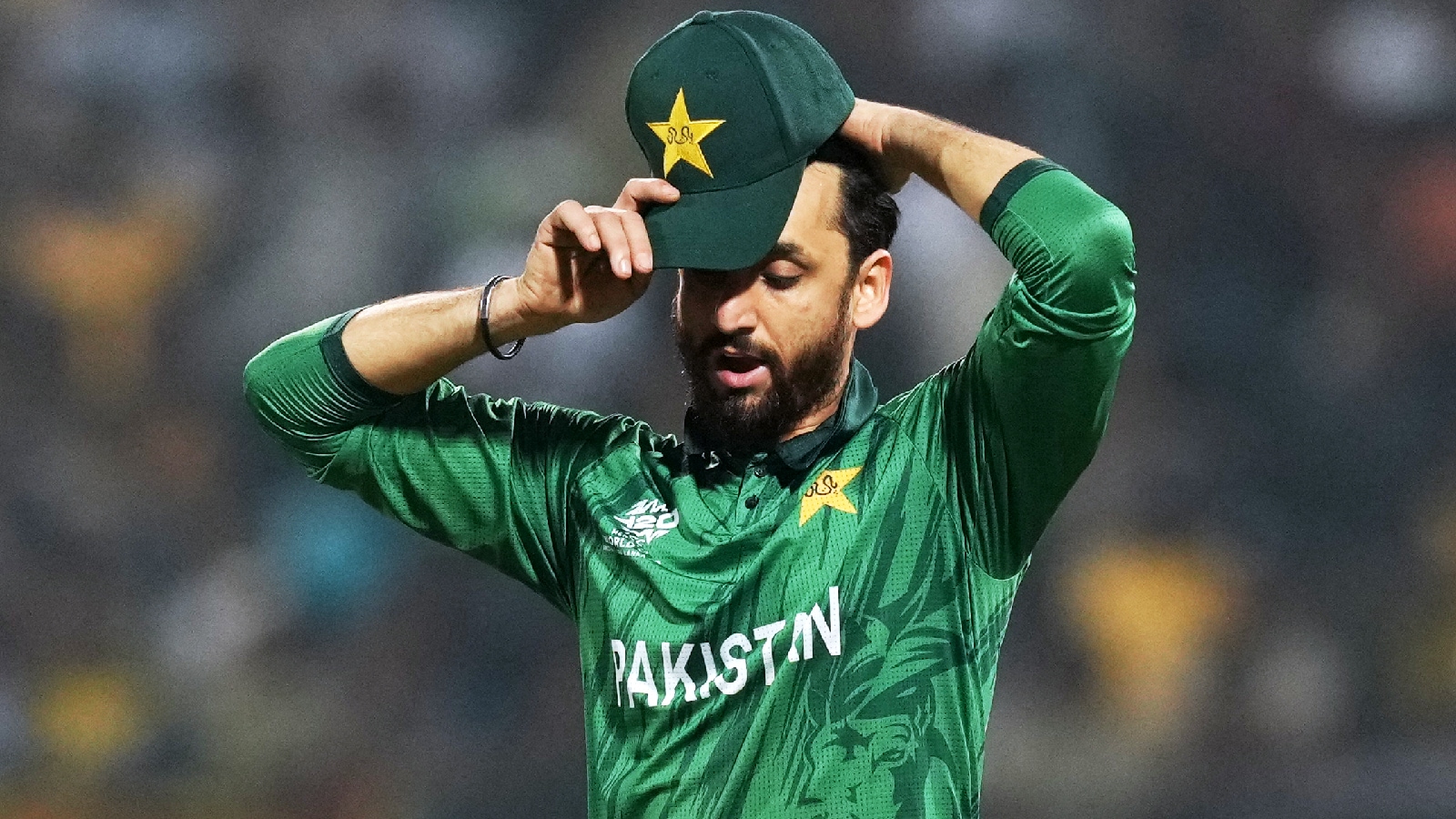 Pakistan’s captain Salman Ali Agha reacts in the field during the T20 World Cup cricket match between Pakistan and Sri Lanka in Pallekele, Sri Lanka, Saturday, Feb. 28, 2026. (AP Photo)
“If you look at the entire tournament, and if I had to sum it up, I think we significantly underperformed. In a 20-over game (against Sri Lanka), we played 18 overs very well, but the other team only needed two good overs to capitalize. Yes, our execution in the last three overs wasn’t good (with the ball). We are a much better bowling unit than this, and we have bowled better in the past. Today, our execution was simply missing. You are right that we haven’t reached the semifinals in the last four ICC tournaments. The reason is that we need to learn how to elevate our game under pressure. Specifically, how to improve our decision-making when the pressure mounts. Right now, I think that matters most because whenever we are under pressure, our decision-making isn’t as good as it should be. When you play in ICC events like the World Cup, pressure is inevitable. If your decision-making isn’t sharp under that pressure, I believe these are the kinds of results you will get.”
Agha continued: “We will take responsibility. Why wouldn’t we? We were obviously involved in selecting the team, and we were the ones playing the 11 or whichever players were brought in. So, I take responsibility, and I am sure the coach will too. It’s the same point I made earlier—we have to improve our decision-making under pressure. Mistakes usually happen when you are under stress. In ICC events, the pressure is always high because you are playing against the best teams in the world and every game is vital. If you lose one game, it feels like you’ll be out of the tournament. We must improve our choices in those moments.”


 English (US) ·