.png)
.png) 6 hours ago
20
6 hours ago
20

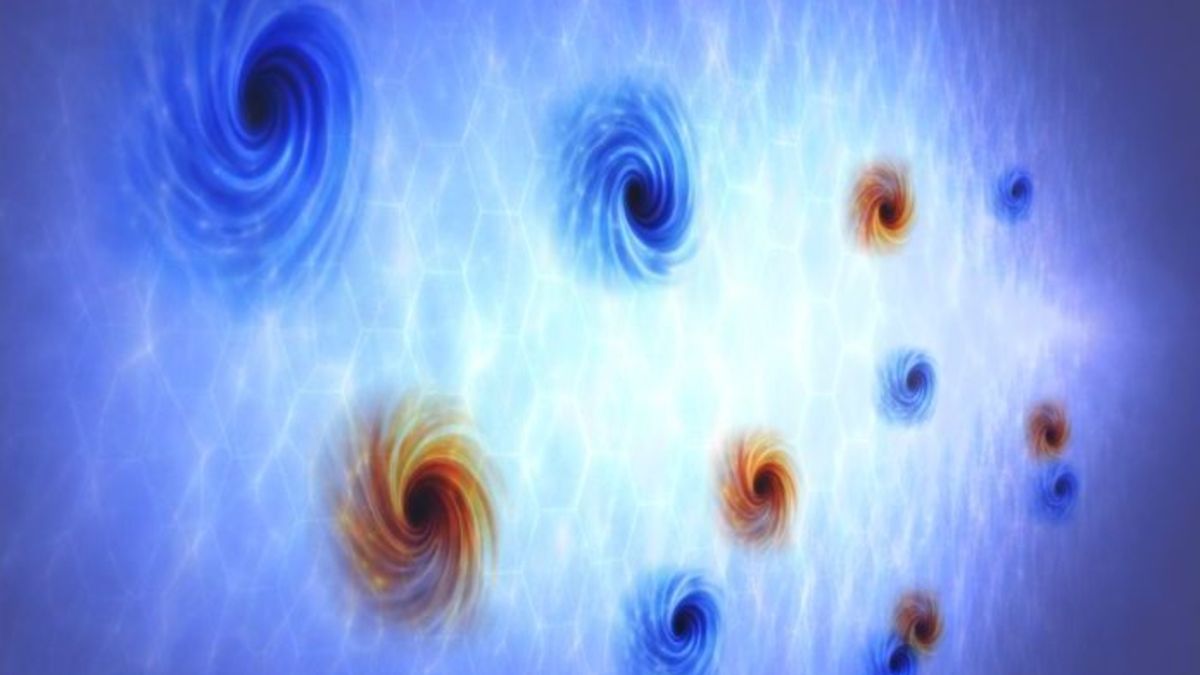
At the smallest scales, nature often repeats itself. It makes families of subatomic particles that look identical in almost every way. Yet when scientists measured them, they found these ‘copies’ didn’t line up neatly. Some are far heavier than others for no clear reason. Some change into one another at oddly chosen rates. While physicists can describe these patterns with impressive precision, they don’t know why the pattern exists at all.
These effects occur at a deeper level in particle physics, going by the name ‘flavour puzzle’. It consists of several questions. Consider the electron: it was discovered in 1897 and found not to be unique in 1936, when scientists found the muon. Oddly, the muon has the same properties as the electron but is 200x heavier, prompting the physicist Isidor Rabi to ask: “Who ordered that?” The meaning of this question was that the theory of electrons told us how it behaves and interacts with other particles, but it didn’t predict there would be another copy of it.






 English (US) ·