.png)
 1 hour ago
26
1 hour ago
26
The Foreign Office is drawing up plans to evacuate tens of thousands of British citizens if war in the Middle East escalates, with many travellers currently stranded in Dubai.
The government does not know how many British nationals are resident, on holiday or otherwise travelling across the Gulf, but it said 76,000 have so far registered their presence in affected areas of the region.
More than 50,000 of those are believed to be in the United Arab Emirates, and most of those are holidaymakers or other travellers, rather than residents, with Dubai a major tourist and business destination. Its airspace is currently closed, leaving tourists without a plan for getting home.
The UK government’s advice is for people to follow local instructions, especially where it is to shelter in their current location.
But the situation is uncertain and Whitehall sources said the government is looking at all options including evacuations via different routes if the airspace remains closed and tensions escalate. One possibility could be evacuation by road to neighbouring countries where the airspace remains open, such as Saudi Arabia.
The Ministry of Defence is working with the Foreign Office on options as part of an unprecedented consular operation involving registering people across multiple countries to identify who may need support.
The Foreign Office’s advice is against all travel to Iran, Israel and Palestine. It also advises against all but essential travel to the UAE, Qatar, Kuwait and Bahrain, and there are further instructions to avoid travel to some parts of Pakistan.
British nationals in Saudi Arabia are advised to stay at home, while those in Jordan, Oman, Syria, Lebanon, Yemen and Iraq should take precautions given the heightened regional tensions.
Yvette Cooper, the foreign secretary, is expected to make her first remarks on the unfolding crisis on Monday after spending the weekend working on the response.
She has been engaged in a major diplomatic push, speaking to her regional counterparts along with the US secretary of state, Marco Rubio, and other G7 foreign ministers.
Keir Starmer on Sunday expressed “solidarity” with nations in the Middle East facing “indiscriminate” fire from Iran as he spoke to the leaders of Bahrain and Cyprus.
No 10 has refused to say whether the UK supports the US and Israeli strikes on Iran, but John Healey, the defence secretary, said on Sunday morning that few will mourn Iran’s supreme leader, Ali Khamenei, who died in the bombing.
Healey described the Iranian regime as “evil” and said it had menaced the west by sponsoring at least 20 terrorist plots to attack the UK, as well as involvement in proxy wars.
Pressed on the legality of the strikes, he said it was “for the US to set out and explain” whether its action was legal. He also refused to be drawn on the UK having the declined use of its military bases for the attacks.
While distancing the UK from the strikes, Healey said the government’s role was now to act defensively. He said there was a “very real and rising threat from a regime that is lashing out across the region”, and that 300 UK troops had been within “a few hundred yards” of an Iranian strike on a base in Bahrain.
Two missiles have also been fired in the direction of Cyprus, where thousands of UK personnel are stationed, although these are not believed to have been deliberately targeted at the British bases there.
Speaking on Sky News, Healey said UK military planes were active in the Middle East in order to protect British citizens and interests across the region. Healey said Iran should get rid of its weapons and return to negotiation.
Asked for his reaction to the killing of Khamenei, he said: “I think few people will mourn the ayatollah’s death, not least the families and friends of the thousands of protesters murdered on the streets of Iranian cities.
“Iran and the regime he’s led for so long, it’s a source of evil – murdering its own citizens and sponsoring and exporting terror.”
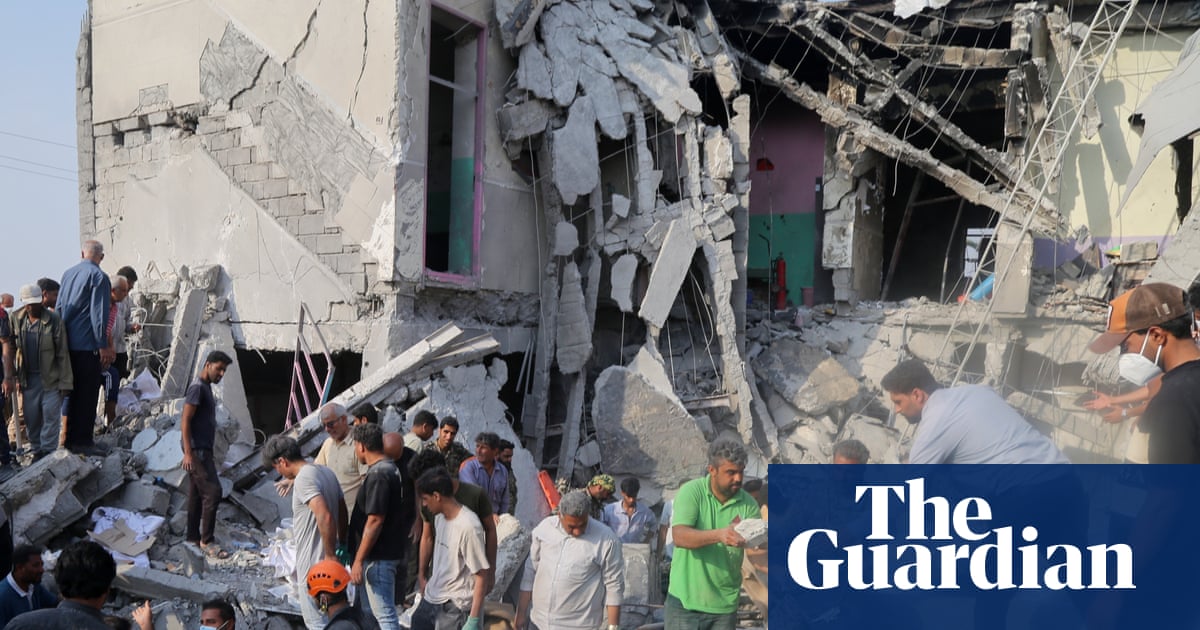
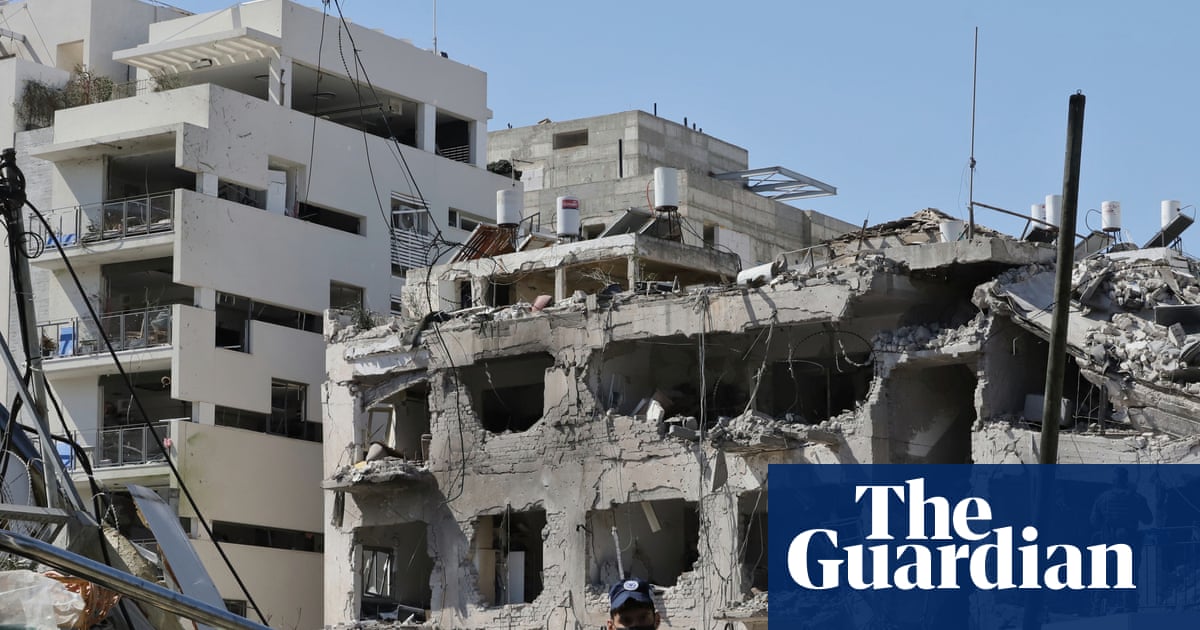
Healey said Iran was hitting out in an “indiscriminate” way, attacking hotels in Dubai and Bahrain, as well as an airport in Kuwait.
The US and Israeli action has divided opinion in the UK. Emily Thornberry, the Labour chair of parliament’s foreign affairs committee, said the attack was in breach of international law and she was glad the UK was not involved.
Zack Polanski, the leader of the Green party, condemned the assassination of the ayatollah and told the BBC’s Laura Kuenssberg that there was no justification for the bombing.
In contrast, Priti Patel, the shadow foreign secretary, said it was “astonishing” that Starmer did not “step up” and offer more support to the US and Israeli operation.
Reform UK’s Nigel Farage took a similar position, posting on X: “The prime minister needs to change his mind on the use of our military bases and back the Americans in this vital fight against Iran!”




 English (US) ·