.png)
 1 hour ago
23
1 hour ago
23
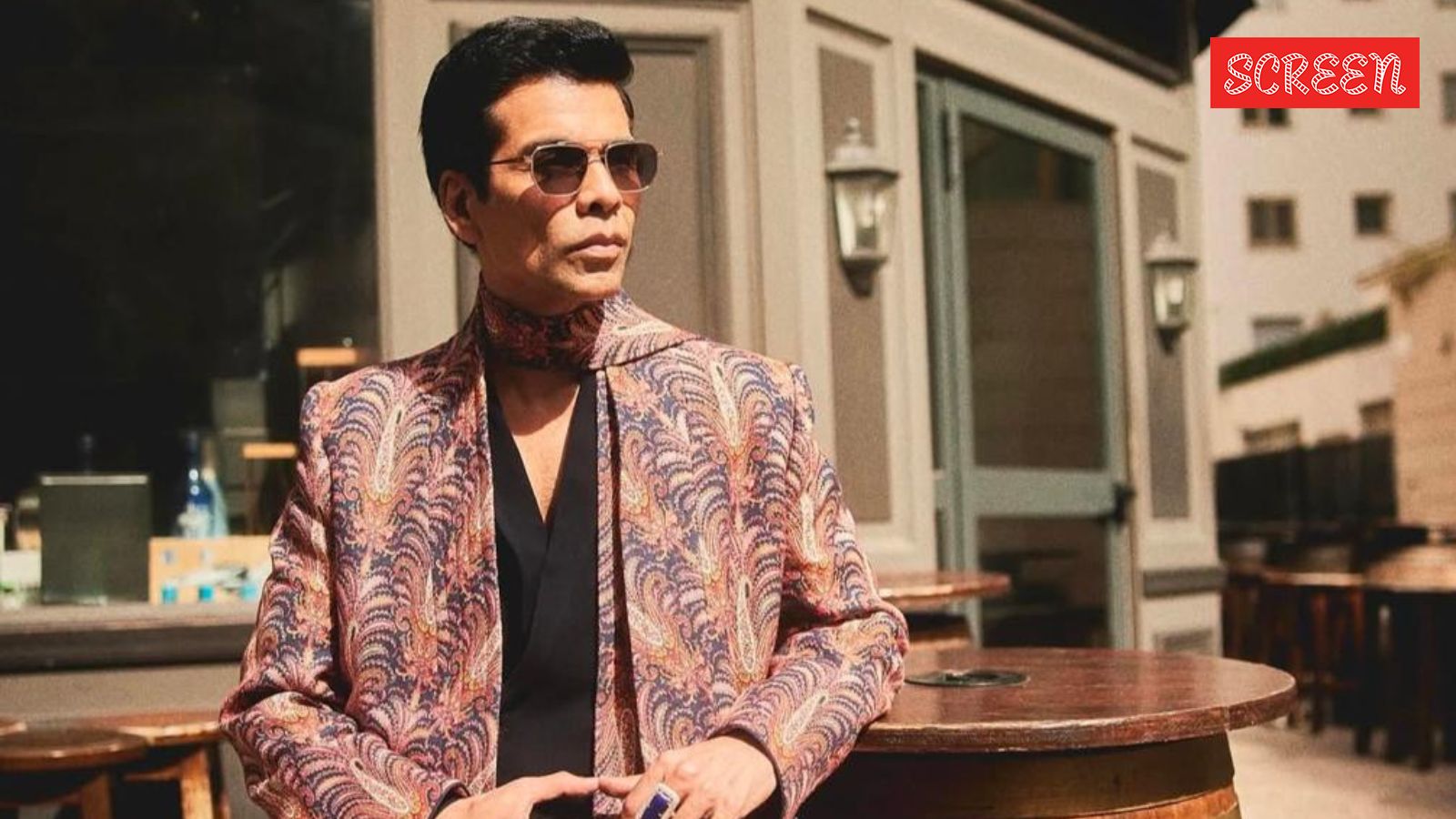 Karan Johar said that, as an industry, Hindi cinema has still not tapped into the true potential of pure horror, and that is where he would like to place his next big bet.
(Photo: Karan Johar, Instagram)
Karan Johar said that, as an industry, Hindi cinema has still not tapped into the true potential of pure horror, and that is where he would like to place his next big bet.
(Photo: Karan Johar, Instagram)
The Hindi film industry is navigating one of its most unpredictable phases in recent memory. No one can accurately predict which film will resonate with audiences, but what is clear is that the ecosystem has shifted dramatically. Big-ticket tentpole blockbusters are failing at the box office, while smaller films are struggling to secure screens and attention. Major production houses are entering strategic partnerships to withstand rapid market changes and protect themselves from financial setbacks. Amid this churn, filmmaker and producer Karan Johar recently shared his perspective on what is currently connecting with audiences.
‘People are reacting to machismo, alpha energy’
In a conversation with Sarthak Ahuja, he outlined the changing audience dynamics. “There’s a mass multiplex audience, a tier-two multiplex audience, and a tier-two single-screen audience that reacts to a certain kind of cinema, something that Hindi cinema, largely, has not been catering to. So suddenly, when a Animal comes, or when a Dhurandhar comes, it caters to that audience which has been starved of a certain energy. They react to machismo, violence, heroic dialogues and alpha energy. Whether it’s Kabir Singh, Animal, Dhurandhar, I’m not categorising them as the same kind of film, but there is that front-footed machismo, that front-footed alpha energy. Rightly or wrongly, and let’s not get into that debate, that energy is attractive to a certain audience. And those films have been working consistently when done right.”
‘Intense love stories really work’
However, Karan also noted that testosterone-driven cinema is not the only genre finding success. There is another emotional space that continues to attract viewers: “Not every love story, like say a rom-com will work, but intense love stories really work. An Aashiqui will work. A Saiyaara will work. Intensity in love works. There’s what’s colloquially called the “nas-kata” audience, people who are ready to die for love. That emotional extremity is something people love. That tier-two audience wants to watch that kind of film. The mass audience, especially the mass male audience, gravitates towards films that play on a larger emotional or heroic scale.”
‘I’m betting on horror’
Looking ahead, Karan identified one genre he believes remains largely untapped in India: horror. “If you ask me which is the one big genre that India has not succeeded in, it’s actually pure horror. We haven’t got our The Nun, we haven’t got our The Conjuring. We haven’t cracked that genre yet. Horror can be a huge breakthrough when you get it right, when it’s genuinely scary, not just about jump scares, but when there’s a real sense of atmospheric horror. That’s something we still need to get right. That genre hasn’t been consistently successful for us.”
He summed up the current scenario: “What’s not working are the family dramas, the rom-coms, the emotional dramas, they’re just not working. So today, if I had to discuss all this and put it in one bracket, the one thing no one is really talking about is pure horror. That’s what I’m betting on next.”
‘Women are loving alpha movies’
During the same conversation, Karan pointed to what he described as a surprising dichotomy in audience behaviour, particularly among women. “I think a lot of movies have addressed women’s empowerment and the inequality between genders. Having said that, there is this alpha, misogynistic kind of film that is working. Is that counterproductive to those films? Because films made purely on feminism will almost always do less business than films that are about entitlement and alpha energy.”
Story continues below this ad
He elaborated further: “What really throws me off is the data. There are so many evolved, liberal women who speak out against these misogynistic, alpha-male films. But there are many more women who are watching these films, and loving them. When I research a hundred women, maybe 20 are offended, and 80 perhaps are not, even by films that could be considered offensive to women. Films that I would imagine my mother or my aunt might be offended by, but many women are not.”
Previously, in the same chat, Karan also spoke about the much talked about decision to sell 50% of equity of his production house, Dharma Productions, to Adar Poonawalla for Rs 1,000 crore. Speaking about the deal, he said: “I think this was a move towards diversification but with him, it’s a balance. I’m sure at some point he is looking for an exit out of this deal because he is a businessman and this is a business. But also, I think he is a lover of the arts. But he is very clear. Maybe the return at that point, after 8 or 10 years or whenever he is looking at it is not magnificently huge but enough to have satiated him, to have satiated his creativity or rather his diversification needs as well as given him that kind of glory.”



 English (US) ·