.png)
.png) 1 hour ago
5
1 hour ago
5
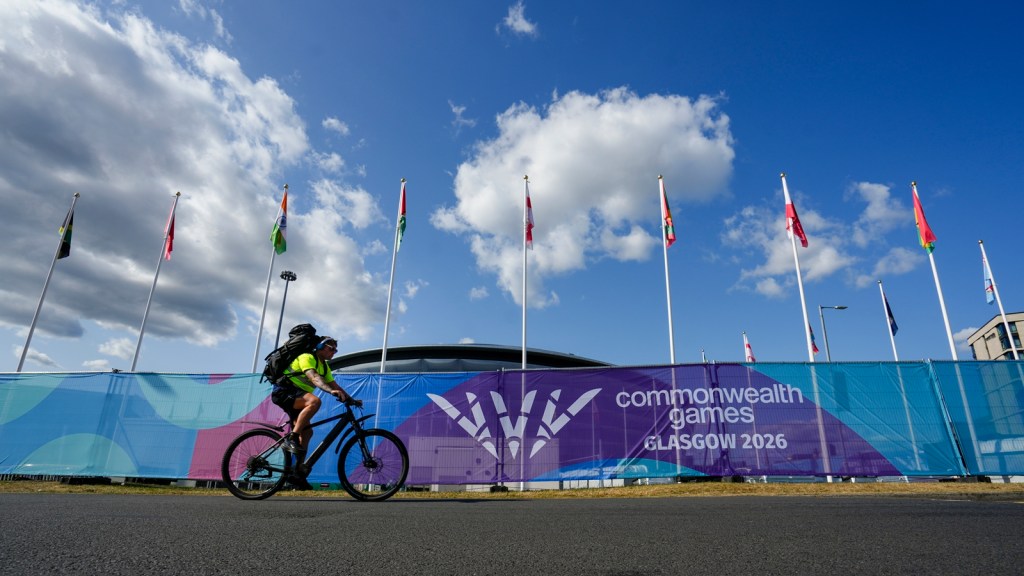 Glasgow has been unwilling to disturb the city's rhythm to accommodate the CWG. (PTI Photo)
An Indian team member, who was in Glasgow 12 years ago as well, couldn’t help but compare the mood then and now upon reaching Scotland’s largest city. “In 2014,” he says, “the central square was a lively place where everyone congregated, creating a party atmosphere. When I passed it today, all I heard was drilling sounds, the road was dug up, and it was out of bounds.”
It isn’t a lament so much as a statement of fact.
Exactly 12 years ago, during the opening ceremony of the previous Glasgow Commonwealth Games on July 23, 2014, Rod Stewart stood on a stage inside Celtic Park and belted out ‘Can’t Stop Me Now’ to a crowd that brought the proverbial roof off. As the flame reached Glasgow for Thursday night’s opening, the loudest noise this time is of the heavy construction machinery.
ALSO READ | Lovlina Borgohain assured of medal at Commonwealth Games 2026 without throwing a punch
Host cities tend to expedite infrastructure projects to welcome an event of this magnitude. But Glasgow has been unwilling to disturb the city’s rhythm to accommodate the CWG. It has, by design, kept the thousands who have descended upon Glasgow away from its centre, concentrating the Games within a leaner, tighter corridor, one that fits, quite literally, inside an eight-mile loop of the city.
That number, eight miles, has become the defining phrase of Glasgow 2026, repeated in every briefing and brochure. All four competition venues, Scotstoun Stadium, the Chris Hoy Velodrome, Tollcross International Swimming Centre, and the Scottish Event Campus, sit within that radius of the city centre. A visitor could, in theory, watch a swimming heat at Tollcross in the morning, be pitchside for netball at the SEC by early afternoon, and hop over to Scotstoun for athletics in the evening.
ALSO READ | Full list of Indian athletes competing at Commonwealth Games 2026
Story continues below this ad
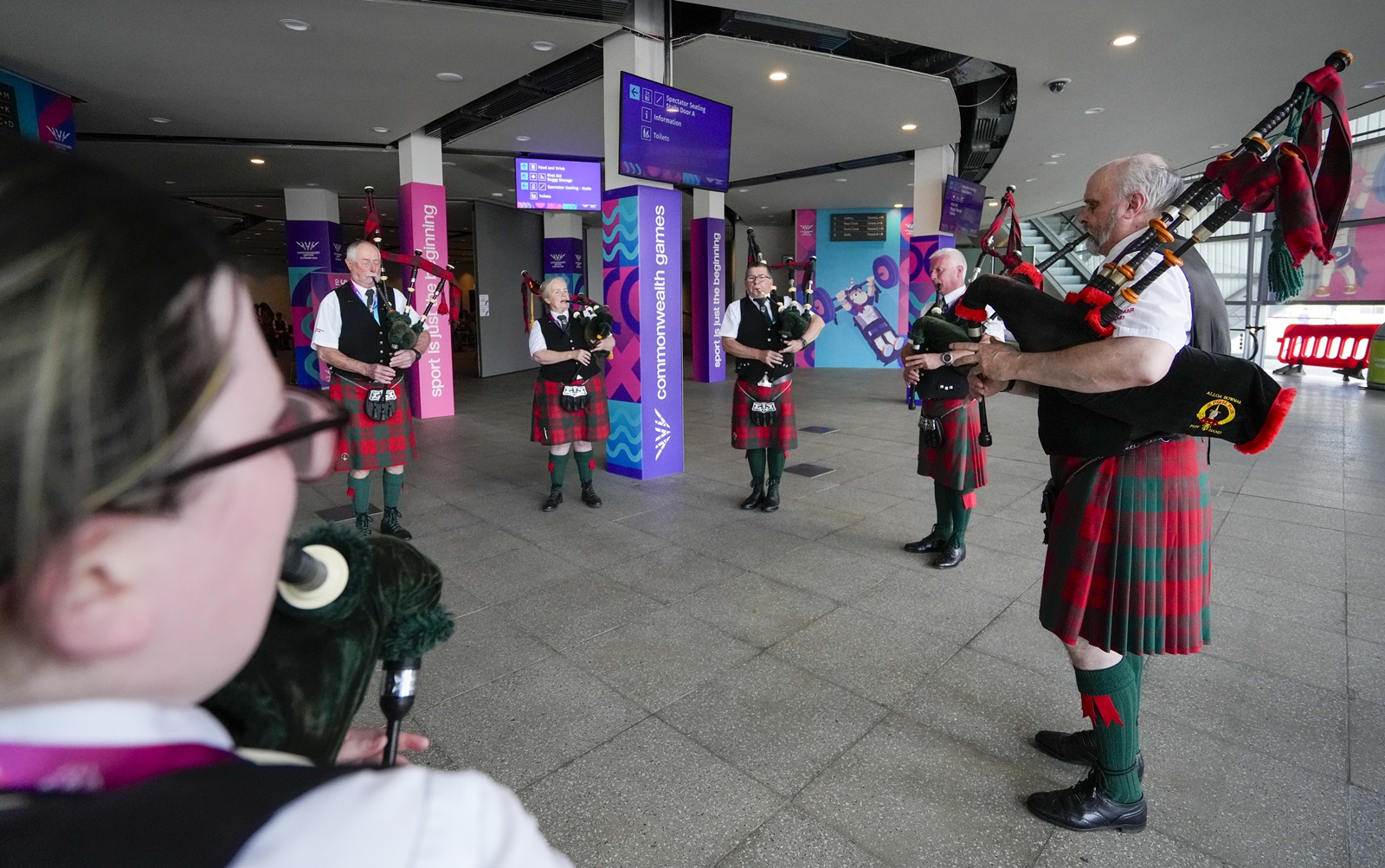 Members of a Scottish bagpipe band amid preparations for the Commonwealth Games 2026, in Glasgow, Scotland. (PTI Photo)
This compactness was born of necessity. When the Australian state of Victoria withdrew as host in 2023, citing costs, the Commonwealth Games looked, for a moment, like it might not survive at all. Singapore, Malaysia and Gold Coast all weighed bids and walked away.
Glasgow stepped in with an unusual pitch: no new venues, no athletes’ village, no ballooning budget, just the infrastructure already sitting from 2014, dusted off and reused. The Commonwealth Games Federation backed it with initial funding, and in September 2024 the deal was done.
The contrast with twelve years ago is stark. Glasgow 2014 was a sprawling, 17-sport spectacle that drew nearly 5,000 athletes from 71 nations, sold 1.1 million tickets, and was watched by an estimated billion people worldwide.
Glasgow 2026 wears a rather thin look. The sport count has dropped from 17 to 10. There is no new athletes’ village, competitors are billeted in existing city accommodation at hotels and college hostels. There are no road events at all. Bowls, usually played outdoors on manicured greens, move indoors for the first time in the sport’s Commonwealth history. It is, by design, a Games with the fat trimmed to the bone.
Story continues below this ad
The numbers speak for themselves: the 2022 Birmingham CWG were held at a cost of £778 million; this time, the organisers have spent just £150 million. And if the organisers sold more than a million tickets for Glasgow 2014, they hadn’t even been able to sell the 13,000 tickets until a few hours before Thursday night’s opening.
No country will feel the cuts quite like India. Before the contingent departed, a sports ministry official requested the media not to ‘panic’ by looking at the medals table. When the count begins, India might not feature in the top five, as it usually does. Badminton, hockey, wrestling, table tennis, squash and cricket, the sports that delivered nearly half of India’s 61-medal haul in Birmingham, now aren’t on the Glasgow programme. Of the 210 athletes India sent to Birmingham in 2022, close to half competed in disciplines that no longer exist at these Games.
Wrestling alone handed India twelve medals last time; table tennis gave them five golds. There is no equivalent cushion here. India’s hopes now rest on a narrower base: athletics, weightlifting, boxing, judo and lawn bowls. It’s a blunt reminder that a leaner Games doesn’t cut costs evenly; it reshuffles winners and losers, and this time the shuffle has landed hardest on one of the Commonwealth’s biggest sporting nations.
Even for those who are there, the Glasgow CWG is a mere warm-up for September’s Asian Games. Vijay Sharma, the national weightlifting coach, has said Mirabai Chanu is unlikely to lift anywhere close to her personal best so that she remains fully fit for the Asiad, the only medal missing from her cabinet. Adille Sumariwalla, the Athletics Federation of India spokesperson, recently said that they would have liked to send ‘token’ representation to Glasgow and rather focus on the continental event. But India, as the hosts of the next CWG, couldn’t have had a lean contingent. So, Neeraj Chopra headlines a strong track and field contingent.
Story continues below this ad
Nearly all the sports that have been dropped are likely to return when Ahmedabad hosts the Games in four years. For now, Glasgow opens its second Commonwealth Games not with the unguarded joy of 2014, but with something quieter and more pragmatic. A compact loop of familiar venues, a city betting that intimacy can be a substitute for scale, and a ‘Lite’ Games whose true shape will only be visible once the running, swimming and lifting actually begin.


 English (US) ·