.png)
.png) 2 hours ago
20
2 hours ago
20
While the world gossips about the Man City manager's retirement, the maverick loves keeping the world guessing with his gnashing gridlocks and getaways plotted for opponents
Written by Sandip G December 22, 2025 12:52 PM IST
 6 min read
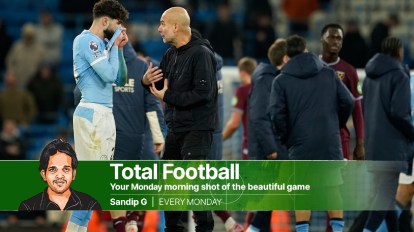 Manchester City's head coach Pep Guardiola talks to Manchester City's Josko Gvardiol on the pitch after the end of the English Premier League soccer match between Manchester City and West Ham United in Manchester, England, Saturday, Dec. 20, 2025. (AP Photo/Dave Thompson)
Retirement is for young people, Sir Alex Ferguson would quip at rumour mongers in 2010. He was 69, halfway through another successful league season. But gossip swirled that he was stressed, that he couldn’t keep apace with the changing game, and his health was taking a toll. He retired after two more seasons, bowed out with a title, the last his club kissed, so that he “needed more time with his wife.” Scuttlebutts were not too far away. Some claimed he was tired of the Glazers, the American owners; some sensed he wanted to keep his legacy intact and break the concert when his sound was still good. But intrigue continues to swirl, like an unsolved whodunit.
Story continues below this ad
The second most successful manager in the Premier League era, Pep Guardiola is only 54, riding the high noon of his career, has built a dynasty with Manchester City, and could realistically crowd his mantle piece with more trophies and medals. He can live in Etihad forever, winking at his own bronze statue. Yet, there are reports that Guardiola could be gone by the end of the season. “I am here. What is going to happen, who knows that?” he told reporters before the game against West Ham United, wearing that cryptic smile, making him sound more like the philosopher Seneca than the greatest football manager in the world. To accentuate the theatre of mystery, he repeated: “Who knows?” Getting to the heart of Guardiola is more difficult than getting to the essence of his tactics. He would then fling a jibe: “Sooner or later, when I’m 75 or 76, I will quit Manchester City!.”
 But Guardiola has dwelled on farewells from his first season at the club. “Every day takes you closer to the day of goodbye.” Or, “I will retire when I feel bored.” Guardiola leaving Etihad at the end of the season seems unreasonable, to a degree illogical too, but the days of managers clinging to their posts because they are winning, or have been winning, is long gone. A manager leaving a club on his own will has become a shuddering rarity; even those that are granted the privilege leaves the gaffer’s garb because they need a break from the crushing churn that is managing an elite club. The season before, Jurgen Klopp bade farewell to Liverpool because he felt he had been running on fumes and did not want to do the job on “three wheels.” Managing a club for 10 years is unimaginable.
Story continues below this ad
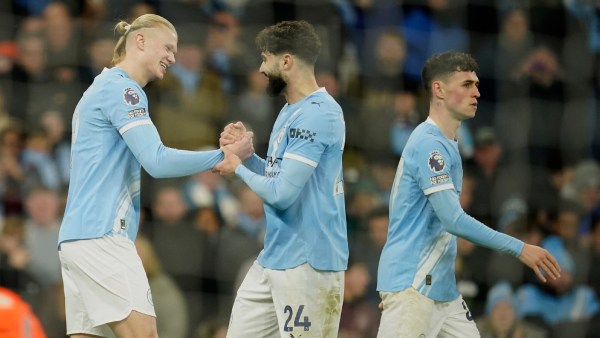 Manchester City’s Erling Haaland, left, celebrates with Manchester City’s Josko Gvardiol, after scoring his sides third goal of the game during the English Premier League soccer match between Manchester City and West Ham United in Manchester, England, Saturday, Dec. 20, 2025. (AP Photo/Dave Thompson)
Guardiola, too, had felt exhaustion before. At Barcelona, conducting one of the finest orchestras in football, he felt knackered. His lieutenant Xavi understood the traits that drove him to burn out after just four years (of feast). “He is obsessive; he would keep going until he got it right. He demands so much from himself. And that pressure that he puts on himself, those demands are contagious – it spreads to everyone. He wants everything to be perfect.” The physical and emotional intensity took its toll on him, even though he had at least three players who could be considered the best in the world at that time. He went to Bayern Munich, relished the more relaxed yet tactically rigorous league, and by the third year got bored.
England posed him more challenges, taxed and pushed him, and in the end sculpted him into one of the greatest thinkers and revolutionaries of the modern game. Often, his battles were not with his adversary or himself, but with the game itself, moulding, stretching and testing its tactical tenors. His biggest joy was not in winning titles but in finding new ways and methods, seeing the unseen and thinking the unthought. From checkmating the classical nine with false nine, he has counter-checkmated the false nine with the classical nine. His journey could be mapped through the functions of two extreme players he has pivoted his ever-evolving philosophy to, Lionel Messi, his falsest nine, and Erling Haaland, his truest nine.
Story continues below this ad
He makes theories and makes theories to counter his own theories. He once loathed dribbling, ball-carrying and long balls. In the last two years, he has been greedily encouraging what once were considered antithesis. This season, on the face of an apparent crisis, he has retooled his side by employing central midfielder Matheus Nunes and Nico O’Reilly as his full-backs in a dynamic 4-3-2-1. The pair is fast, inventive and flexible. They could be the conventional flying winger, overlap and underlap, fill the midfield holes or combine with the wingers. O’Reilly and Doku, bouncing on the left flank have been City’s best passing combo in the final third this season. On the opposite side are Bernardo Silva and Nunes, their second best combo.
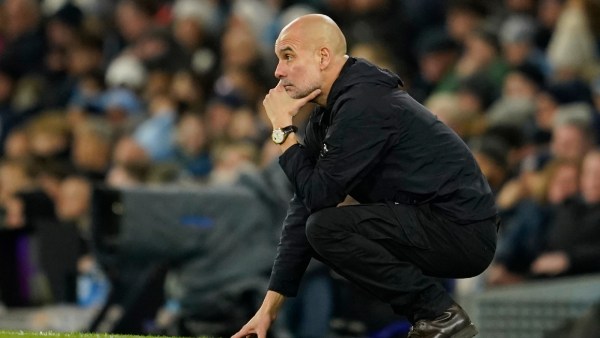 Manchester City’s head coach Pep Guardiola watches his team plays from the sidelines during the English Premier League soccer match between Manchester City and West Ham United in Manchester, England, Saturday, Dec. 20, 2025. (AP Photo/Dave Thompson)
The piece of ingenuity has seen City overturn a juddering start to genuinely hunting for the title. After slipping in a dilemma, seeing football in England reverting to a more counterattacking, set-piece oriented style, returning to pre-Pep days, he has adapted, devising counter-measures. It’s the essence of Pepism, to prove he was right, then to prove that he is right again. He threw a brief glimpse into his world. “When you do something and it goes well, they (opponents) watch you and create an antidote… Anything we do and they respond to us, we have to respond again,” he would say.
England, thus, has extracted more from him than Spain and Germany. No where else has spent more years or made more tactical reinventions. And like Ferguson, he might say: “Retirement is for younger people.”
© The Indian Express Pvt Ltd






 English (US) ·