.png)
.png) 2 hours ago
21
2 hours ago
21
How to weld the J and the K together for a W had seemed like a decade-long problem for Jammu & Kashmir, often thwarting their Ranji Trophy ambitions.
“This team has been together for three years now. This season they gelled and became one. It’s the biggest challenge we’ve overcome — and look where we are,” says J&K bowling coach P Krishna Kumar, after his team’s maiden Ranji final appearance, secured with a six-wicket win over Bengal in the semifinals.
While the unassuming Paras Dogra was brought in from Himachal Pradesh to lead the side, Krishna Kumar faced a subtler challenge. Bowlers from the Kashmir Valley were ridiculously talented. But to take them to the next level, a coach first had to earn their trust.
𝙎𝘾𝙀𝙉𝙀𝙎 𝙊𝙁 𝙋𝙐𝙍𝙀 𝙅𝙐𝘽𝙄𝙇𝘼𝙏𝙄𝙊𝙉 🤩
J&K create history as they defeat Bengal by 7️⃣ wickets to book their ticket to the #RanjiTrophy Final for the very first time 🫡
Scorecard ▶️ https://t.co/QXyCuRHJ6e@IDFCFIRSTBank pic.twitter.com/VBKPD9I9mX
— BCCI Domestic (@BCCIdomestic) February 18, 2026
“When I joined three years ago, I studied the different cultures of Kashmir and Jammu — understanding how players would react, what calmed them, what ticked them off,” says the former NCA coach. “Players from Kashmir come from hardship. They’ve never had facilities. But if someone talks to them with love and affection, they respond. Building that trust was as important as any bowling plan. Now they discuss family matters with us too.”
The standout bowler this season has been Auqib Nabi from Baramulla — 55 wickets at an average of 13, numbers that would turn heads in any company.
“For him to lead his state into a Ranji final is a huge thing. He started with zero facilities and travelled 60 kilometres daily just to train,” Krishna says. “In the Bengal match, he wasn’t bowling to domestic giant Abhimanyu Easwaran. He was bowling to a batter called Abhimanyu.”
That reframing is central to J&K’s approach. For two years, the team has used video analysis to dissect top batters, and their bowling plans have been consistently sharp — last season they accounted for Rahane, Jaiswal and company. Their ten-pacer arsenal includes Umran Malik, not in the current squad but still within their system. The latest addition is left-arm seamer Sunil Kumar from Akhnoor.
“He had no practice facilities nearby, so we got a pitch built at his home and worked through the off-season,” Krishna says. The investment paid off: four crucial wickets as Bengal were bowled out for 99 in their second innings, and two five-fors across the season.
Story continues below this ad
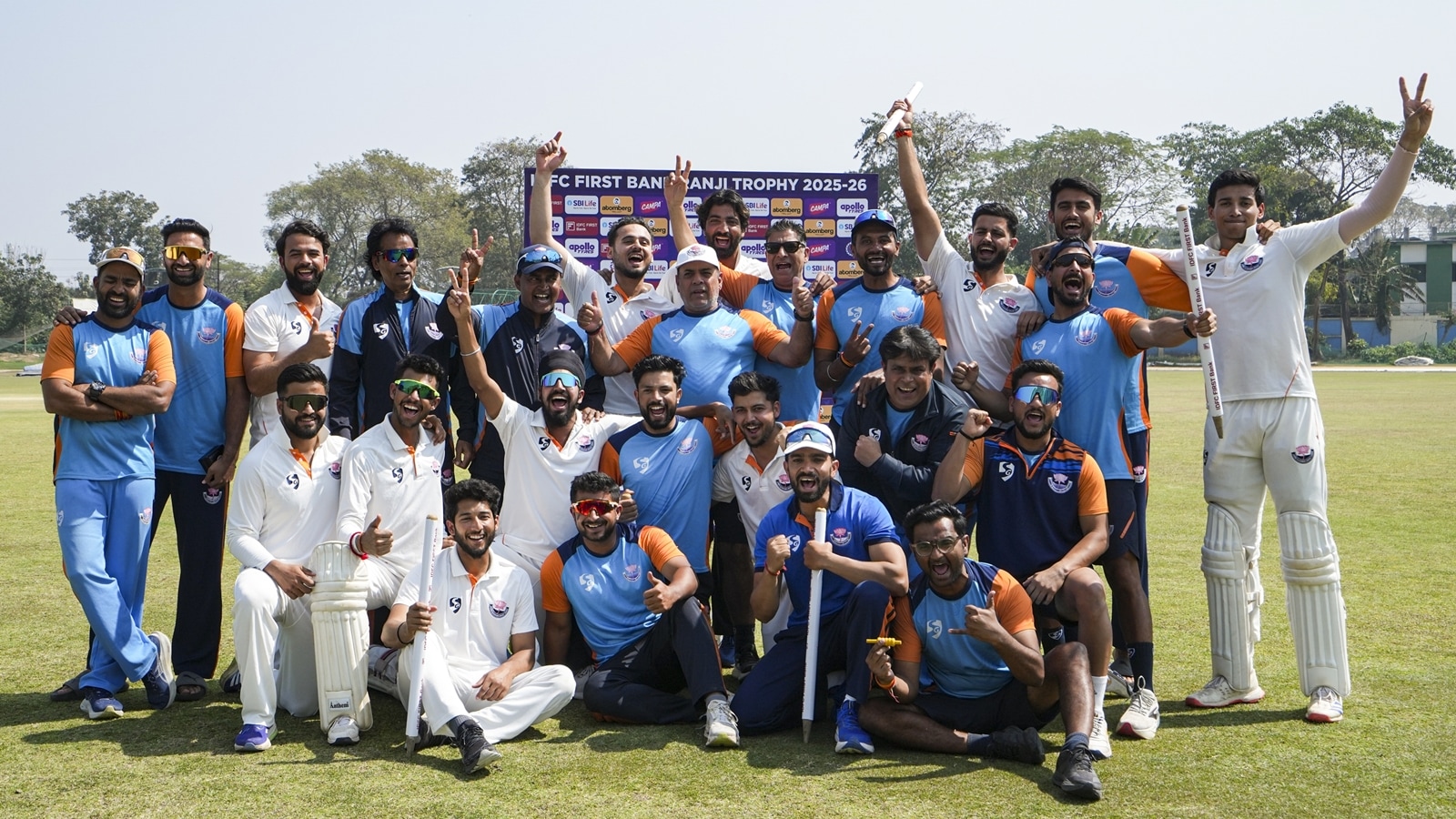 J&K’s two breakout seasons have had milestones of beating big-name teams at home, and overturning Bengal at home, completes their marching stomp into the final (PTI Photo)
Discipline has been woven into the culture — punctuality, gym and nets routines, time bonding in hotels. But all of J&K shared what Krishna candidly calls the “inferiority complex of small teams”.
“When I played for Rajasthan, I had a complex playing against Mumbai. That very thought can stop a player from expressing himself.” Last season’s one-run defeat to Kerala in the quarterfinals, agonising as it was, planted a seed. “It told them they were already knocking on the door. Bas thoda aur mehnat chaiye tha.”
This season they left no stone unturned — practice matches against Punjab and Himachal, Buchi Babu in Chennai. The core group held together, and a culture of excellence quietly took root.
Then there is Abdul Samad — maverick batsman, fielding genius, and occasional cause of collective deep breathing among the coaching staff. He came good against Bengal with a near-run-a-ball 82 and a breezy 30, dominating three Test bowlers including Mohammed Shami from 13 for 3.
Story continues below this ad
“He doesn’t care about reputations and strikes the ball as cleanly as any Indian batsman I’ve seen. He’s like Sehwag — walks in and immediately tries to change the game.”
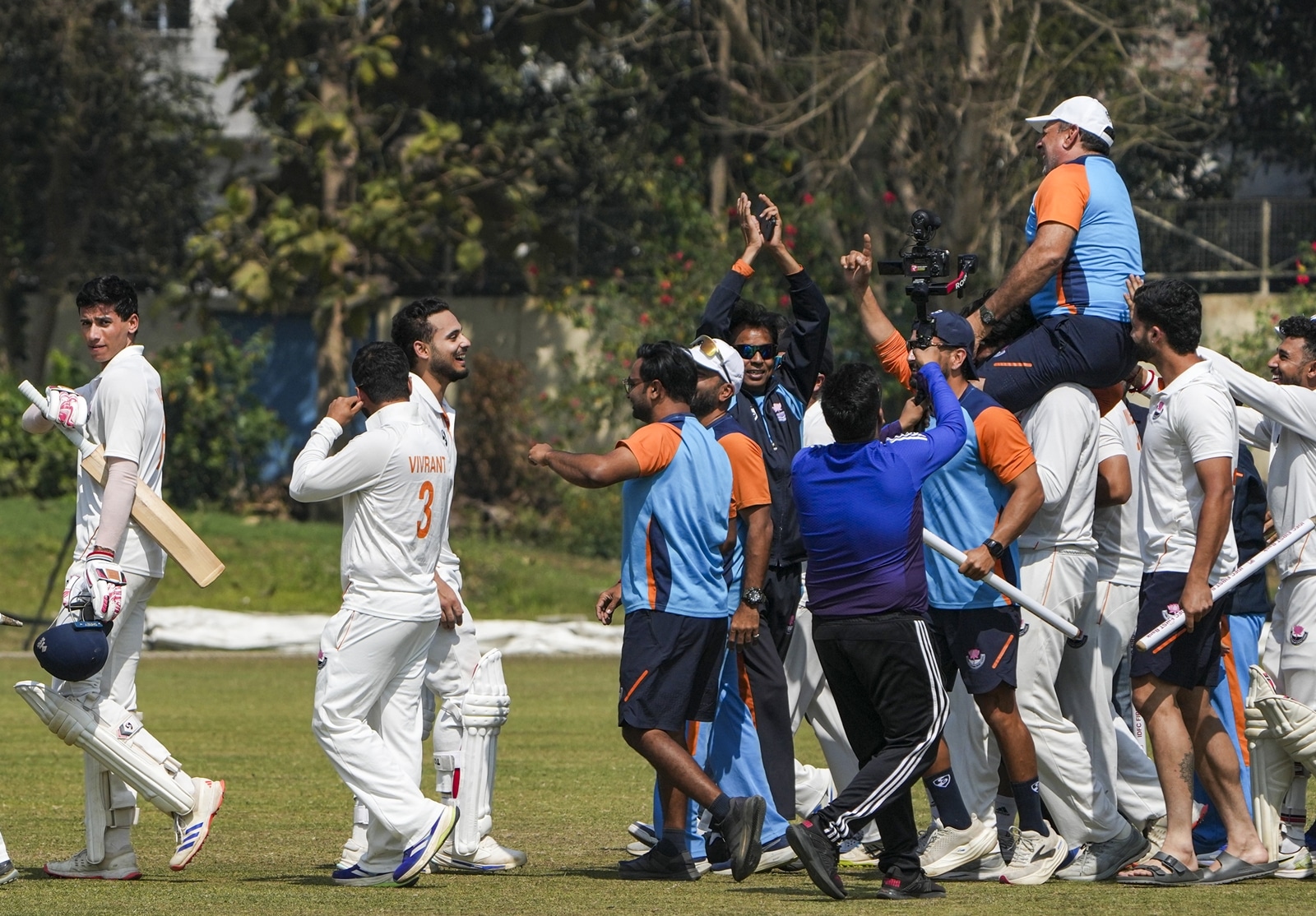 Jammu and Kashmir players lift their coach Ajay Sharma as they celebrate the teams victory in the Ranji Trophy semifinal cricket match against Bengal, at the Bengal Cricket Academy Ground, in Kalyani, West Bengal, Wednesday, Feb. 18, 2026. (PTI Photo)
The trouble is, Samad is prone to squandering good starts — a wild aerial shot against Mumbai when 30 runs were needed being the most recent example. The coaches have learned to live with it. “When you tell him to go and play his game, he will. You can’t then scream at him. So we practise slow breathing and back him completely.”
Samad’s confidence is anchored in his fielding. Alongside 600-plus runs, he hasn’t dropped a catch all season and has pouched half a dozen blinders. “Our fielding coach Dishant Yagnik brings the latest drills. The standard has skyrocketed,” says Krishna.
Clean bowling plans, cultural unity, and a self-belief that no longer flinches at big names — J&K have built something real. “We just like to follow our routines,” says the coach. In a season where winning has started to feel like a gleeful routine.





 English (US) ·