.png)
 2 hours ago
27
2 hours ago
27

 Margaret Holland
Recent flood events are not only having an immediate effect on wildlife, but also future reproduction
This winter's extreme flooding has destroyed nests, drowned small mammals and threatens a sharp drop in butterflies and other species this spring.
Relentless storms and near‑constant rainfall – described as "apocalyptic" by one expert – have brought some of the South West's worst flooding in decades.
While the human impact has been widely felt, nature groups say the toll on local wildlife is only beginning to emerge.
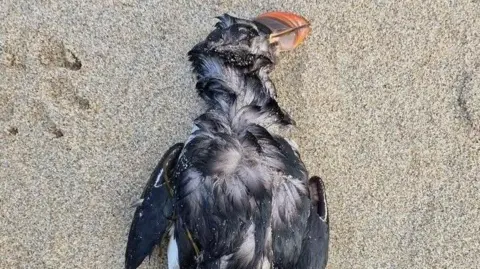
The devastating effect of storms on seabirds, including the thousands of puffins washing up on the coastline in the South West, Channel Islands and France, has been well documented.
The "conveyer belt of storms hitting us" had led to a busy few weeks with a lot of strandings reported said Rob Deaville, project manager for the Cetacean Stranding Investigation Programme (CSIP) at the Zoological Society of London.
 Andy Cowrie, Cornwall Wildlife Trust
Rob Deaville said a lot of strandings were likely to be storm-related
He said the reports had included turtles, some alive and dead, and a lot of the strandings were "likely to be storm related".
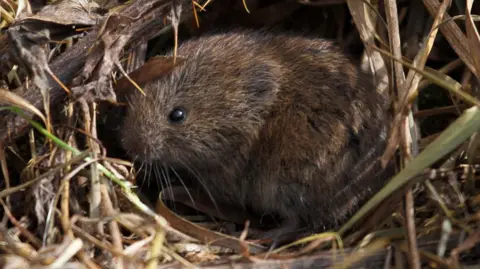
On land, habitats for hedgehogs, field voles and other small mammals have been washed out, resulting in them being pushed out of their homes and drowning.
Early nesting birds have lost eggs, and conservationists warn spring may bring noticeably fewer butterflies and insects as floodwaters have swept away eggs and overwintering larvae.
Despite some species being naturally resilient to wet winters, rescue groups said repeated storms and saturated ground were overwhelming animals' ability to cope.
Stephen Hussey, from Devon Wildlife Trust, said slow-moving mammals were among the most at risk.
"They may not be able to move to higher ground and therefore could be overwhelmed very quickly by water," he said.
Field voles, hedgehogs and other ground‑nesting species rely on dense vegetation, leaf piles and scrub for shelter during the colder months.
Once floodwater rises, those hiding places disappear in minutes.
 Prickles in a Pickle
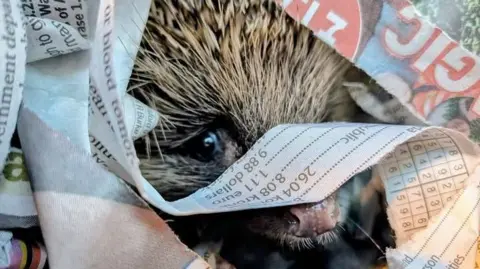
A Devon hedgehog rescue said the small animals were being washed away in flood water
Rescue centres said with winters getting "wetter and wetter" and summers getting warmer, fewer hedgehogs were having a full hibernation, leading to health issues and unfamiliar feeding patterns.
Hibernation usually takes place October/November to March/April.
Devon rescue group Prickles in a Pickle said it had received a surge of reports of hedgehogs washed from nests in the Plymouth, Kingsbridge, Ivybridge and Dartmouth areas.
Co-founder Judy Thompson said this winter had been "hard hitting" for the animals.
"They have been flooded out of their homes and at this time of year, food is scarce," she said.
"If they're underweight, or they've struggled into the winter in the first place, this is a double hard hit for them."
Some hedgehogs arriving at the rescue centre felt like "little empty bags of prickles and very, very slim" due to dehydration, Thompson said.
She said they were unable to safely drink the flood water because they could be swept away and their main food source, worms, have been flattened or dried out by the rain.
Thompson said increasing development on and near floodplains was also cutting off wildlife refuges: "Building sites are stealing habitats, leaving wildlife with nowhere to go.
"There needs to be more natural management of floodplains and drainage."
The European hedgehog is protected under the Wildlife and Countryside Act 1981 and is classified as "vulnerable to extinction" on the IUCN Red List for British Mammals.
Their numbers have fallen below one million in the UK which is down by 30% in more than 10 years, Devon Wildlife Trust said.
Thompson said: "We can't afford to lose them as fast as we are... I for one don't want to see them disappear."
 Amy Lewis
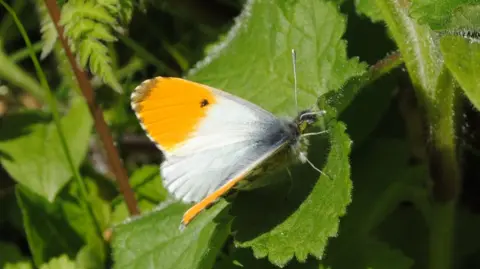
Orange-tip butterflies may be scarce this spring as extreme flooding has washed away their eggs
The true impact of the wet winter may not be visible until spring, when butterflies that usually fill hedgerows and gardens may be noticeably absent.
"A lot of butterflies will have laid their eggs last spring and summer on plant material," Hussey said.
"If the water rises and covers it, those will be lost and washed away."
Orange-tip butterflies, one of the earliest species to emerge, are among those potentially affected.
Eggs and pupae sit low on vegetation over winter, making them vulnerable during prolonged flooding.
Experts said insect losses could ripple up the food chain, affecting birds and small mammals that rely on them.
In Dawlish, Devon, two black swan nests and 10 eggs were washed away after consecutive January storms brought torrential rain and caused the brook to breach its banks.
Don Phillips, head waterfowl warden, said it was not the first time nests had been lost.
"We've had a lot worse storms, but Storm Chandra was a bad one, especially because they were nesting," he said.
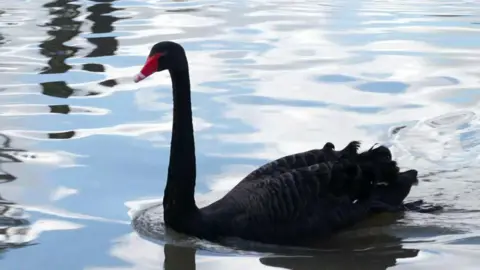
The warden said it was not the first time the nests have been washed away
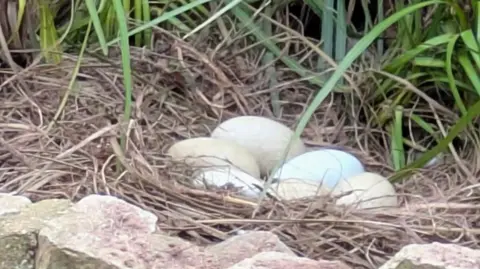
Both pairs have since rebuilt their nests in slightly higher locations and are incubating fresh clutches of eggs.
Phillips hopes the improved sites will protect them if more wet weather arrives.
 Lorraine
Don Phillips said the new nesting sites were in higher positions than the previous ones
The Met Office said this season for Cornwall, Devon and Dorset ranks in the top five of the wettest winters since records began.
Parts of Cornwall and Devon have seen rainfall totals reach about 150% of the long-term average.
While heavy winter rain is normal for the region, Prof Dave Hodgson - an ecologist at the University of Exeter's Cornwall campus - said the volume and persistence this season felt "a bit apocalyptic".
High winds and saturated ground have also toppled trees, removing nesting cavities for birds and burrows for mammals such as badgers and rabbits.
BBC South West broadcast meteorologist Bee Tucker said there were reasons to be optimistic about the weather.
She said: "This week is likely to see more rain towards the tail end but the next few days should see some much needed drier and brighter weather, with maximum temperatures hitting more 'spring like' values of 13-16 degrees."
 University of Exeter
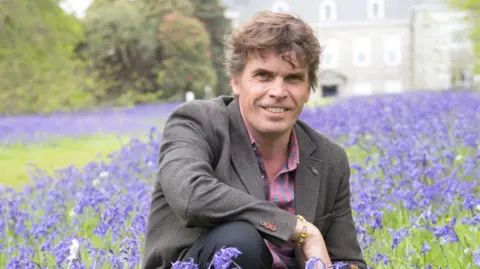
Prof Dave Hodgson said wildlife mortality should be a "wake-up call" to create more flooding defences
"It's inevitably going to wash away butterfly eggs, remove nesting sites and disrupt underground breeding areas," Hodgson said.
However, he believes many species can cope – but only if they have a way out: "A lot of wildlife is able to escape from floods and rainfall, but only if it has the opportunity to do so."
Hodgson said: "Wildlife have relatively simple needs, they're much like people, they're looking for shelter, food, safety from disease and predators and breeding opportunities."
He said the winter should be a "wake-up call" to create more natural flood defences and wildlife-friendly escape routes - higher ground, connected green spaces and undisturbed vegetation can give animals places to retreat during storms.
Hodgson said human infrastructure in the South West had not been designed for this level of sustained rainfall.
Flooding can trigger sewage releases into rivers and estuaries, threatening wildlife with disease and toxic water, "exaggerating the number of wildlife death events".
What can be done to help wildlife?
- Link gardens to create escape routes for small mammals
- Put out fresh water for hedgehogs- and report sightings in the day times
- Leave leaf piles and sheltered spots for insects
- Avoid using slug pellets and chemicals in saturated soil
- Report stranded wildlife to local rescue services
Based on climate change models more intense rainfall, storms and flooding are expected in future winters, Hodgson said.
"We need to pay attention to climate change predictions and how we can mitigate these weather events through changing the way that we use the natural environment," he said.
"It's about working with the natural environment – reducing waste, influencing how water and drainage are managed, and ensuring everything operates more sustainably with less impact on biodiversity."
Hodgson said: "It's not just the wildlife charities to solve this, it's on every person to solve it by treading more lightly."




 English (US) ·