.png)
 1 hour ago
26
1 hour ago
26
What Sadiq Khan would most like you to know about his now-famous “pink” elephant Chanchal is that it was age, and not the paint, that killed her in February this year — even as a video of the animal has sparked abuse allegations.
Over the past few days, mahout Khan — and Chanchal — from near Amber Fort in Jaipur have been at the centre of a row after a video showed a pink-coloured model seated atop the similarly coloured elephant just outside the fort walls, sparking allegations of animal abuse. Posted in December by Russian photographer Julia Buruleva, the clip gained traction over the last month and drew strong reactions, both of which intensified after news of Chanchal’s death — months after the photoshoot — became public.
However, Khan, who was offered Rs 2,500 for the photoshoot, denies allegations of abuse, claiming that the 70-year-old Chanchal died of age-related heart-related ailments. “It was organic dry gulaal,” Khan says. “Six months ago, a photographer passing by spotted us on the road and asked us for a photoshoot. We allowed it. She used dry gulaal colour to paint the elephant and the shoot was over in 15 minutes. There was no chemical involved… The postmortem conducted by the forest department also said the death was caused by a heart problem.”
Buruleva, too, has said the colour used was organic. In an Instagram post on February 18 — nearly two months after first sharing the video — she said: “To anyone concerned about the elephant—we used organic, locally produced paint, exactly the kind that locals use during festivals; therefore, it was completely safe for the animal”.
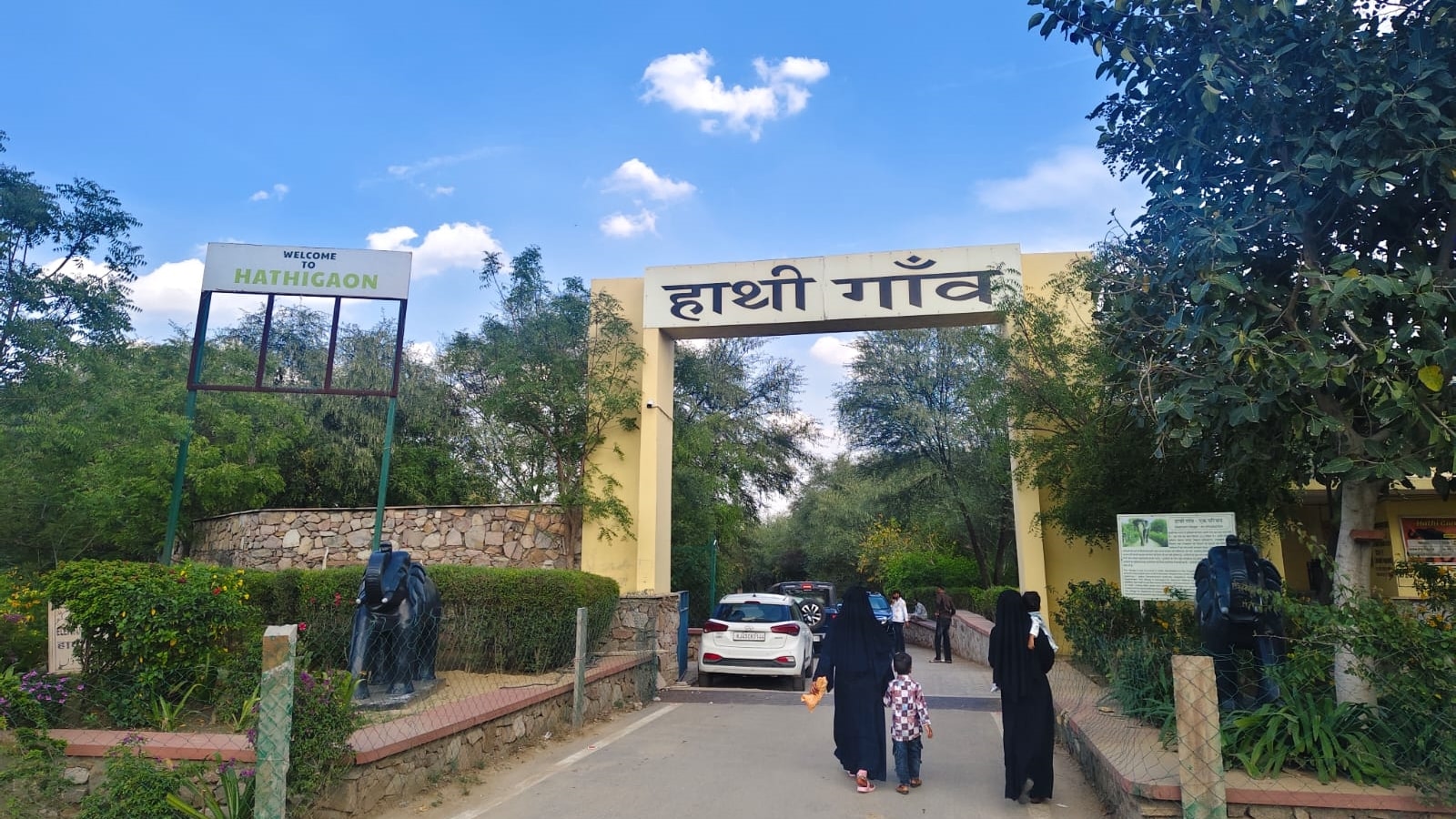 The 70-year-old Chanchal was once part of a herd of 76 elephants at Hathi Gaon that ferried tourists up a steep 4-km concrete path to the fort but retired five years ago.
When contacted, the forest department declined to comment. However, despite the denials of Khan and Buruleva, the department appears to be taking the allegations seriously. An official, speaking on condition of anonymity, said a committee has been set up to inquire into the elephant’s death.
The 70-year-old Chanchal was once part of a herd of 76 elephants at Hathi Gaon that ferried tourists up a steep 4-km concrete path to the fort but retired five years ago. Since then, she has primarily been engaged in offering elephant rides to tourists within Hathi Gaon.
Chanchal died in February. On March 30 — after the death of the elephant became public knowledge — Buruleva, while condoling the death, reiterated her claim that no harm was done to the elephant.
Watch here:
“The shoot was brief, supervised, and used safe, non-toxic paint. The elephant was calm and comfortable throughout. In Jaipur, decorated elephants are a visible part of the cultural landscape — I saw them throughout the city, on the streets and in everyday life. I’m not here to promote or justify these practices — I’m reflecting a reality I observed,” she said.
Story continues below this ad
The post added: “I’ve also seen claims that the elephant has recently passed away. If that is true, it’s very sad the shoot took place several months ago and could not have had any impact on this. I am not connected to that in any way”.
As the row escalated, animal welfare group People for the Ethical Treatment of Animals (PETA) alleged that elephants used for rides at the fort are “often kept chained and controlled with weapons, causing severe physical and psychological distress”. Actor Rupali Ganguly, a PETA member and BJP activist, wrote to Prime Minister Narendra Modi seeking his intervention.
“This incident has upset people across India and beyond, reflecting how strongly the public now feels against elephant exploitation,” Ganguly wrote. “On World Wildlife Day, you shared the importance of wildlife protection. It is in this spirit, I respectfully urge that India end all elephant rides as Indonesia has now done, and that robotic elephants, decorated electric vehicles, and other non-animal alternatives be encouraged for use to protect our national heritage animal from use in cruel spectacles”.








 English (US) ·