.png)
 2 hours ago
22
2 hours ago
22
When Boris Johnson resigned as the British prime minister in 2022, he explained that the politicians who had once loyally supported him had turned against him.
This had sealed his fate. “The herd instinct is powerful and when the herd moves, it moves,” he said.
The same question is now being asked about Keir Starmer, prime minister since 2024, when his Labour party won a huge majority at the general election.
The resignation over the weekend of his closest aide was just the latest in a series of calamities that have befallen his government over the last 18 months.
As a result that political herd is definitely restive and frustrated. But it has not moved against Starmer en masse. Yet.
The consensus among most political pundits – including those who write for the Guardian – is that Starmer’s tenure as prime minister is coming to an end.
Many members of parliament in his own party agree, but few have dared to say so publicly.
That changed on Monday afternoon when the leader of the Labour party in Scotland, Anas Sarwar, became the first heavyweight figure to call for him to go.

“The distraction needs to end and the leadership in Downing Street has to change,” he said.
Nobody followed Sarwar’s lead and within an hour, pretty much all of Starmer’s colleagues in his cabinet of senior ministers declared he should stay; it looked like a coordinated attempt to shore him up.
The prime minister’s position is nonetheless quite perilous.
Morgan McSweeney, his chief of staff who resigned on Sunday, is not a household name around the world. Or even in Britain. His importance, though, is unquestionable.
He is a political strategist who has been credited with catapulting Starmer into power. He identified him as a potential leader of the Labour party, he was responsible for devising the plan for Labour’s landslide win at the general election.
He has been Starmer’s main ally and consigliere in government. Think Simon without Garfunkel, Starsky without Hutch. Wallace minus Gromit. They were that close.
Starmer is now more isolated than ever. It may seem odd, but the reason McSweeney quit, and why Starmer is under such intense pressure, is a direct consequence of the release of the Epstein files.
In the millions of documents, reporters have found emails and details that made clear another prominent British politician, Peter Mandelson, had been very close indeed to Epstein.
Mandelson was until September last year the UK’s ambassador to the United States. As details emerged of his association with Epstein last summer, Mandelson resigned.
In the months since then, Mandelson has insisted he has nothing to apologise for, and said he was only on the outer fringes of Epstein’s circle of friends.
The last tranche of documents released 10 days ago suggests his description was far from the truth; in fact, they two men were very close. So close that in 2008, when Mandelson was a senior member of the previous Labour government, he allegedly shared with him market-sensitive secrets.
An embarrassing friendship underplayed has blown into a crisis in which the words “treason” and “betrayal” have become common currency.
The British historian Anthony Seldon has described the revelations as possibly the UK’s worst political scandal.
And the fingers of blame are wagging hard in the direction of those who appointed Mandelson in the first place. That buck stops with Starmer – ultimately, it was his call. But McSweeney advised him to do so, and that is the reason he gave for resigning.
“The decision to appoint Peter Mandelson was wrong,” McSweeney said in his statement on Sunday.
“He has damaged our party, our country and trust in politics itself. When asked, I advised the prime minister to make that appointment and I take full responsibility for that advice.”
Supporters of the prime minister hope that the resignation will buy him some time to reset his government.
His critics, though, point out that the last line of defence has just been removed – and it is just a matter of time before Starmer has to go too.
There is a another factor to consider: the Guardian’s political editor, Pippa Crerar, points to a more personal element in the story.
She notes that one consistent theme of his career – as a lawyer before he became a politician, and as a politician in and out of government – has been the defence of women against predatory and violent men.
The Epstein scandal will have hurt him, and his current anger may well turn to remorse, which in turn could make him question his position.
If he is minded to keep going, there are forces that could hold him in place a while longer.
There is no obvious heir in Britain’s Labour party. Angela Rayner, once deputy prime minister, is thought of as a potential candidate from the left. But she had to quit Starmer’s cabinet over her complicated tax affairs – which remain unresolved.
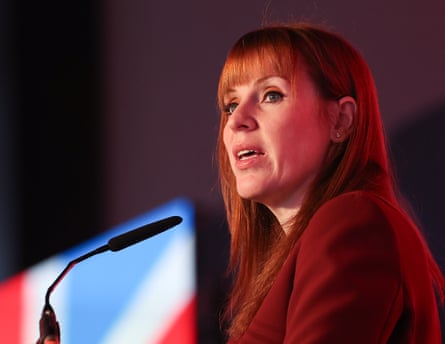
Wes Streeting, who is in charge of the Department of Health, is a potential candidate from the right. An accomplished speaker, he is still a divisive figure in British politics.
Could either of them unite the Labour party if Starmer quit? And would they be any better as prime minister of a country that seems fed up with the endless dramas, resignations and scandals of the last Conservative government?
If Starmer lasts until May, then his fate may well rest on the results of elections to the devolved Scottish and Welsh parliaments, and to councils across England. If Labour does really badly in those elections, then the pressure on Starmer may become intolerable.
His leadership rivals could finally raise their hands. The herd could move.





 English (US) ·