.png)
 1 hour ago
18
1 hour ago
18
If you’ve heard “Jaiye Sajana” from Dhurandhar 2, and chances are you have, you already know the voice. What you may not know is the story behind it. Jasmine Sandlas, born in Jalandhar and raised in California, has been in the music industry for nearly two decades. Over a hundred songs, four albums, and Bollywood hits like “Yaar Na Miley” and “Taras” to her name. But behind the career is a story she doesn’t often tell — of immigration, family struggles, loss, and why she almost gave up on music more than once.
Jasmine was in 8th or 9th standard when her family left Punjab for the United States. Her father had been a law school valedictorian with a powerful, well-respected job back home. None of that carried over.
“We landed in New York. I didn’t speak English. Whatever was the local school, my father got us admitted there. We used to live in a one-bedroom apartment which was a low-income home, and we were 6 people,” she told Ranveer Allahbadia on his podcast.
Her father’s first job in America was at a gas station. Her mother, who had been a teacher in India, worked at a factory and picked cherries. The family survived on food stamps.
“I remember sitting with him in the snow and he had no shoes on. When I asked him, he told me that snowshoes are very expensive. He sacrificed his whole life for us. He left a high-paying, well-respected job in India to give me and my siblings a better life.”
Things gradually improved when the family moved to California and her father re-entered the legal system as an interpreter.
ALSO READ: ‘He healed me from pain he didn’t cause’: Rashmika Mandanna-Vijay Deverakonda’s beautiful love story
Story continues below this ad
Growing up between two worlds
For Jasmine, those teenage years in America were disorienting in ways that went beyond just culture shock.
“From age 13 to like 18, I had no idea what was happening in my life. Itna kuch chal raha tha. We were struggling in more ways than one,” she said. The family was adjusting to a new country, a new language, and a completely different life, all while packed into a small shared space. It took five to six years to find their footing.
Through all of it, music was the one outlet she had. “At 12, 13, I used to sing shabads at the gurudwara. Uss time koi music nahi tha meri life mein — the only time I could sing was shabads at the gurudwara.”
 (Photo: Instagram/Jasmine Sandlas)
Story continues below this ad
She also speaks honestly about the emotional environment at home. Her parents were under enormous pressure, and that pressure filtered down to the children. “Parents are not emotionally regulated. It is a lot for them too, but it is really a lot for children growing up in that. We were just kids. We needed guidance, protection, and nourishment.”
When her parents didn’t believe in her music
Jasmine’s parents weren’t exactly encouraging when it came to her singing ambitions. Her mother called it a good hobby. Her father was direct — music was not a viable career.
“I asked my parents to give me six months. If I make it, good — otherwise I will quit,” she said. She didn’t make it that time. She didn’t quit either.
Success, loss, and a difficult few years
In 2014, “Yaar Na Miley” from Salman Khan’s Kick made Jasmine a household name. Co-written with Yo Yo Honey Singh, the song was one of the biggest Bollywood hits of the year. She had finally arrived.
And then her father passed away.
Story continues below this ad
“Yaar Na Miley was the biggest hit at the time, and I lost my dad. My whole family fell apart. We could never find an anchor again,” she said. “My father was a silent type, a good righteous man. He was the anchor. When he left, hum sab bikhar gaye. We are still trying to gather the pieces. It’s been more than ten years. I miss him. I want to celebrate success with him.”
The grief, combined with family dynamics falling apart and the sudden fame, led her to a difficult period. She has spoken about drinking during those two to three years. “A lot of things piled up — I was famous, I was feeling certain things, my family broke apart, my father was no more. I drank more than I should have, and I regret it — but it was important for me at that time,” she said plainly.
Her relationship with alcohol had deep roots. Her father drank, and she had spent years swearing she never would.
“There are two things that happen when you have a father who drinks — either you become one, or you say I can’t ever do this. So I did both.”
Story continues below this ad
Picking herself back up
Even through the low points, Jasmine never completely stopped making music. The late 2010s brought a new creative chapter – “Illegal Weapon” and “Sip Sip” with Garry Sandhu and producer Intense became massive hits, later finding their way into the Bollywood film Street Dancer 3D. In 2020, she released her album What’s in a Name on her father’s birthday.
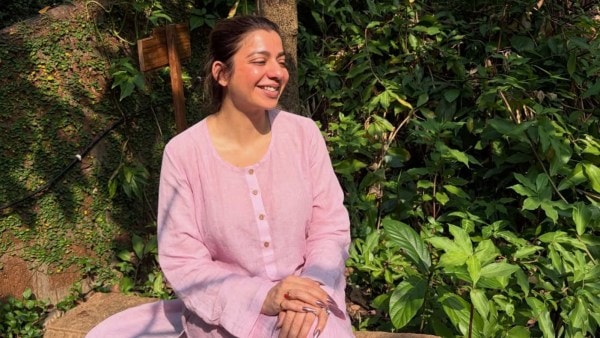 Photo: (Instagram/Jasmine Sandlas)
But she is honest that success didn’t come easily or quickly. “Musical journey has been colourful and with ups and downs. Mujhe success bohat late mili. Many times I felt like — maybe my parents are right, maybe I should keep this as a hobby. But kuch na kuch hope milti rehti thi. And I kept going.”
In 2023, she was inducted into the Women Songwriter’s Hall of Fame. She runs her own label, Jasmine Sandlas Records. And in 2025, she released POLS, calling it a rebirth in her artistic journey.
Then came “Jaiye Sajana” — recorded at 4 AM, exhausted, with almost no time left on the session. It went viral.
Story continues below this ad
Still here
Jasmine once prayed for just one year of success. One year to see what the view looked like from the top.
“I used to pray that I get success in life for just one year. I just wanted to see the view from the top. And I got that year,” she said.
She got more than a year. She got a career built entirely on her own terms.
This article discusses personal experiences with grief, family loss, and past struggles with alcohol as part of a reflective life story. While these narratives offer an intimate look at the artist’s journey, they are shared for informational and storytelling purposes rather than as professional or advisory guidance. If you are experiencing distress or dealing with similar emotional challenges, reaching out to a qualified professional or a support network is encouraged.





 English (US) ·