.png)
.png) 2 hours ago
25
2 hours ago
25
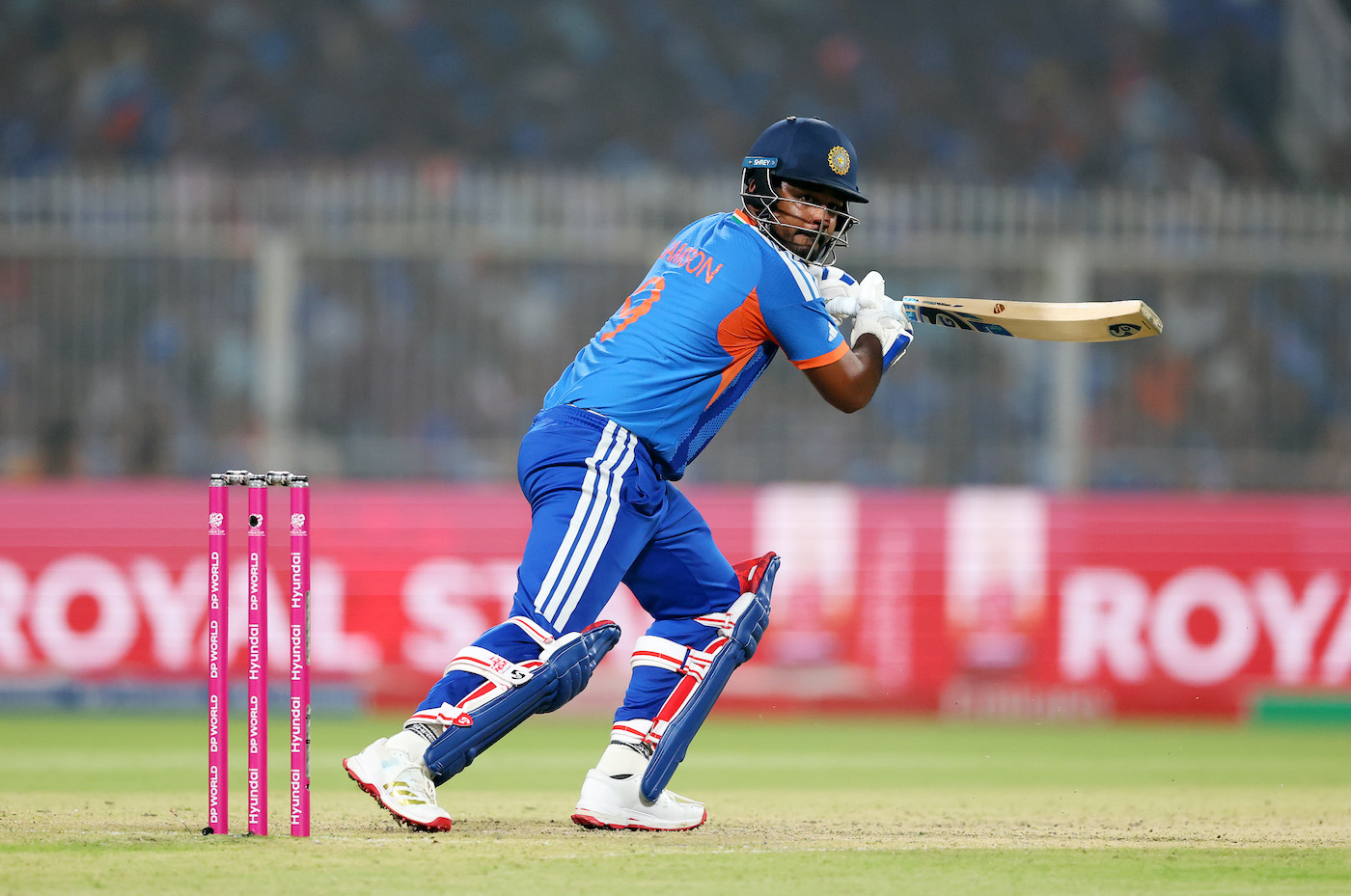
Like an ensemble cast movie, India had a variety of heroes in the tournament. At the start, Ishan Kishan, Suryakumar Yadav and Varun Chakaravarthy were the chief protagonists; Tilak Varma, Hardik Pandya and Arshdeep Singh took turns. In Eden, Sanju Samson would be extolled as the night’s star for his career-defining knock that took past the finish line.
The title defence, so far, has not been flawless. India spilled three catches; Abhishek Sharma is yet to hit the higher gears; Varun has been subdued. Yet, Surya has this one man cheat-code of all fickleness of form and format, which is Jasprit Bumrah. A common thread in all of India’s highs in this tournament has been Bumrah.
In Eden, too, it all began with him. A sudden, irresistible flow of energy emitted from the stands when Bumrah retraced his run-up again, at the start of the twelfth over. Shimron Hetmyer had just dismantled the crowd favourite Varun; Pandya was unusually bland. Suryakumar turned into his biggest match-winner. Hope buzzed and anticipation soared.
The move was probably two-pronged. It could have been a match-up call. He has nailed Hetmyer five times in nine meetings; India frantically needed a wicket to choke West Indies from hitting carnage mode. Irrespective of formats, no one has answered the captain’s call more than Bumrah. He is the shining jewel of India’s greatest captain. He was Virat Kohli’s tour de force in India’s maiden Test series victory in Australia; he was Rohit Sharma’s prize-horse in the 2024 T20 World Cup triumph; he is, with ridiculous predictability, Surya’s jack among the pack in this World Cup. Not a game has passed without his sleight-of-hand imprint. He has that rare and innate ability to influence the game at the most opportune moment.
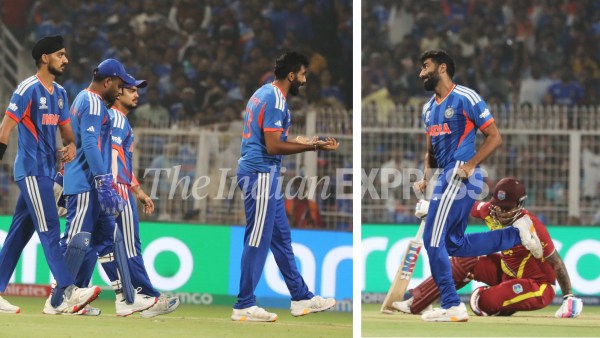 Jasprit Bumrah broke West Indies’ momentum by picking two wickets in the 12th over. (Express Photo by Partha Paul)
The West Indies were bouncing with newfound freedom. Eleven overs after India had inserted them on a ground that bled of runs, they had laid the base to build the mansion. They had just clanked the gears from fourth to fifth, the last two overs had cost 30 runs and rocketed West Indies to 99 for 1. Then Bumrah came, and then he struck. Two routine, sting-less slower-balls later, he stoked a hard-length beast, screaming away from the left-hander and rushing him to an ill-conceived heave. An inch shorter, or a yard slower, the ball would have whistled into the upper tiers. Hetmyer has lightning fast hands and is unafraid of bounce. But Bumrah’s precision bound him in unshakable chains. The reflexes were not attuned to face the sudden spurt of pace. It was the fastest ball of his over replete with cutters.
A slower-one brute would soon arrive. Roston Chase was committed into a slash outside the off-stump and could not freeze-frame. His mind could process the danger but his body could not stagger itself. The ball jumped on him, like a pinball and he ballooned off the splice. As Suryakumar completed the catch, Bumrah roared. In his first over, Chase had scooped him for a four. Bowlers are unkind to such slights.
Story continues below this ad
This was a ball worthy of a place in his glorious album of slower balls. Most bowlers have a favourite length to bowl their slower-ball. Bumrah has no such favouritism. He is a master of all. The Shaun Marsh pearler was totally full; the Ryan Rickleton was on the good-length side; the Chase blinder was more just shorter than good length. Chase, who was well-set, ended with both feet in the air.
QUICK COMMENT | India’s decision to hold back Bumrah and Varun, fetches mixed results, as wickets don’t stem run flow
Bumrah’s action is made for slower balls, just as it is made for shoe-crushing yorkers. The run-up is short, whereupon the body explodes into the action. The elbow is hyper-extended. The natural release is in front of his body, which means he’s releasing the ball from six-seven inches closer to batsmen than most bowlers. All these chains of inter-related actions and quirks mean the batsman is crunched for reaction time to decode the change of pace.
The Bumrah slower ball forces a batsman to react against his own muscle memory. A batsman when facing a 145kph bowler is trained to react in less than 0.4 seconds, the time it takes for a ball’s journey across the pitch. But when the ball turns out to be much slower, the fully focused batsman has to realign himself.
Story continues below this ad
The two-wicket over put a speedbreaker on West Indies’ ambitions. The run-rate quietened. The next three overs cost only 22 runs. West Indies lost their impetus. They did pull things back in the end, but the twin-wicket was the difference between India being tasked to chase 196 and not a 200-plus total. Bumrah was slowly whittling down West Indies’ chances in the game. He would do so at the death too. He yielded 22 runs in his last two overs, but conceded only three boundaries and a six achieved with extreme risk. Rovman Powell and Jason Holder swung their bats wildly, but could not manage any meaningful connection on most deliveries.
Years later, when the match is revisited, it would be remembered for Sanju Samson’s exploits, a steep chase completed, the sixes and fours India hit, Bumrah’s numbers (4-0-36-2) would seem nothing special. But the Eden crowd would fondly remember the 12th over and the flow of energy he brought. They would chorus, it all began with Bumrah.




 English (US) ·