.png)
 4 hours ago
25
4 hours ago
25
4 min readKeralaFeb 8, 2026 05:50 AM IST
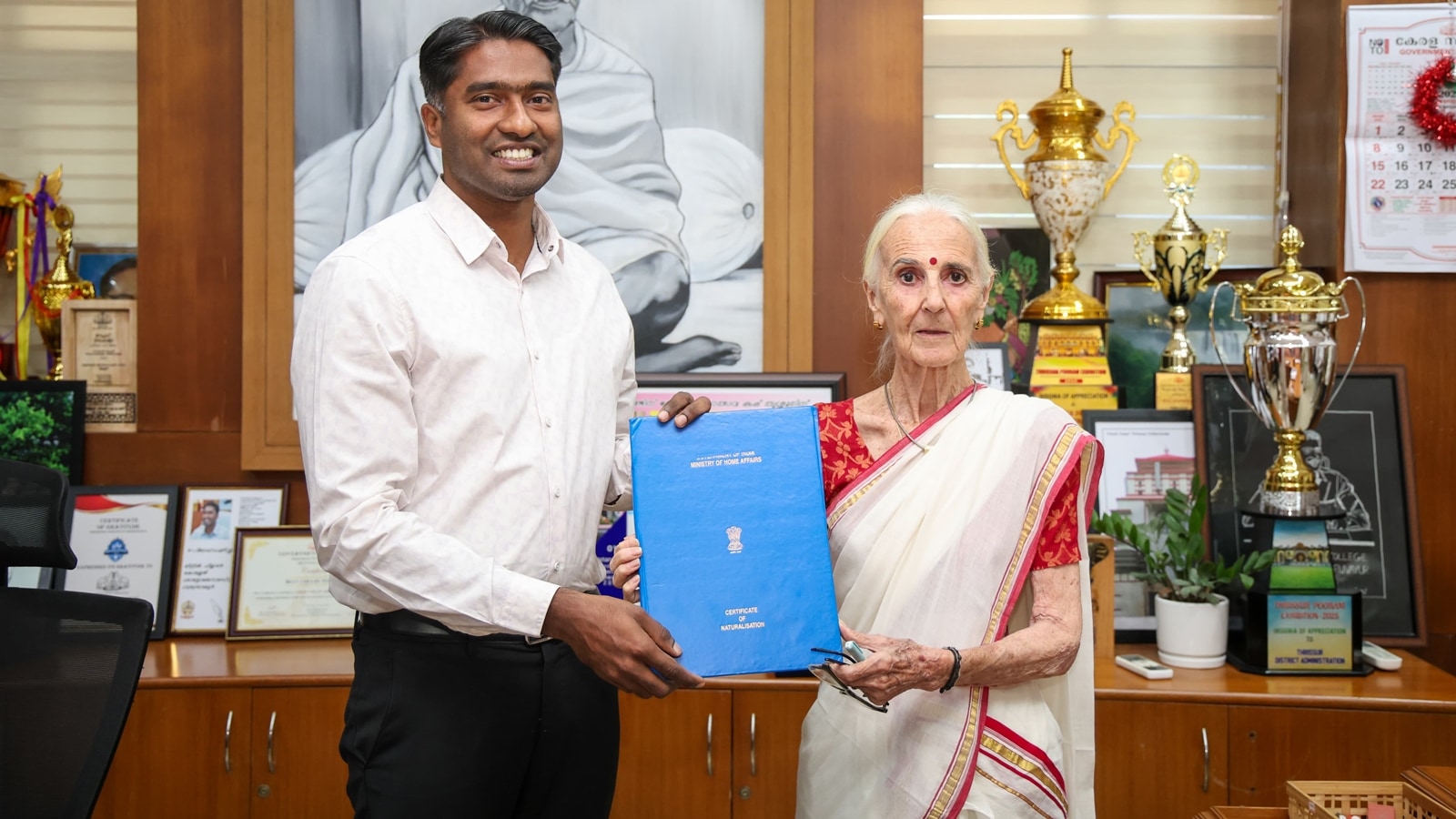 Pepita was awarded the Padma Shri in 2012 in recognition of her contribution to Kerala’s culture. (Image: IEMalayalam)
Known among the Theyyam communities of Kannur and the Guruvayur temples as “Anna Amma” (elephant mother in Malayalam), Pepita Seth, Britain-born photographer-author received her Indian citizenship in Thrissur on February 6. Having made Kerala her home for nearly 50 years, this was a natural move, prompted by friends and those who knew her. “I liked being here, especially in south India and I could do things which were interesting to me and didn’t take anything away from anybody here,” says the 84-year-old.
Pepita’s India journey began when she decided to use her great grandfather Leonard Howard Loyd Irby’s diary as a map. Irby was on a ship headed to China, when they turned course because they heard of the Indian mutiny in 1857. His diary clocks his time from Calcutta to Lucknow. That’s how Pepita Christian, born to Victor Ramsay and Christian Geraldine, travelled to India for the first time, where she visited Mumbai, Kolkata, Lucknow and Varanasi. On her second visit in 1972, serendipitous meetings brought her to Kannur where she was captivated by elephants and temple dances, which melded folk stories with traditions of a people she began to call her own.
“The first time I saw Theyyam, they wouldn’t allow me to take photos. But once they realised I came with the same kind of devotion and sincerity they had, they invited me to stay with them. The dancers are from lower castes but when they wear the costume and makeup, they enter a revered space where they can be critical of the higher ups and there’s no comeback,” says Pepita. Out of these experiences came her many books, including ‘In God’s Mirror: The Theyyams of Malabar’ (Scala, 2023) and ‘The Divine Frenzy: Hindu Myths and Rituals of Kerala’ (Westzone, 2001).
During her stay in India, Pepita met her partner and actor Roshan Seth, known for his portrayal of Jawaharlal Nehru in Richard Attenborough’s 1982-film Gandhi. Though separated now, Pepita continues to live in Thrissur. She was awarded the Padma Shri in 2012 in recognition of her contribution to Kerala’s culture.
She recalls how elephant owners from Wadakkancherry, Thrissur, would visit the Sonepur Mela in Bihar, to buy elephants for the temple festival. “Now, of course, it’s illegal, but in those days it was an annual fair. The locals thought that the Malayalees were crazy for wanting to buy these expensive elephants because they wanted huge ones. And you can make an elephant stand in such a way that it looks much bigger than it is. But the Malayalees knew better. They would come with measuring tapes and measure the foot of the elephant. The circumference of its front foot is about twice the height of the elephant. A Malayalee knew how to buy an elephant,” says Pepita.
Her photographs are insights into a metaphysical world, the metamorphosis of man becoming God through the centuries-old dance of Theyyam. Scarlet faces, intense eyes and dervish swirls of the dancer, sometimes with a 21-foot headdress, bring alive a time-tested ritual where one can almost hear the clanking of the chest plates and the clinking of the shells and beads. In her Gurvayur photos, one sees the glow of the temple lamps against the stark white dhotis of prostrate devotees, an elephant, larger-than-life, leading a multitude in worship.
“Kerala always felt like home. I remember I was all of 10 or 11 years old when a farmer told me, “You will one day go to the city to earn. But remember, what’s in the earth is in the earth, even when it gets forgotten,” she says.







 English (US) ·