.png)
 2 hours ago
16
2 hours ago
16
Good morning. Over the weekend the US and Israel launched a series of attacks on Iran that resulted in the assassination of Tehran’s supreme leader, Ayatollah Ali Khamenei – a move that dramatically raised the stakes in their long-running conflict.
The assassination of a serving supreme leader is an extraordinary act – one that signals not containment, but confrontation. Retaliatory strikes by Iran have already spilled the conflict far beyond its borders, drawing a host of regional powers into the fray. Iranian president, Masoud Pezeshkian, the judiciary chief, Gholamhossein Mohseni Ejei, and senior cleric Alireza Arafi will reportedly lead Iran in the transitional period following Khamenei’s death.
In today’s newsletter we look at how the attacks unfolded, what the response has been, why the US and Israel chose to strike at this moment, and what the longer-term consequences may be for the region and, indeed, the world. First of all, the headlines.
Five big stories
-
Iran | Donald Trump said on Sunday he was prepared to talk to what was left of the Iranian leadership in the wake of the killing of the country’s supreme leader by US-Israeli air strikes aimed at overthrowing the regime.
-
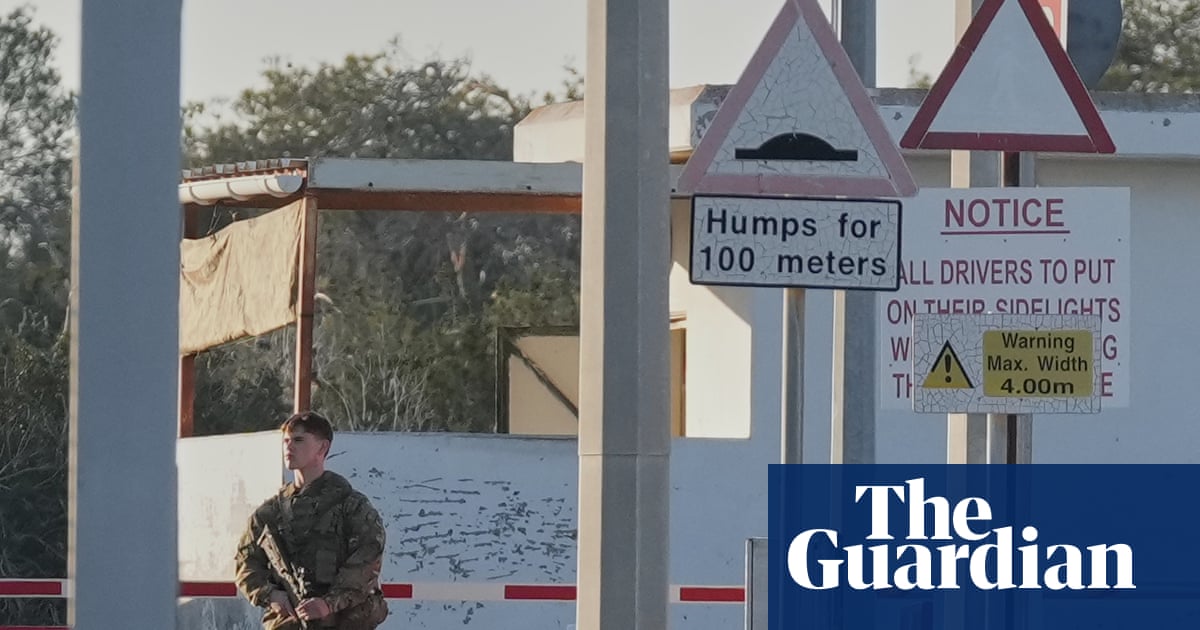
British military | The UK’s RAF Akrotiri base in Cyprus was hit by a suspected drone strike, causing limited damage and no casualties, Cypriot authorities and the Ministry of Defence (MoD) said.
-
Immigration | Shabana Mahmood has ripped up the government’s asylum rules so that from Monday every refugee will be told that their status is temporary and will last just 30 months.
-
UK politics | The Green party said its membership had passed 200,000 in the wake of its victory in the Gorton and Denton byelection, in which it overturned a huge Labour majority.
-
AI | Datacentre developers are facing pressure to reveal whether their projects will increase the UK’s net greenhouse gas emissions, amid concerns the sites could double national electricity demand.
In depth: ‘Grave consequences for civilians and regional stability’
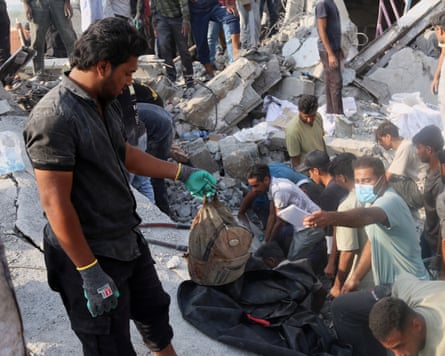
Few events reshape a region overnight. The killing of Ali Khamenei may prove to be one of them – removing the man who embodied Iran for more than three decades and opening an uncertain struggle over what, and who, comes next.
Who was Ayatollah Ali Khamenei?
An 86-year-old at the time of his death, Ali Khamenei was a revolutionary who rose from the prisons of the shah to become Iran’s supreme leader in 1989. He spent more than three decades consolidating clerical rule at home while projecting power abroad, arming and funding groups such as Hezbollah and Hamas to engage Israel, and decrease US influence in the region.
Publicly, he forswore weapons of mass destruction and allowed the 2015 nuclear deal to proceed, but he was sceptical of rapprochement with Washington and backed proxy warfare in Iraq and beyond.
In his final years, economic crisis, domestic unrest and Israeli military pressure eroded the regional network he had built. The first months of 2026 had seen large scale protests in Iran met with a severe crackdown, with authorities saying about 3,000 people were killed, but Washington-based human rights organisation HRANA claiming twice as many had died, while others estimated closer to 30,000.
How did the attacks unfold?
The operation began before it was formally announced.
A swarm of US Tomahawk missiles and Israeli fighter jets struck hundreds of targets across Iran in what Israeli officials called Operation Lion’s Roar – a campaign aimed at “degrading the regime’s capabilities” and, in Trump’s words, triggering regime change.
Strikes hit intelligence headquarters, ballistic missile sites, Revolutionary Guards facilities and the homes of senior officials across at least 14 cities. Satellite images later showed heavy damage to Khamenei’s compound in Tehran. Iranian state media confirmed Khamenei had been killed, along with several senior military figures including the armed forces chief of staff and the head of the Revolutionary Guards. Israel claimed at least 40 Iranian “commanders” were killed in the opening strikes.
Civilian casualties mounted rapidly. Iran’s Red Crescent reported more than 200 people killed and hundreds injured across 24 provinces, and nearly 150 people were reportedly killed in a strike on a girls’ school in Minab in the south-east. Hossein Kermanpour, the spokesperson for Iran’s health ministry, said on social media “God knows how many more children’s bodies they will pull from under the rubble.”
What has been the response?
The response was immediate – and spread across the region. Within hours, waves of Iranian missiles and drones were launched at Israel and at US bases across the Gulf – including in Qatar, Kuwait, the United Arab Emirates and Bahrain – dramatically widening the conflict. Explosions were reported in Tel Aviv, Doha, Dubai and Manama. A residential building in Tel Aviv was hit, killing one person and injuring more than 20. In the Gulf, drones and missiles struck airports and high-rise buildings; the UAE said it intercepted most of the 137 missiles and more than 200 drones fired at its territory.
Air raid sirens sounded repeatedly across central Israel, while residents in Tehran fled parts of the capital as smoke rose above the skyline. In Lebanon and Iraq, people queued at petrol stations and airports as the region braced for further escalation. Within hours, what had begun as a joint US-Israeli strike on Iran had expanded into a confrontation stretching across much of the Middle East. The travel plans of hundreds of thousands of people were disrupted as airlines scrambled to cancel flights amid security fears. Overnight, a suspected Iranian drone strike hit the RAF Akrotiri airbase in Cyprus, and Israel launched strikes on Lebanon’s capital, Beirut, after Hezbollah fired missiles across the border.
Secretary-general António Guterres told the UN security council over the weekend that the US and Israeli airstrikes violated international law, including the UN Charter. He said everything must be done to prevent an escalation. “The alternative,” he warned, “is a potential wider conflict with grave consequences for civilians and regional stability”. He also condemned Iran’s retaliatory strikes.
The Russian president, Vladimir Putin, sent his condolences to the people of Iran, saying their leader had been killed “in cynical violation of all norms of human morality and international law”. Iran has been supplying weaponry for his full-scale invasion of Ukraine.
But allies have not been keen to distance themselves too far from Washington. The UK defence secretary, John Healey, said few will mourn Khamenei, describing the Iranian regime as “evil” and saying that it was “for the US to set out and explain” whether its action was legal. He said UK military planes were active in the Middle East in order to protect British citizens and interests across the region.
What next for Trump, Israel and Iran?
For Trump, the assassination of Khamenei comes just months after he was awarded Fifa’s inaugural peace prize, and shortly on the heels of his administration seizing Venezuela’s president Nicolás Maduro.
He is, of course, the US commander-in-chief, but not – as much as he might think it – a king who can act unilaterally. The 1973 War Powers Act requires consultation with Congress and imposes a 60-day limit on unauthorised military engagements. Chuck Schumer, the Democratic leader in the Senate, has called for Congress to reconvene.
In December 2016 the then president-elect Trump had said “We will stop racing to topple foreign regimes that we know nothing about, that we shouldn’t be involved with”. It remains to be seen how his supporters respond to this latest volte face.
In Israel, Benjamin Netanyahu can add the killing of Iran’s supreme leader to a series of high-risk military operations since the 7 October attacks – including strikes on Hezbollah in Lebanon and the repeated targeting of Iranian commanders and assets across the region. Facing ongoing corruption charges at home, Netanyahu has long argued that confronting Tehran is a matter of national survival. Critics say the escalation also reshapes his domestic political landscape.
With Khamenei’s death at the hands of the US and Israel, his predecessor Ayatollah Ruhollah Khomeini remains the only Iranian leader in nearly a century to have died peacefully at home rather than in exile or by violence.
Iran has faced repeated waves of domestic unrest. While many younger Iranians openly despise the clerical establishment, regime change imposed from outside carries its own risks in a country where foreign interference remains a powerful historical grievance. And history in Iraq and Afghanistan should teach us that US-imposed regime change in the Middle East rarely runs smoothly.
From the Mediterranean to the Gulf and across Iran’s eastern frontier, governments and civilians alike are holding their breath – watching to see whether this latest chapter in a generations-long US-Iran conflict burns out or burns wider.
What else we’ve been reading
-
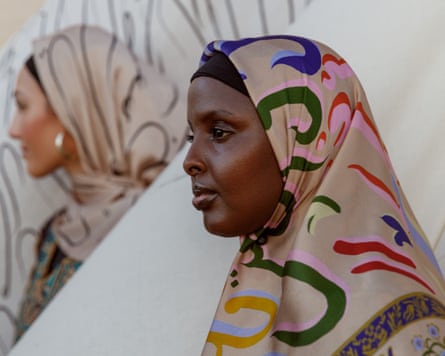
I enjoyed this timely piece by Sundus Abdi on the rise of the new bold, patterned headscarves, written for our Fashion Statement newsletter. Katy Vans, newsletters team
-
As if the actions of the US regime weren’t worrying enough, Matthew Cantor looks at how the language of “incel” culture has bled into the Maga mainstream. Toby Moses, head of newsletters
-
TMI? Or not enough? This thought provoking piece by Leslie John on the benefits of sharing things that matter to us, reveals some valuable insights in what it means to be a happy human. Katy
-
There’s a lot going on, so you’d be forgiven if you’d forgotten that Rachel Reeves is in the midst of preparing her Spring statement – but fear not, Heather Stewart can guide us through what to expect from the chancellor on Tuesday. Toby
-
Anyone watching the C4 docudrama Dirty Business, will not be shocked that the water industry gets to mark its own homework, with a large rise in downgrades to pollution incidents based on water company evidence alone. Katy
Sport
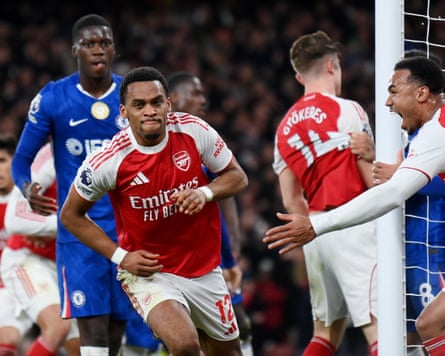
Football | Arsenal have extended their lead at the top of the Premier League to 5 points after beating Chelsea 2-1 thanks to goals from Jurriën Timber and William Saliba. Tottenham lost at Fulham 2-1 meaning they slip even further towards the drop zone. Meanwhile Manchester United are riding high in 3rd place after their 2-1 win at home against a 10-man Crystal Palace.
Rugby league | Hull KR may be rugby league’s new world club champions but they got soundly beaten by Leeds Rhinos in Las Vegas, losing by 52 points.
Formula One | This coming weekend a new era will begin in Formula One as a major shift in regulations brings with it an air of unpredictability. Read our ultimate breakdown of the new rules.
The front pages
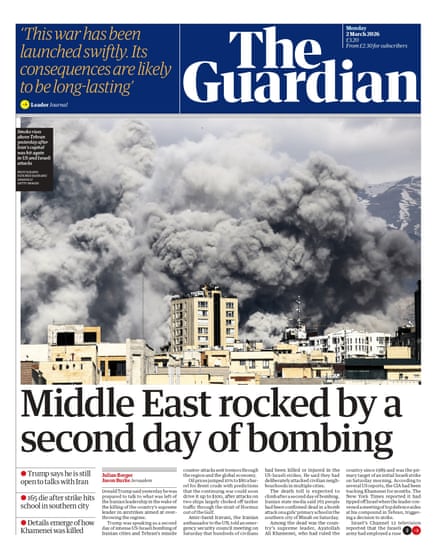
“Middle East rocked by a second day of bombing” is the Guardian splash. “Britain backs war on Iran” is top story at the Telegraph, the Times has “Trump vows to press on” and the FT says “Iran seeks vengeance for Khamenei with strikes on Israel and US Gulf allies”. “UK planning to evacuate Britons from Middle East as Iran war grows” is top story at the i paper – a theme picked up by the Sun with “Escape from Dubai”, the Mirror’s “Stranded” and the Mail splash “UK draws up rescue plan for Britons trapped in Gulf states”.
Today in Focus
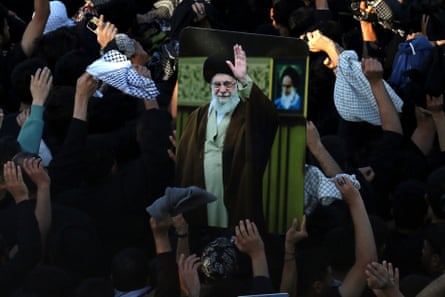
The assassination of Iran’s ayatollah – and fears for a wider conflict
Iran’s supreme leader was killed in a military strike on his compound as Israel and the US launched attacks on the country. Patrick Wintour reports.
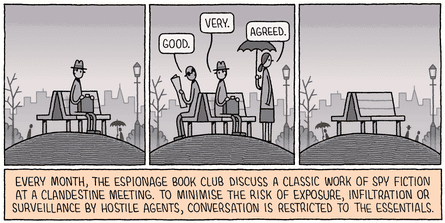
Cartoon of the day | Tom Gauld
The Upside
A bit of good news to remind you that the world’s not all bad
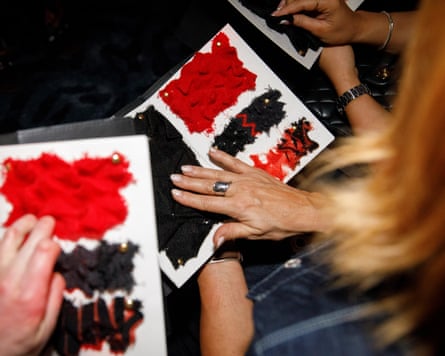
Fashion designer Chet Lo partnered with the non-profit Making Fashion Accessible to give blind and low-vision guests a tactile “touch tour” before his London fashion week show.
Guests could explore each garment through touch, feeling feathers, knit textures and structural details. They then sat in the front row with audio descriptions and fabric-swatch booklets to help them build a full sensory picture of each look.
Founder Anna Cofone, inspired by her blind father, created the initiative to challenge misconceptions as the fashion industry often overlooks accessibility.
Attenders said the event helped them feel fully part of fashion culture and more confident in expressing their personal style.
“There is this preconceived idea that a blind or low-vision person won’t care about how they look and actually that couldn’t be further from the truth,” Cofone says.
Sign up here for a weekly roundup of The Upside, sent to you every Sunday
Bored at work?
And finally, the Guardian’s puzzles are here to keep you entertained throughout the day. Until tomorrow.





 English (US) ·