.png)
 1 hour ago
13
1 hour ago
13
Last Updated:May 15, 2026, 16:40 IST
The Madhya Pradesh High Court has declared that the disputed historical site at Bhojshala is a temple dedicated to Goddess Saraswati


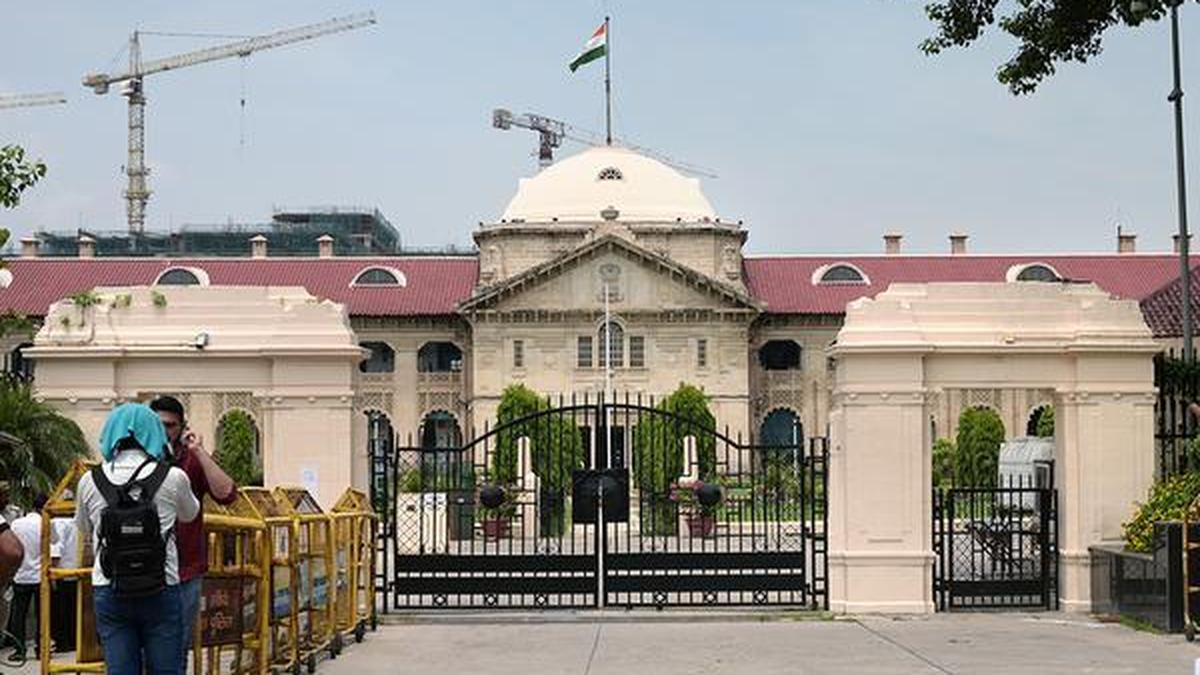
Bhojshala complex in MP's Dhar | File Image
Friday’s verdict by the Madhya Pradesh High Court regarding the Bhojshala-Kamal Maula Mosque complex has reignited a fierce national debate on the legal protections afforded to religious sites. While the 1991 Places of Worship Act is often cited as an ironclad barrier against altering the character of any shrine, its “failure to protect the mosque status" in Dhar has left many questioning the strength of the statute. The court’s decision to declare the site a temple dedicated to Goddess Saraswati rests on specific legal exemptions that place the Bhojshala in a unique category, distinct from the broader mandate of the 1991 Act.
What is the primary mandate of the 1991 Places of Worship Act?
To understand why the Act did not apply, one must first look at its core objective. Enacted during the height of the Ram Janmabhoomi movement, the Places of Worship (Special Provisions) Act, 1991, was designed to freeze the religious character of any place of worship as it existed on August 15, 1947. The law explicitly prohibits the conversion of a site from one religious denomination to another, aiming to prevent a cascading series of communal litigations over historical wrongs. Under Section 3 of the Act, the nature of a shrine—whether it was a mosque, temple, or church at the time of Independence—is meant to be permanent.
Why was the Bhojshala complex exempted from this Act?
The most critical reason the 1991 Act did not “save" the mosque status lies in Section 4(3)(a) of the statute itself. This specific clause provides a blanket exemption for any place of worship that is an “ancient and historical monument" or an “archaeological site" covered by the Ancient Monuments and Archaeological Sites and Remains Act, 1958. Since the Bhojshala complex was officially notified as a protected monument under the oversight of the Archaeological Survey of India (ASI) as far back as the early 20th century and reaffirmed in 1952, it falls outside the restrictive purview of the 1991 Act.
Consequently, the legal “freeze" that applies to most shrines in India does not apply to the Bhojshala. This allowed the High Court to prioritise archaeological evidence and historical continuity over the 1947 status quo. The court essentially ruled that if scientific data proves a site was originally a temple, its status as a protected monument allows the judiciary to correct historical records without violating the 1991 statute.
How did the ASI survey influence the court’s decision?
Because the site was exempt from the 1991 Act, the judiciary was free to order a comprehensive scientific survey, similar to the process seen in the Gyanvapi case. The ASI’s report, submitted between 2024 and 2025, played a decisive role in the final ruling. The survey documented Sanskrit inscriptions, pillars with Hindu motifs, and architectural layouts that were fundamentally characteristic of an 11th-century temple and university (Gurukul) built by King Bhoja. By relying on these physical findings, the court concluded that the Islamic elements were later additions to a pre-existing temple structure. The absence of the 1991 Act’s shield meant that these historical and scientific truths became the primary basis for the legal verdict, rather than the “use" of the site in 1947.
What does this mean for the future of ‘shared’ religious sites?
The Bhojshala ruling serves as a significant precedent because it demonstrates that the 1991 Act is not a universal shield. Any religious site that carries the tag of a “protected monument" is potentially subject to similar judicial scrutiny and character reassessment based on archaeological merit. For the Kamal Maula Mosque committee, this represents a major legal hurdle, as the “monument" status that once protected the site from encroachment has now become the very mechanism for its reclassification. As the battle likely moves to the Supreme Court, the focus will remain on whether archaeological history can legally override decades of administrative compromises.
Handpicked stories, in your inbox
A newsletter with the best of our journalism
News india Monumental Decision: Why Places Of Worship Act Couldn't Save Disputed Bhojshala Site's 'Mosque Status'
Disclaimer: Comments reflect users’ views, not News18’s. Please keep discussions respectful and constructive. Abusive, defamatory, or illegal comments will be removed. News18 may disable any comment at its discretion. By posting, you agree to our Terms of Use and Privacy Policy.
Read More




 English (US) ·