.png)
 57 minutes ago
10
57 minutes ago
10
K Asif’s magnum opus, Mughal-E-Azam, had everything going against it when it released back in 1960. Of course, it had the biggest stars of its time – Dilip Kumar, Madhubala and Prithviraj Kapoor – but just going by the economics of the film, no one had faith that the most expensive film of its time, made on a reported budget of Rs 1.5 crore, would ever recover its entire budget. Rs 1.5 crore of 1960 would be roughly equal to Rs 145 crore of 2026. The film had been in the making for over a decade, and when it was released, it was amid controversy – the lead stars had broken up, the director and the lead actor were no longer on talking terms, and K Asif, the man who had dreamed of the world of Mughal-E-Azam, was struggling in his personal life.
Regardless, the decade that was spent in making the film, K Asif spared no expense, and backing him was the construction tycoon, Shapoorji Pallonji Mistry. K Asif famously refused to shoot a scene when he wasn’t given real gold idol to shoot a scene in Jodha Bai’s temple. He also halted the shoot when he wasn’t given real pearls to shoot a scene welcoming Salim, for he felt that even if the audience couldn’t tell the difference between real and fake, he could. The pearls cost Rs 1 lakh (Rs 97 lakh in 2026). Such was his eye for detail that he once called off the shoot as the scene that he was scheduled to shoot required Anarkali to step out of a pool of ittar. When the production filled the pool with water, he felt that this wasn’t good enough, and only shot when they filled it up with perfume. No wonder the film’s expenses shot up, and it took them a decade to finish filming.
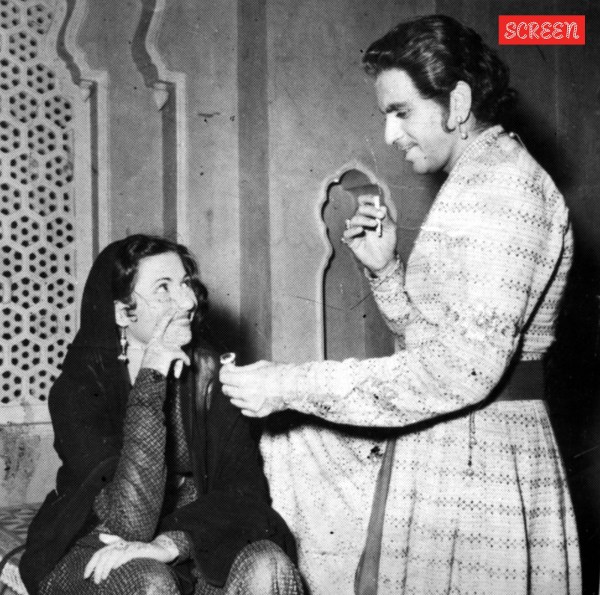 Madhubala and Dilip Kumar broke up during the filming of Mughal-e-Azam. (Photo: Express Archives)
Belgian glass worth Rs 15 lakh (Rs 14.5 crore in 2026)
As Asif was shooting for the film, technology was changing at a rapid pace, and he decided that the ode to love, “Pyaar Kiya Toh Darna Kya”, would be shot in technicolour. As per a report in The Hindu, Belgian glass worth Rs 15 lakh (Rs 14.5 crore in 2026), was imported to shoot the memorable ‘Sheesh Mahal’ sequence. While many technicians could not figure out until years later how this scene was shot, director K Asif and cinematographer RD Mathur came up with a genius way to put strips of clothing to reduce camera glare, and successfully shot the song.
After they achieved this feat, K Asif, who had already shot 70 percent of the film by then, decided that he wanted to shoot the entire film in technicolour. But, this is when producer Shapoorji Pallonji Mistry finally put his foot down. The film had exceeded all proposed budgets and had been in the making for nearly a decade, he couldn’t afford any more delays. K Asif was threatened that if he even thought about remaking the entire film now, the existing film would be given to distributors and released as is. Even the distributors had been waiting or the film for a long time, so the decision was made that only a small portion would remain technicolour.
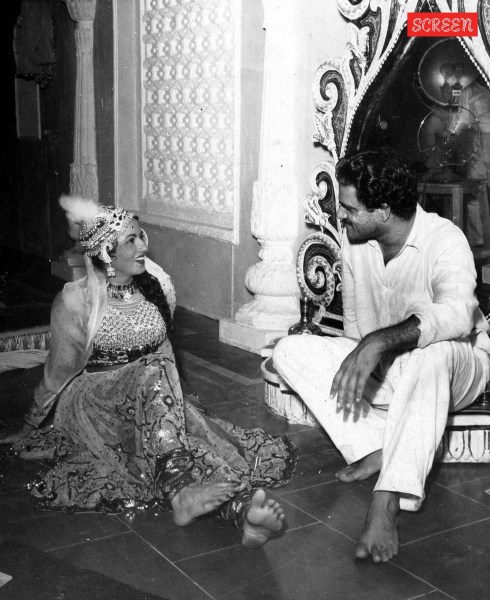 Madhubala and director K Asif during the making of Mughal-e-Azam (Photo: Express Archives)
Ustad Bade Ghulam Ali Khan was paid Rs 25,000 for a song (Rs 24 lakh in 2026)
Not just costumes and props, every department of the film spent money like they had unlimited resources. In an interview from 2004, photographer Jayesh Seth, who made the documentary Ek Aitihasik Karishma, revealed that Ustad Bade Ghulam Ali Khan was paid Rs 25,000 for a song, while Lata Mangeshkar and Mohammed Rafi were paid Rs 200-300 per song (Rs 19,000-Rs 29,000). Rs 25,000 is roughly equal to Rs 24 lakh!
Story continues below this ad
Mughal-E-Azam made Rs 3.5 crore (Rs 340 crore in 2026)
A lot had gone into the making so the premiere of the film had to match the scale of the production. A 1,100-seater was booked for the premiere and unlike the standard norm followed in those days, the film was released across 150 theatres in India. And the investment paid off. Mughal-E-Azam made Rs 3.5 crore, on an investment of Rs 1.5 crore, which would roughly be around Rs 340 crore in box office returns. Till date, most Hindi films can’t reach that number. The K Asif directorial held that record for almost 15 years, until Sholay surpassed it.
K Asif’s film is still considered to be the gold standard of filmmaking in India but after the success of Mughal-E-Aza, the director stayed away from making films. He started making Love & God with Guru Dutt in 1963, but had to shelve the film after Dutt passed away in 1964. A few years later, he resumed the film with Sanjeev Kumar, but before he could finish the film, Asif passed away in 1970. The film was ultimately finished by his wife, and released in 1986, months after Sanjeev Kumar’s death.






 English (US) ·