.png)
 2 hours ago
26
2 hours ago
26
As part of PVR and INOX’s “month of love” re-releases, the 2003 cult film Tere Naam returns to theatres today. While Himesh Reshammiya’s chart-busters and Salman Khan’s iconic hairstyle might draw a crowd, we need to have a serious conversation: Why are we celebrating the “OG” of toxic obsession as a celebration of love? Tere Naam is perhaps the last film one should revisit while talking about love, or even trying to understand it, in 2026.
For years now, Hindi cinema has struggled with the romanticisation of deeply problematic male protagonists. In recent years also, there has been a pattern of blurring the line between obsession and passion – from Kabir Singh to Kundan (Raanjhana), Shankar (Tere Ishk Mein), and Vikramaditya (Ek Deewane Ki Deewaniyat). But Tere Naam’s Radhe didn’t just blur those lines, he erased them altogether.
Tere Naam’s Radhe is the OG of toxicity
In Tere Naam, Radhe doesn’t merely pursue Nirjara (Bhumika Chawla), he stalks her and ultimately kidnaps her because she doesn’t reciprocate his feelings. He ties her up, threatens her. In any real-world scenario, that would, and should, be the end of any emotional connection and even calls for a restraining order. But not in Radhe’s world, here the woman not only forgives him but falls in love, moved by his so-called “golden heart” and selective good deeds.
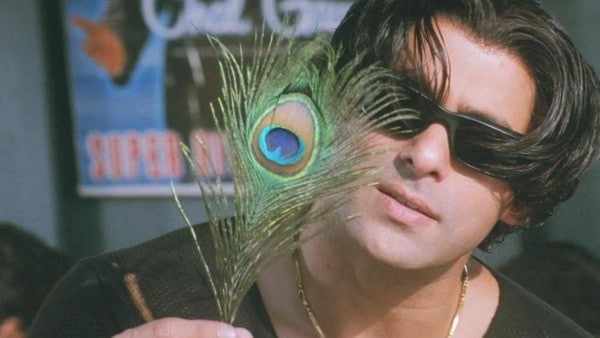 A still from Tere Naam.
In a move that feels like a gut punch to sensibilities, she actually apologises to him for misunderstanding him. This narrative suggests that a man’s violence is justifiable if his intentions are “pure”.
Across the first half, there are scenes, that will make you squirm in your seat. In a college campus, a candidate wins an election on the manifesto promise that “no action will be taken against boys for winking at girls.”
Radhe, the hyper-masculine “saviour” of the campus, leads a victory song with the lyrics: “Ishq mein naa ka matlab toh haan hota hai” (In love, ‘no’ actually means ‘yes’). Consent anyone?
What complicates matters further is the film’s second half. Radhe’s eventual downfall and mental breakdown evoke sympathy, softening audience memory of his earlier actions. His fate creates a tragic arc that almost absolves him, shifting focus away from his toxicity.
Story continues below this ad
Impact of films like Tere Naam
Films like Tere Naam normalise behaviours that should immediately register as red flags. Consent is treated as a minor obstacle, stalking as romance, and possessiveness as proof of sincerity. These narratives subtly teach generations of viewers that ignoring a woman’s “no” is simply part of the “hero’s” journey.
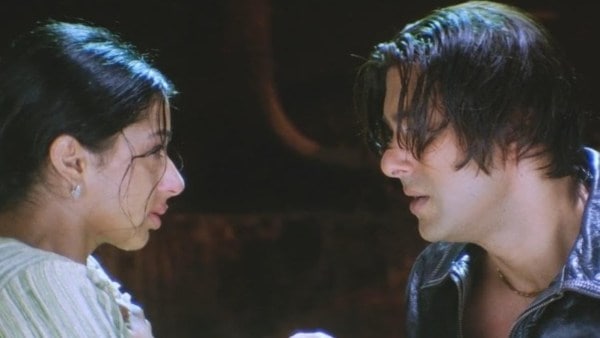 A still from Tere Naam.
Even when the film was released in 2003, it was deeply problematic, but the lines between romance, obsession, and toxicity were blurred enough for audiences to accept it without much questioning.
Why re-releasing Tere Naam in 2026 is a bad idea
In 2026, conversations around relationships have evolved. Terms like consent, boundaries, red flags, and emotional health are no longer fringe ideas. Audiences today are far more aware of what constitutes a healthy relationship, or at least they should be. Placing this film back on the big screen risks reopening narratives that society is actively trying to unlearn.
Story continues below this ad
Tere Naam today isn’t just harmless nostalgia – it’s a manual of red flags. Re-releasing it today risks rebranding dangerous, damaging behaviour as a romantic ideal we should have left in the past.
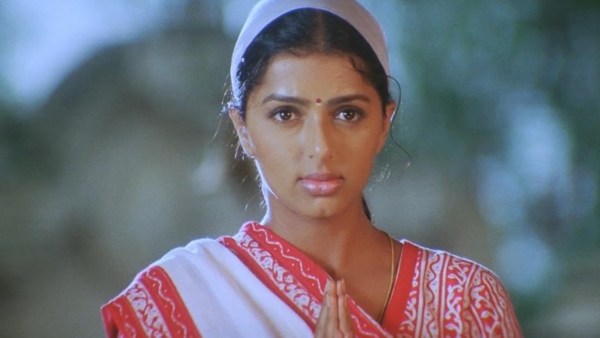 A still from Tere Naam.
Disturbingly, this isn’t just a thing of the past. The “Radhe Mohan” archetype has morphed into the modern “red-flag hero” and with films like Kabir Singh, Tere Ishk Mein, cinema continues to sell the lie that emotional volatility is a sign of intense love. When paired with an impressionable audience, remember recent videos of viewers breaking down during hyper-dramatic love scenes, the cultural impact becomes harder to ignore.
Love, especially in the era we live in, deserves better stories. Stories that respect consent, shows partnership is a choice, not a conquest, celebrate equality, portray emotional maturity and where the hero doesn’t need a chair and a rope to win a girl’s heart.







 English (US) ·