.png)
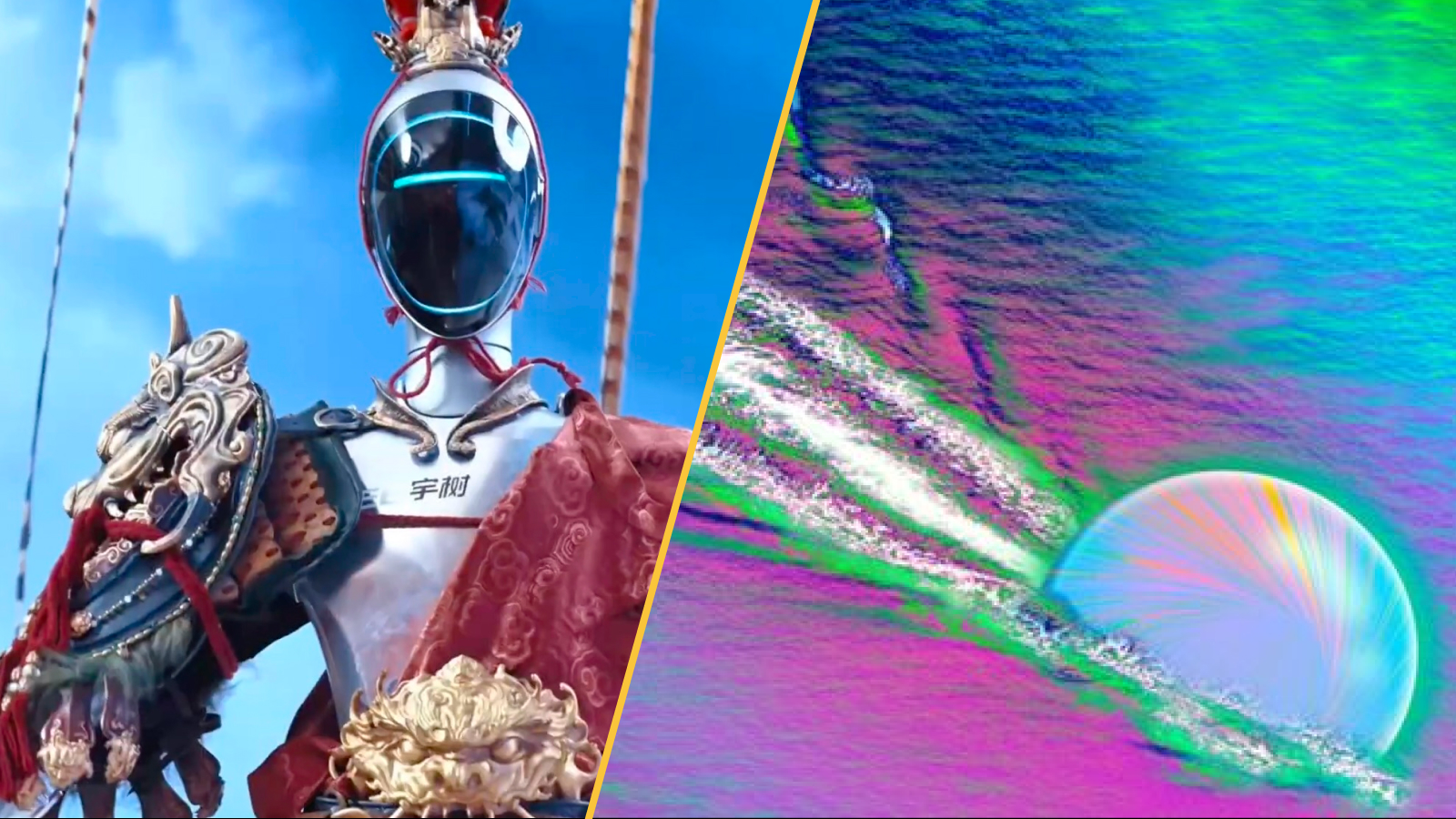
This week's science news was filled with some astonishing — and creepy — displays of technology's accelerating progress.
Top of the bill was a stunning demonstration of Chinese company Unitree Robotics' humanoid robots, which somersaulted, flipped and kicked in a kung fu performance at this year's Lunar New Year festival. The robots' eerily fluid movements were a sight to behold on their own. But compare them with the stiff and cumbersome moves by similar robots just a year earlier, and it's clear how much the tech — has advanced, thanks to better algorithms and cluster control platforms.
Physicists make a Big Bang soup
Physicists recreated the first millisecond after the Big Bang — and found it was surprisingly soupy

In the most ambitious instance of experimental home cooking we covered this week, physicists at the Large Hadron Collider (LHC) recreated the primordial state of the early universe and found it was more like soup than first thought.
The discovery comes from the LHC's Compact Muon Solenoid, which smashed together two heavy atomic nuclei at near light speed to create an extremely short-lived quark-gluon plasma, believed to be the stuff of our universe in the first microseconds following the Big Bang.
The findings could have enormous implications for how our cosmos, and the stuff it's made of, first formed.
Discover more space and physics news
—Solar flares may be triggering earthquakes, controversial study claims
—Saturn's largest moon may actually be 2 moons in 1 — and helped birth the planet's iconic rings
Life's Little Mysteries
What is rigor mortis, and why does it happen?

Not long after death, a sea change takes hold within the human body — a sequence of natural, cellular-level steps that result in a process called rigor mortis. But what are these steps? And why does rigor mortis happen to nearly all human bodies?
—If you enjoyed this, sign up for our Life's Little Mysteries newsletter
Teenager buried with her father's bones
5,500 years ago, a teenage girl was buried with her father's bones on her chest, new DNA study reveals
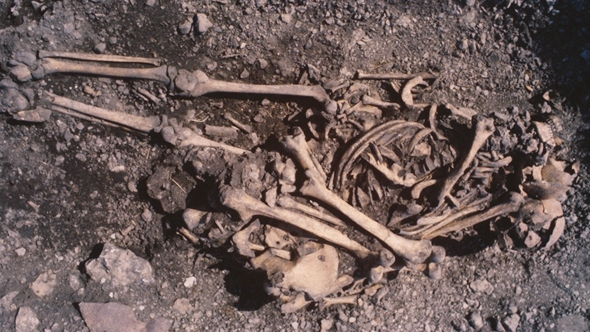
Archaeologists who performed a DNA analysis of skeletons excavated from a Neolithic cemetery in Sweden have uncovered some surprising family burial practices this week, showing that some of Europe's last hunter-gatherers had detailed knowledge of their family lineages.
The society, called the Pitted Ware culture, was a hunter-gatherer community that lived on the western Swedish island of Gotland 5,500 years ago. Evidence of burials and reburials, with graves shared by up to third-degree relatives, suggests people of this culture paid scrupulous attention to their social connections and honored them long after death.
Discover more archaeology news
Also in science news this week
—Diagnostic dilemma: 83-year-old man's unusual form of syphilis had an 'uncertain' source
—Our adorable, noodle-like ancestor had 4 eyes, half-a-billion-year-old fossils reveal
—Vanishing lakes in Tibet may have triggered earthquakes by awakening faults in Earth's crust
Science long read
'Proof by intimidation': AI is confidently solving 'impossible' math problems. But can it convince the world's top mathematicians?
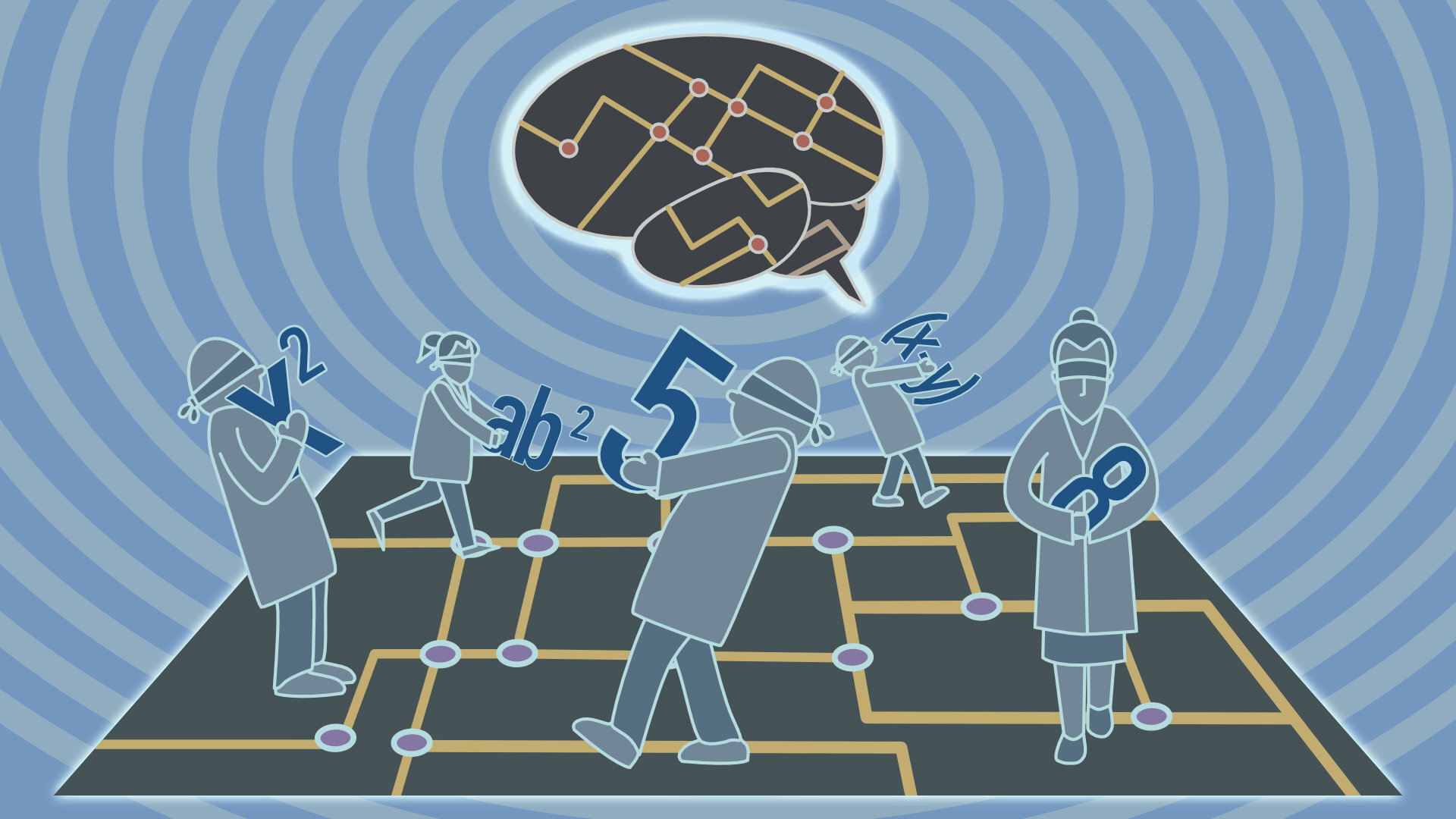
At a secret meeting in Berkeley, California, last year, some of the world's leading mathematicians gathered to discuss the fate of their profession. The agenda was clear: Was artificial intelligence (AI) on the precipice of taking their jobs? And would the best math no longer be produced by humans?
Yet during the discussion, an even more troubling question appeared. In the past, confidence and a good argument were signs a proof was right, as only the best would be convincing to the rest of the field. Now, however, AI is spewing out hundreds of proofs that could be flawed but are too complex to verify. In this long read, Live Science investigated mathematicians' fight to figure out if the machines are right.
Something for the weekend
If you're looking for something a little longer to read over the weekend, here are some of the best analyses, opinions and crosswords published this week.
Live Science crossword puzzle #30: Brightest star in the night sky — 5 down [Crossword]
Science news in pictures
City-size, cold-volcano comet transforms into a glowing 'snail shell' after major explosive outburst
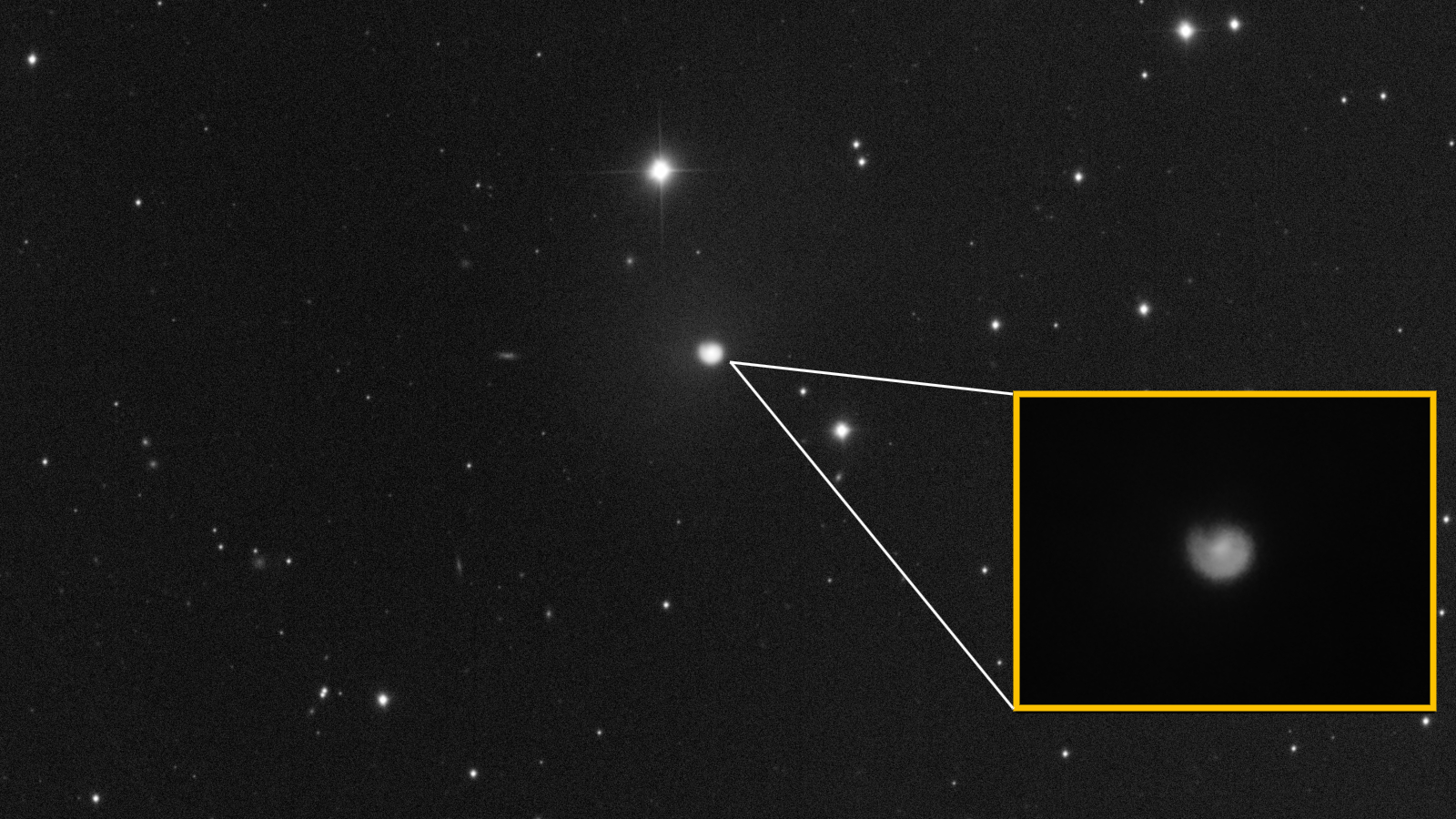
This photo shows Comet 29P/Schwassmann-Wachmann, an ice ball three times the length of Manhattan, erupting into a cosmic snail shell as it circles the inner solar system.
29P/Schwassmann-Wachmann is an example of a cryovolcanic comet, which explodes after its icy shell soaks up too much solar radiation. This causes the icy gas and dust on its surface to sublimate outward, forming a fuzzy cloud.
Follow Live Science on social media
Want more science news? Follow our Live Science WhatsApp Channel for the latest discoveries as they happen. It's the best way to get our expert reporting on the go, but if you don't use WhatsApp we're also on Facebook, X (formerly Twitter), Flipboard, Instagram, TikTok, Bluesky and LinkedIn.








 English (US) ·