.png)
 22 hours ago
27
22 hours ago
27
The phone call from Sekhar Kammula found Sai Pallavi in the wrong country for the right reason. She was in Tbilisi, halfway through the final stretch of her MBBS at the Tbilisi State Medical University, where she had been studying. Shekar Kammula had a script that needed a native Telangana dialect. When he narrated to her over the phone, she knew immediately that this is what she wanted to do. Her degree was something she was going to finish regardless.
She told the director he would have to wait and he did. Six months later, with her medical qualification completed in 2016, she came back to him. That was the beginning of Fidaa.
Starting from scratch with a dialect
Fidaa, released in 2017, is a Telugu romantic drama written and directed by Sekhar Kammula and produced by Dil Raju under Sri Venkateswara Creations. The film stars Varun Tej as Varun, an NRI medical student based in Texas, and Sai Pallavi as Bhanumathi, a confident and rooted young woman from Telangana. The two meet when Sai Pallavi’s sister marries Varun Tej’s brother, and develop feelings for each other. However, their relationship hits a wall when Varun’s plans to build his future in the United States clash with Bhanu’s unwillingness to leave her home and her father behind.
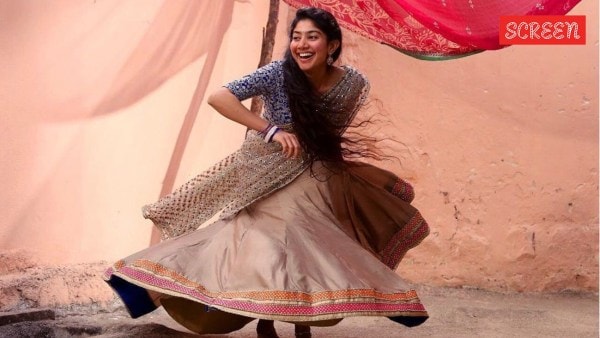 Sai Pallavi as Bhanumathi in Fidaa (Credit: @saipallavi.senthamarai/ Instagram)
The role Sekhar Kammula had written for her was Bhanumathi, a spirited young woman from Banswada, a town in Telangana. Bhanu is the kind of character who fills a room, whose words carry as much personality as her actions. To play her credibly, Sai Pallavi would need to speak Telangana-accented Telugu, a dialect with its own distinct cadence, vocabulary, and tonal sharpness that sets it apart from the Telugu spoken elsewhere.
However, Sai Pallavi speaks Tamil and her previous two films were in Malayalam. Conversational Telugu was already a stretch and the Telangana dialect was a different terrain entirely.
Also Read: When Classmates almost dethroned Mohanlal and Mammootty films, earning 7x its budget with no stars
The standard practice in film industry for such situations is to bring in a dubbing professional. Someone who knows the accent, who can deliver lines with the precision audiences expect from a well-written character. But to everyone’s surprise, Sai Pallavi rejected that option even before it became a serious discussion. She decided she would dub every line herself, in her own voice, in an accent she was still learning.
Story continues below this ad
Director Shekar Kammula, who grew up in Telangana and knows the dialect from the inside, worked with her through the process. The preparation was neither quick nor effortless. A video from the dubbing sessions, shared through the production house’s YouTube channel, showed her laughing through her errors, trying again, getting it closer, then closer still. There was a naturalness to how she handled the difficulty, no visible frustration, just a willingness to keep at it until it sounded right.
She later recalled Sekhar Kammula cautioning her about what this decision would mean going forward. If she chose to dub her own dialogue now, she would be expected to do it for every film that followed. Her response was simple: she would rather do it herself, because she understood better than anyone else how her own emotions sounded when she was performing.
Why the dialect mattered to audiences
Telangana Telugu has a texture that is difficult to manufacture. It carries a quality that is both casual and pointed at once, something that cannot be approximated through studied imitation alone. For Bhanumathi, a character who is direct, unhurried, and entirely uninterested in softening herself for anyone, the dialect became the foundation of her character, which set her apart from the other characters in the film while making the audience relate to her.
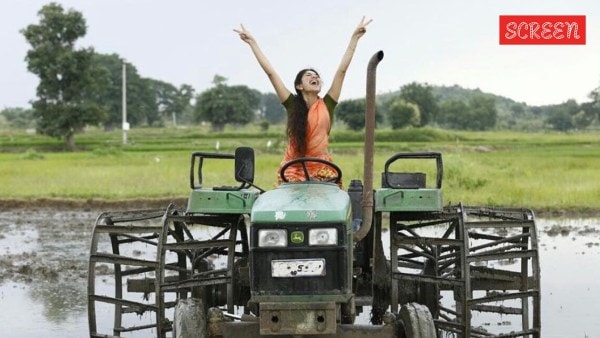
Audiences from Telugu states responded to this representation and the dedication shown by Sai Pallavi loudly. The recognition of their everyday speech on screen, delivered not by a native speaker but by a Tamil actress who had put in the work to earn it, gave the character a believability that landed in theatres immediately. Viewers watched her lines with a kind of ownership, cheering dialogue as though it belonged to them because in a very real sense it did.
Story continues below this ad
In her later interviews, she admitted after the release that the audience reaction had genuinely surprised her. Watching the film in a theatre, she had not anticipated the scale of what she was witnessing. She described the experience as overwhelming.
The dialect had also, by that point, become the only version of Telugu she knew. It was the only Telugu she had properly learned, and she had learned it from the ground up.
What it set in motion
Fidaa boosted the credibility of Sai Pallavi among Telugu audience. It established the standard she would hold herself to in every project that came after it. The willingness to absorb a dialect she had never spoken and deliver it entirely in her own voice became a working principle, not a one-time achievement.
Years later, when she returned to work with Sekhar Kammula on Love Story, another film set in the Telangana dialect, she was afraid that whether audiences would see Bhanumathi in the new character instead of someone fresh.
Story continues below this ad
She had inhabited the role so fully the first time that separating from it required deliberate effort. That is a very kind of problem that belongs to performers who do not simply portray a character but carry one, who bring so much genuine preparation into a role that the seam between the work and the result stops being visible.




 English (US) ·