.png)
.png) 2 hours ago
22
2 hours ago
22
Though they are nominally an ICC Full Member Nation, Zimbabwe’s progress would be a shot in the arm for Associate teams, who have run several big sides close at the T20 World Cup without actually getting over the line.
The Netherlands, the United States, Nepal, UAE and Italy were within touching distance of huge upsets, but it was Zimbabwe who ended decades of disappointment, heartbreak and turmoil to overturn cricketing powerhouses Australia to gatecrash a party which the game’s decision-makers had envisioned to be reserved for the big boys.
The 20-over format is more conducive to such unexpected results, but the achievement is still significant in a sport which functions, at the elite level at least, as almost a closed shop.
An individual who knows what so-called minnows are up against and how to get the best out of them is former India international Lalchand Rajput. The former Mumbai stalwart, who played two Tests and four ODIs in the 1980s, is now the UAE head coach and had previous stints with Afghanistan and Zimbabwe.
ALSO READ | T20 World Cup: Zimbabwe, world cricket’s much-liked giant-slayers, are back
“I was there (Zimbabwe) for five years, we did well. And now I’m really happy that they beat Australia. It will be good for Zimbabwe cricket as well, because the last time they didn’t qualify for the World Cup. This will be a good platform for them to show that they are a better team than what is expected of them,” Rajput said on Tuesday.
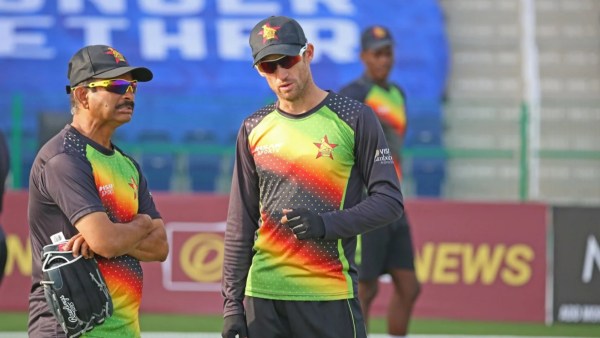 FILE PHOTO: Lalchand Rajput during his time as Zimbabwe coach. (PHOTO: Abu Dhabi Cricket)
There may have been some scepticism about a 20-team World Cup, but for a person intricately involved with the cricketing development of the lesser sides, their impressive performance is not a big surprise, even if their goals going into a major tournament are quite different from those of the top sides.
Story continues below this ad
“We come with a positive frame of mind that we can upset anybody. In T20, one over can change the game. The players start believing that they can play good cricket against better teams. It’s a journey and a process because you cannot change any team or any player overnight,” the manager for the Indian team when it won the 2007 ICC World T20 said.
Challenges remain
However, the drawbacks confronting most of these teams are the same – a lack of facilities and exposure against top sides.
“The associate countries don’t play many matches against the best players of the world. They have to come out of that shell as well. Once you start winning games, the confidence level goes up and they start playing even better,” Rajput said.
“Until you play matches, you won’t be in that situation. No matter how much net practice you do, how can you come out of tight situations like 80-5? How can you win a match if you need 30 runs in the last two overs? You might win only one out of five games, but it will increase your confidence that next time if you are in the same situation, you will be able to win.”
Story continues below this ad
The UAE, at least, had impressive facilities to use in their country, which hosts the ICC headquarters. The Netherlands’ preparation for the T20 World Cup took them to South Africa, India and Sri Lanka. While having a taste of conditions and pitches in different parts of the world is beneficial for cricketing development, it was not always a matter of choice, and points to the various challenges less-fancied teams face in getting more competitive against the big sides.
ALSO READ | Australia knocked out of T20 World Cup 2026 in group stage following Zimbabwe-Ireland washout in Pallekele
The timing of the tournament, just as the northern hemisphere is coming out of winter, left the Dutch with precious few opportunities to train at home. The headquarters of the Royal Dutch Cricket Association was under snow as recently as last month, so the players had to go abroad for training and preparation.
“Some of our players went to South Africa, while others came to Mumbai and Chennai before leaving for our opening game in Colombo,” Dutch team manager Jon van Vliet said.
Story continues below this ad
Most Dutch players also have to ply their trade elsewhere to earn a livelihood. “Quite a few of us play in the UK. I think about four or five players play county cricket,” all-rounder Colin Ackermann said. “I play for Durham, Tim van der Gugten plays at Kent, and Roelof van der Merwe was at Somerset for a number of years. The rest play club cricket in the Netherlands. It isn’t professional, but there is a professional structure coming into place. There are a few central contracts — I think around seven for the coming year.”
Bowling all-rounder Saqib Zulfiqar works with ABN-Amro Bank.
Play more, win more
With matches against top teams few and far between, it’s no surprise that the difference between giving fancied sides a scare and actually crossing the finish line lay in the lack of adequate exposure.
“Coming into this tournament, our last match against a full-member nation was against Bangladesh in August last year. We train extremely hard as a group, but we definitely need more match exposure against top teams,” Ackermann said.
Namibia are in the same boat, as explained by their captain Gerhard Erasmus. “Exposure is what physically gets you on this level – that pressure, that sort of exposure that you have from crowd to media to big stadiums to lights, something we don’t have in Namibia,” the 30-year-old all-rounder said. “It gives them a little bit more smarts at that level of the game. Your skill set also goes up.”
Story continues below this ad
Erasmus believes the ‘Associate Nation’ to be just a tag. “That’s because of infrastructure and the fact that you must qualify for it. But I don’t see anyone as less or as an Associate Nation. For us, it’s always about trying to shake off that feeling that you are less than the other nations. For me, it’s just an exposure thing,” he said, adding, “if we have that exposure, those 50-50 moments will turn into more wins.”





 English (US) ·