.png)
.png) 5 hours ago
20
5 hours ago
20
When Jammu and Kashmir beat Bengal by six wickets to qualify for their first-ever Ranji Trophy final, the victorious players hoisted head coach Ajay Sharma onto their shoulders. Chants of “bhaiyon mein bhai kaisa ho, Ajju bhai jaisa ho” resounded across the ground in Kalyani. For a man who had spent fifteen years being erased — from cricket, from conversations, from his own son’s career — it was an unlikely place to be reborn: on the shoulders of young men from Jammu and Kashmir, in a ground in Bengal, with his name on their lips. Sharma, a battle-hardened Delhi cricketer who once scored first-class hundreds with almost embarrassing ease, could only let the moment wash over him.
ARTICLE CONTINUES BELOW VIDEO
The journey from Ajay Sharma the cricketer-turned-coach to ‘Ajju bhai’, though, was anything but straightforward.
“I would say this is the rebirth of Ajay Sharma,” the 61-year-old told The Indian Express. Sidelined for fifteen years before a Delhi court absolved him of match-fixing charges in 2016, Sharma’s redemption has unfolded in step with J&K cricket’s own rise — from perennial also-rans to championship contenders.
The years of exile left their mark. “Because of the case, nobody was taking my name. I tried to help Manan, my older son, play for India — but maybe because of his father, he faced obstacles. Now I feel I shouldn’t have pushed him towards cricket. Those who never called or messaged for so many years are reaching out now. But I have no bitterness. I have only gratitude for the love and trust these players have shown me.”
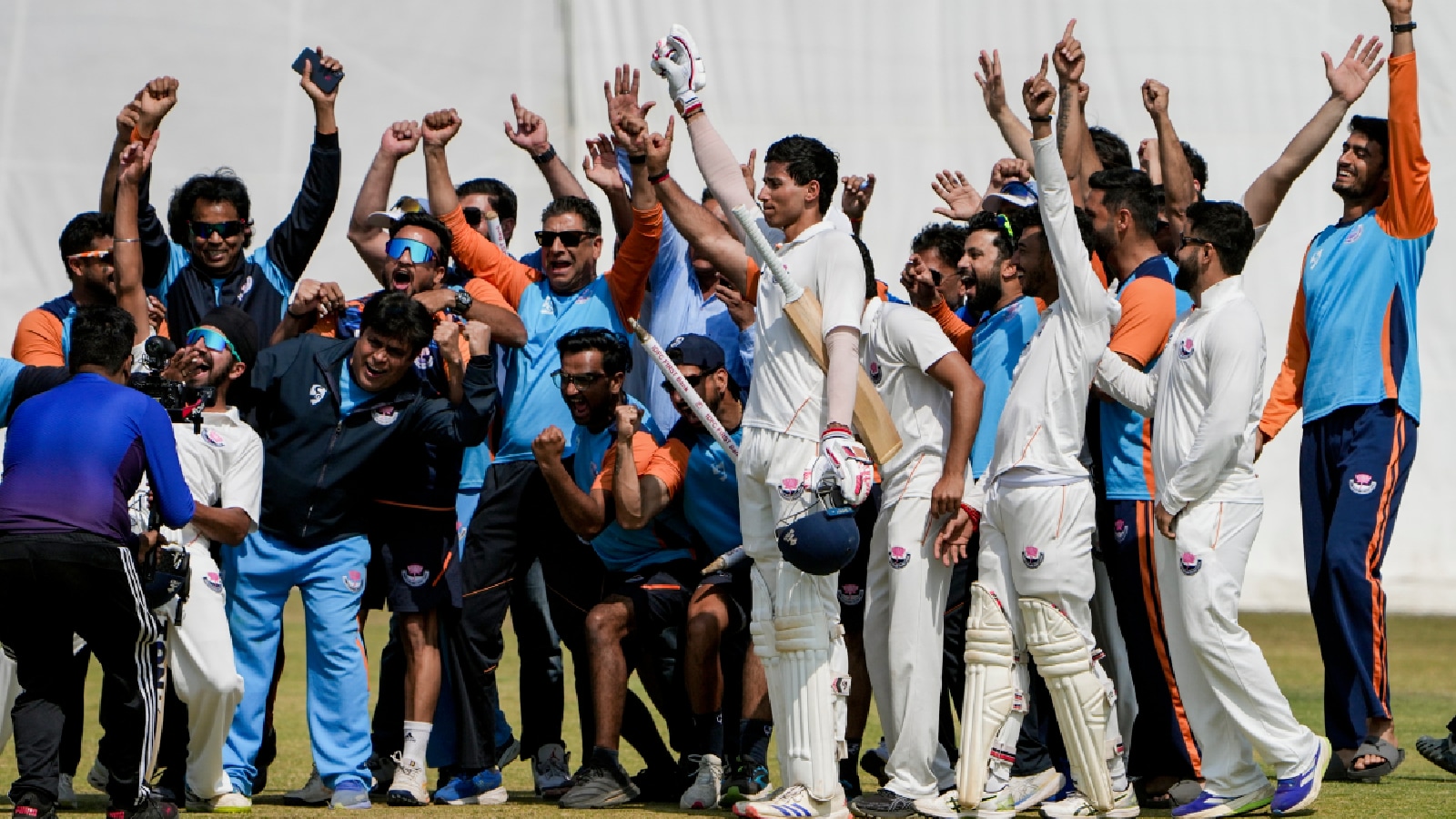 Jammu and Kashmir’s Vanshaj Sharma celebrates with teammates after winning the Ranji Trophy second semifinal cricket match between Bengal and Jammu and Kashmir, at the Bengal Cricket Academy Ground, in Kalyani, Nadia district, West Bengal, Wednesday, Feb. 18, 2026. (PTI Photo)
Four seasons ago, Sharma was coaching the Delhi Under-19 side when Mithun Manhas — now the BCCI president, then J&K’s Director of Cricket Operations — came calling. The two go back a long way: Manhas made his Delhi debut under Sharma’s captaincy. But Sharma wasn’t interested.
“Once you play for Delhi alongside Test cricketers, you feel you’re operating at a different level. In my playing days, we never considered J&K a serious team. I was on holiday in Thailand when Mithun called. I actually laughed — I had aspirations to be the Delhi senior coach,” Sharma recalls.
Manhas tried again as the application deadline loomed. This time, something shifted. “I thought, why not. Mithun said his dream was to see J&K do well in first-class cricket, and he promised his support.” Sharma took the job.
Story continues below this ad
He almost didn’t survive his first season. The players — weaned on IPL dreams and T20 instincts — bristled at what they called the ‘headmaster coach’. In the written feedback forms, they described him as hot-headed; only two or three of twenty players spoke in his favour. The administration took notice.
“Like when a strict teacher joins a class and the kids think isko bhagao yaha se — drive him away,” Sharma says, laughing now at what clearly stung at the time. “In my first camp in Srinagar, batsmen were only stepping out to hit sixes. I thought: where do I start?”
The turning point came from an unlikely corner — his wife. “She said, most of them are kids younger than our sons. Stop comparing them to the established players you grew up with.” Manhas, too, urged him to soften his approach. Sharma also sought counsel from Anil Gupta, a retired brigadier on a BCCI-appointed sub-committee. “I realised playing and coaching are two different things. My entire foundation changed.”
A hard-fought win over Vidarbha in Nagpur in December 2022 gave him early evidence of the talent around him. Patience, he decided, was the only way forward. It took nearly two years, but the dressing room eventually came around. “The players started asking what it takes to win Ranji matches consistently. I could feel the attitude shifting.”
Story continues below this ad
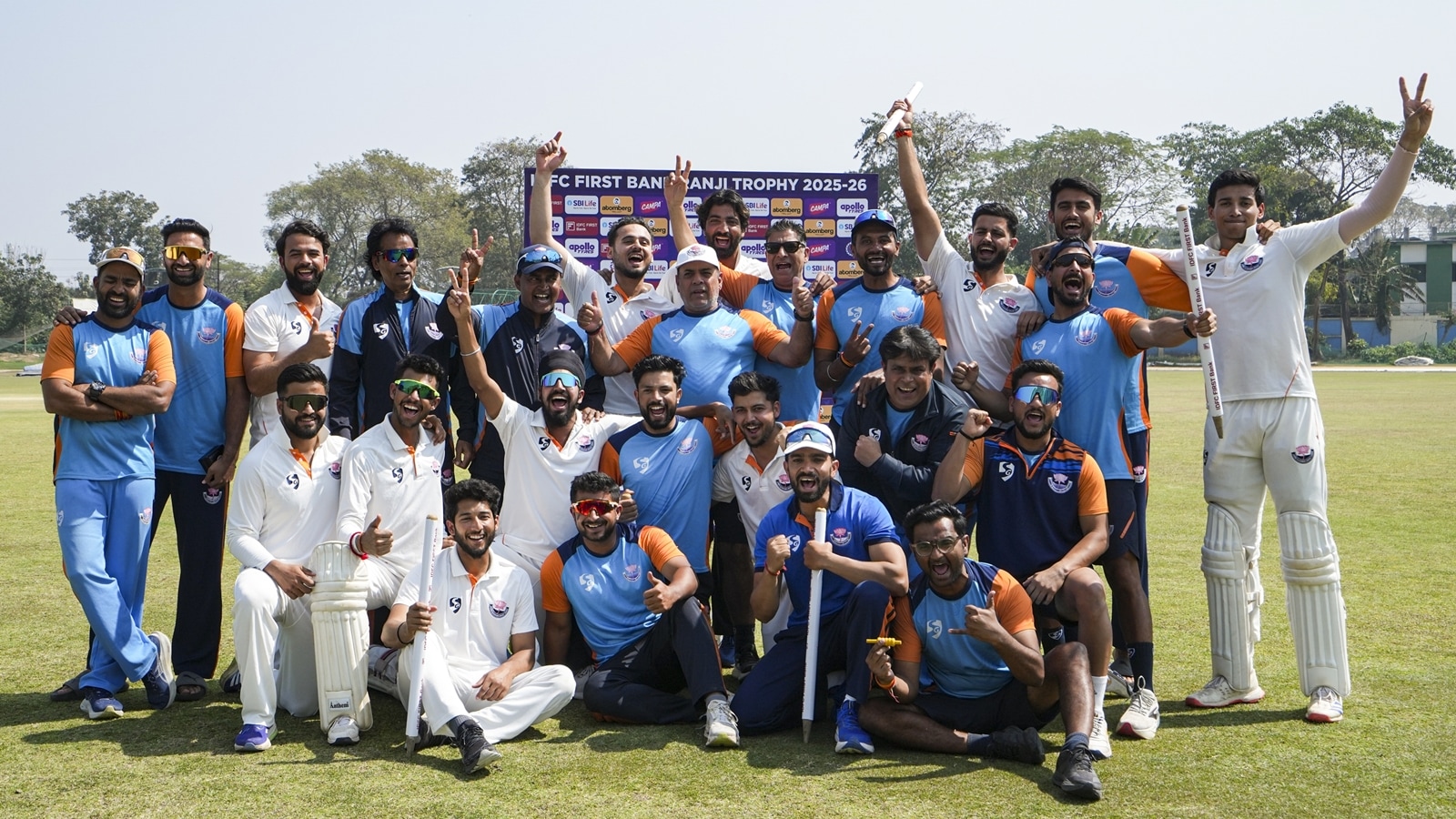 J&K’s two breakout seasons have had milestones of beating big-name teams at home, and overturning Bengal at home, completes their marching stomp into the final (PTI Photo)
Accountability became the cornerstone of that culture. When Abdul Samad, one of the IPL’s most destructive hitters, threw his wicket away against Mumbai, Sharma dropped him for the next game against Baroda. “The message went out — if Abdul can be dropped, anyone can be.” He was careful to back it with honesty. “I told him: I haven’t seen a cleaner hitter in four years of watching domestic cricket closely. But you get criticised because of how you get out. Your average is excellent — protect it.” Samad listened.
The backroom staff — bowling coach P Krishna Kumar and fielding coach Dishant Yagnik — pulled in the same direction. Away wins against Madhya Pradesh in Indore, Delhi in Delhi, and Mumbai in Mumbai announced to the country that J&K were no longer a soft touch.
Sharma has formalised his commitment to the state. A Dogra by birth, he has surrendered his DDCA membership and become a life member of JKCA with voting rights. “The players know I’m here to stay.”
His own path back had begun quietly in 2016, when he took voluntary retirement from the Central Warehousing Corporation, where he had spent fifteen years as a general manager. “I was sitting in an office and working for 15 years,” he says. A call from Ajay Yadav of the TN Memorial Trust’s cricket academy gave him his first proper coaching berth. “When I joined, there were about 35 kids. Just before Covid, that number had grown to 400.” He allows himself a moment of dry humour. “I am a BCCI Level-2 certified coach… just in case people ask (laughs).”
Story continues below this ad
Now, on the eve of a Ranji final, he has one message for his players: “If you win, it becomes a legacy. If you finish runners-up, people forget you quickly.”
On a ground in Kalyani, carried on the shoulders of the players who once wanted him gone, Ajay Sharma had already secured his. The rebirth, it turns out, was complete.





 English (US) ·