.png)
 5 hours ago
21
5 hours ago
21
An 18-month-old baby held with her parents at a South Texas immigration detention center became so ill last month that she was rushed to a hospital with life-threatening respiratory failure — then sent back to detention days later, where she was denied medication doctors said she needed to survive, according to a federal lawsuit filed Friday.
The toddler, Amalia, remained in detention for another nine days and was released only after lawyers filed an emergency habeas corpus petition in federal court challenging her continued confinement. She was freed Friday after the filing.
Amalia had been healthy before immigration officers arrested her family in El Paso in December and transferred them to the Dilley Immigration Processing Center, a remote, prisonlike facility where hundreds of immigrant children are held with their parents. Advocates and pediatric experts have warned that conditions at the center are unsafe for young children.
Amalia’s health quickly deteriorated, the lawsuit says. On Jan. 18, she was rushed to a children’s hospital in San Antonio, where doctors treated her for pneumonia, Covid-19, RSV and severe respiratory distress.
 Amalia spent 10 days at a hospital before being returned to immigration detention, according to a federal lawsuit.via Elora Mukherjee
“She was at the brink of dying,” said Elora Mukherjee, a Columbia Law School professor and the director of the school’s Immigrants’ Rights Clinic, who filed the petition seeking the family’s release.
After days of intensive treatment on oxygen, Amalia began to recover. But her discharge from the hospital was not the end of her ordeal.
Despite warnings from medical experts that the toddler remained medically vulnerable and at high risk of reinfection, immigration officers returned Amalia and her mother to the detention center, the lawsuit says.
“After baby Amalia had been hospitalized for 10 days, ICE thought this baby should be returned to Dilley, where she was denied access to the medicines that the hospital doctors told her she needed,” Mukherjee said. “It is so outrageous.”
The Department of Homeland Security didn’t immediately respond to a request for comment. It has defended its use of family detention, saying in statements and legal filings that detainees are provided basic necessities and that officials work to ensure children and adults are safe.
CoreCivic, the company that runs Dilley under a federal contract, deferred questions about the facility to DHS and said in a statement that “the health and safety of those entrusted to our care” is the company’s top priority.
Amalia’s case comes amid heightened scrutiny of conditions at Dilley, which was thrust into the national spotlight last month after immigration authorities detained Liam Conejo Ramos, a 5-year-old boy taken into custody with his father — an episode that drew widespread outrage after a photograph showed the child in a blue bunny hat as he was led away by officers.
Accounts from detained families, their lawyers and court filings portray Dilley as a place where hundreds of children languish while being served contaminated food, receiving little education and struggling to obtain basic medical care. Sworn declarations from dozens of parents say prolonged confinement takes a heavy physical and psychological toll on children — including regression, weight loss, recurring illness and nightmares — as the federal government expands the use of family detention.
Like many other families held at Dilley, lawyers for Amalia’s parents say the family should never have been detained.
Kheilin Valero Marcano and Stiven Arrieta Prieto entered the United States in 2024 after fleeing Venezuela, where they say they faced persecution for their political opposition to President Nicolás Maduro, according to the lawsuit. They applied for asylum through the government-run appointment system CBP One, and immigration authorities allowed the family to live in El Paso while their case moved forward. According to the lawsuit, they checked in regularly with immigration officials and complied with all requirements, including participation in an alternative-to-detention monitoring program.
That changed on Dec. 11, when the family reported together for a check-in and was taken into custody, according to the lawsuit. Two days later, they were transferred to the Dilley Immigration Processing Center, a sprawling complex an hour south of San Antonio, more than 500 miles from the community where they had been living.
Once inside Dilley, the parents say their daughter’s health deteriorated quickly. In early January, Amalia developed a high fever that would not break. She began vomiting, had diarrhea and struggled to breathe.
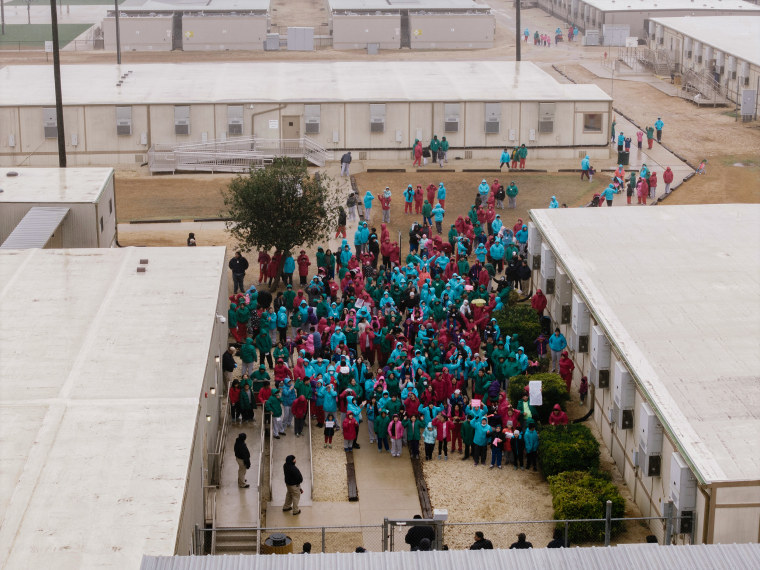 Detainees at the Dilley Immigration Processing Center wave signs during a demonstration in January.Brenda Bazán / AP
As she grew weaker, her parents said they repeatedly took her to the facility’s medical clinic — eight or nine times, according to the lawsuit — seeking help. Each visit ended the same way, according to the lawsuit: basic fever medication.
By mid-January, Amalia was barely getting enough oxygen. On Jan. 18, the lawsuit said, her blood oxygen levels plunged into the 50s — a life-threatening emergency — and she was taken out of the facility with her mother to a hospital. Her father remained behind at Dilley, unable to communicate with his wife or see his daughter as doctors worked to save her.
She spent 10 days at Methodist Children’s Hospital in San Antonio, much of that time on oxygen, as her lungs struggled to recover. Immigration and Customs Enforcement officers maintained constant supervision over Amalia and her mother throughout the hospitalization, according to the lawsuit.
Mukherjee said the girl’s mother spent the days praying at her daughter’s bedside, terrified she would die — and was later devastated to learn that, once discharged, they would be sent back to detention.
When Amalia was released from the hospital on Jan. 28, doctors gave clear instructions, medical records cited in the lawsuit show: She needed breathing treatments delivered by nebulizer and nutritional supplements to help her regain strength and weight.
Instead of allowing them to return to El Paso, immigration officers drove Amalia and her mother back to Dilley, the lawsuit says.
Once there, detention medical staff confiscated Amalia’s nebulizer, albuterol and nutritional supplements. The parents were required to wait for hours in what detainees have described in interviews and sworn declarations as the “pill line” — an outdoor queue families must stand in to obtain medicine and other necessities.
Amalia shivered in her mother’s arms as they waited in the cold, Mukherjee said, only to be given PediaSure and denied the breathing medication doctors had prescribed.
As Amalia remained in detention, Mukherjee and other immigration lawyers repeatedly urged federal officials to release the family, warning that the child’s condition could rapidly worsen.
Medical experts who reviewed Amalia’s records submitted affidavits cautioning that returning a medically fragile toddler to detention — particularly without reliable access to prescribed medication — put her at extreme danger. One physician warned that the child faced a “high risk for medical decompensation and death.”
Mukherjee’s efforts intensified after health officials confirmed two measles cases among people held at Dilley.
When those appeals failed, Mukherjee filed the emergency challenge in federal court seeking the family’s release.
Hours later, on Friday evening, the family was freed. They weren’t immediately available for an interview.
The reprieve brought them relief, Mukherjee said, but she expects the experience will have lasting consequences.
“I imagine they’re going to carry the trauma of this experience for the rest of their lives,” she said.

Mike Hixenbaugh is a senior investigative reporter for NBC News, based in Maryland, and author of "They Came for the Schools."






 English (US) ·