.png)
 2 hours ago
5
2 hours ago
5
Donald Trump’s state department intends to allocate $12m to organisations in the UK founded by the prominent Conservatives Jacob Rees-Mogg and Toby Young, the Guardian can reveal.
The intended grants, revealed in US government documents, are part of a package of support for European groups viewed favourably by the Trump administration. Some former US officials have criticised the funding as a misuse of public money to seek influence over foreign politics.
The documents reviewed by the Guardian set out details of the grants for the first time. They include $7m for 878, a “leading British and American think tank” devoted to “the rediscovery of our ancient culture” and “ending mass immigration”.
The 878 group lists its founding directors as Jacob Rees-Mogg, the former minister of state for Brexit opportunities, and his former special adviser Dr Radomir Tylecote, who has appeared on short-lived former prime minister Liz Truss’ YouTube show. During his appearance, he claimed: “We are not a functioning democracy at this point … it’s a worse system than in the United States.”
According to the document, the funding is justified by 878’s “unique role in the United Kingdom as … a dedicated nonpartisan organisation focused on advancing fundamental freedoms”.
The group appears to have been incorporated in the UK in March this year. 878’s website went live in early July, and says that its registration as a US nonprofit is “pending”. It takes its name from the year King Alfred the Great of the Saxons defeated the “Great Heathen Army”, led by a Danish warlord.
The state department has also set aside $5m for Free Speech Union International, citing its work “promoting free speech and countering digital overregulation across the UK, Europe, and Australia”.
The group is an offshoot of the Free Speech Union (FSU), founded by the Conservative life peer Toby Young, and acts as an umbrella organisation for international sibling groups with similar goals.
The FSU describes itself as “a non-partisan, mass membership public interest body” fighting for anyone who gets into trouble for exercising their freedom of speech, from Reform UK leader Nigel Farage to Palestine Action protesters.
The group notes: “We take no government money and have no political agenda”. But critics see it as a partisan rallying point for “anti-woke” grievance which has campaigned on issues that have become conservative causes célèbres.
Rees-Mogg, Young, and Tylecote were all scheduled to speak in London this week at the Conservative Political Action Conference (CPAC), the inaugural British spin-off – organised by Liz Truss – of the influential US event. Earlier this month, Young appeared on Rees-Mogg’s GB News show to warn that the UK’s “Soviet-level censorship” of social media risked angering Donald Trump and JD Vance.
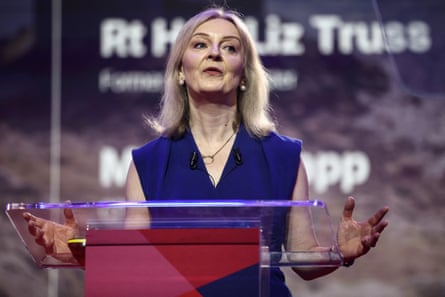
The disclosure that millions in US taxpayer dollars are set to be distributed to Conservative-led groups founded in the UK presents an early transatlantic challenge to incoming Labour prime minister Andy Burnham, who said last week that he would be “very upfront” with Trump about any disagreements.
On Wednesday, German chancellor Friedrich Merz responded to the prospect of grants to Maga-aligned groups in Berlin by saying: “I do not want the American government or institutions close to the government to interfere in German elections.”
A state department spokesperson said that the DRL grants would “continue to undergo the Department’s standard and rigorous vetting process by grant professionals” and that decisions were still under “active deliberation”. They added: “Our foreign assistance programming is aligned to support our strategic priorities. “
Both grants are “sole source” grants, meaning that they are to be awarded without any competition to 878 and FSU International.
There is also an allocation of $3m to the Jobs Foundation, for a program called “Countering Overregulation to Advance American Investment.” The Jobs Foundation is a UK charity that “champions the role of business as a force for good” and appears to have fewer than 10 employees.
The charity describes its goal as “to ensure Britain is a place where businesses can flourish so they continue to be an effective tool for alleviating poverty and unemployment.”
Its president is Matthew Elliott, formerly chief executive of the official pro-Brexit campaign, Vote Leave. Its chief executive is Georgiana Bristol, former development director of the rightwing thinktank the TaxPayers’ Alliance.
The grants are part of a broader shift that has caused dismay among veterans of the state department. In interviews, five former officials suggested that there has been a months-long effort by Trump-aligned individuals in the state department to subvert normal funding procedures and allocate US taxpayer money to conservative and Maga-aligned causes in the UK and Europe.
A former US official who reviewed the allocations called the lack of procedure around them “outrageous and absurd”.
“Sole source awards require significant legal justification to avoid required competitive processes,” they said.
“They are usually given to entities with unique capabilities that are hard to find elsewhere. But in this case I would argue that these entities are being funded to subvert legal and competitive processes.”
Another said that the sole source grants laid out in the document amounted to “horrible stewardship of US taxpayer money.”
The plans are laid out in a congressional notification seen by the Guardian, which documents how the state department intends to spend a sum of money that was allocated last year to a branch of the state department called the Bureau of Democracy, Human Rights, and Labor (DRL).
They come after the state department earlier this week said it would offer grants of up to $3m to groups focused on “developing civilizational bonds” and “defending rule of law” in Europe.
State department grants are generally competitive and highly regulated, with organisations having to demonstrate solid administrative capabilities and a track record of handling funds.
Show more
One of the former officials characterised recent efforts across Europe as bizarre, and described being told of plans to give money to “some guys” with barely any visible organisation.
Several US officials appear to be spearheading these efforts, they said. Sarah B Rogers, who recently spoke at a conference in London, pledged $500,000 in US funding to “promote digital freedom” earlier this year. Darren Beattie, a rightwing political commentator who is now a senior state department official, met with Markus Frohnmaier, of the rightwing Alternative für Deutschland, in Washington DC last year.
The document says that the grant to 878 will “strengthen the transatlantic partnership” by addressing “common threats to Western civilisation, such as mass migration, censorship, lawfare and supranational governance”.
878 has yet to list any specific initiatives, but says that it is focused on “mass migration”, “warfighting” and “rejuvenating energy abundance for urgent re-industrialisation”, as well as “Judeo-Christian culture”.
Approached by the Guardian, Young said that Free Speech Union International had “expressed interest in applying for grant funding from the US State Department.”
Young said that Free Speech Union International has not submitted a formal application and has not been awarded a grant.
This is in line with State Department procedures for awarding grant money, which would require it to submit a congressional notification before inviting selected organisations to apply for the money. For “sole source” grants, such an application would be largely a formality.
A spokesperson for the Jobs Foundation said that it was “under consideration for project funding for a piece of international economic research that will help support the policies needed to create more jobs”.
It added that it is a “cross-party charity which seeks to ensure that Britain is a place where businesses can flourish” and said it looks forward to working with incoming UK prime minister Andy Burnham “just as we worked with the Starmer government and opposition parties”.
Jacob Rees-Mogg and Radomir Tylecote did not respond to a request for comment.





 English (US) ·