.png)
 2 hours ago
25
2 hours ago
25
5 min readNew DelhiFeb 8, 2026 06:39 AM IST
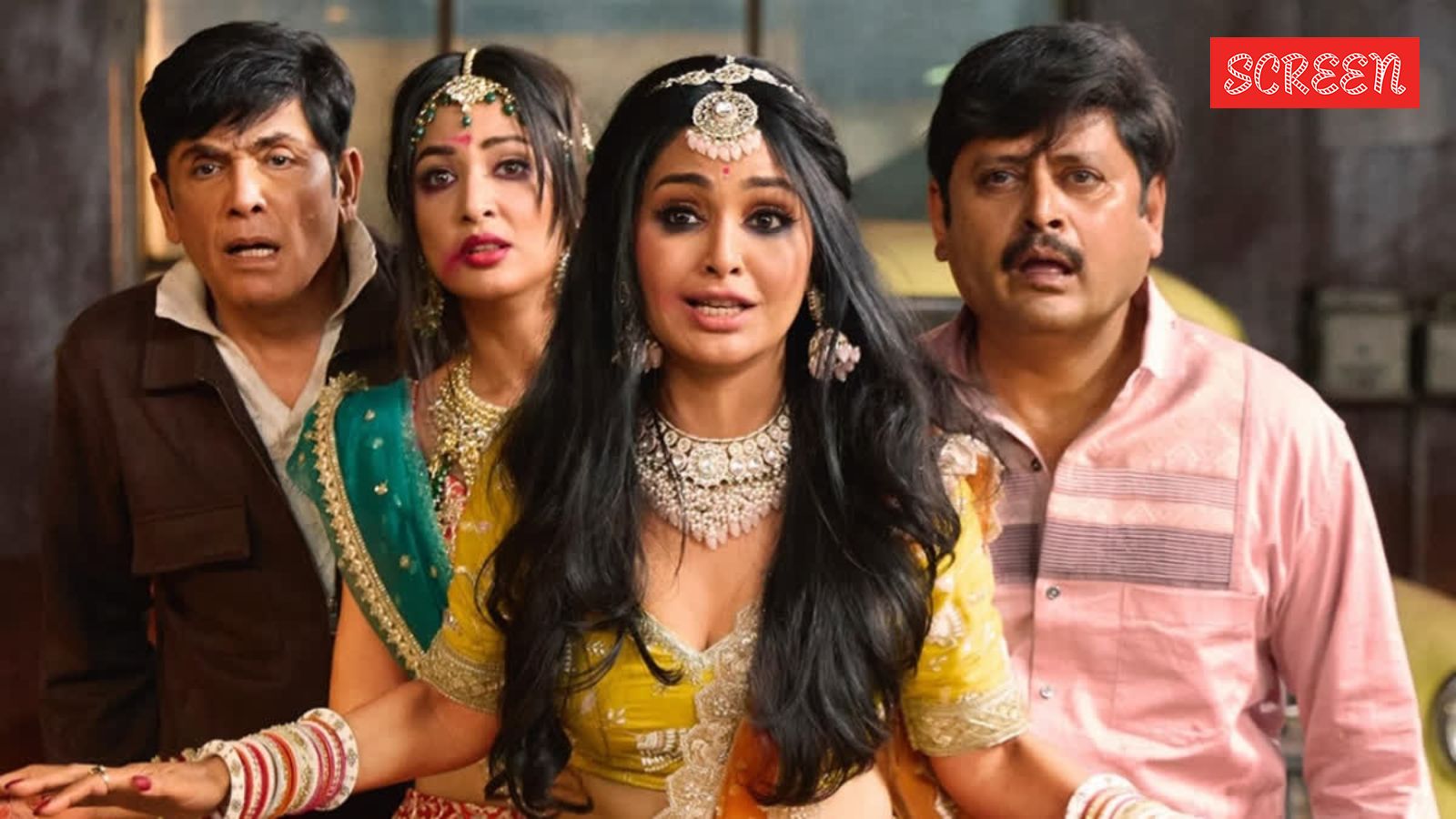 Bhabhiji Ghar Par Hain review: Film outshines big budget comedy. (Photo: IMDb)
Sometimes you walk into a theatre expecting disappointment, only to be pleasantly surprised. Bhabhiji Ghar Par Hain! is one such film. Given the track record of television shows transitioning to the big screen—and the recent spate of loud, exhausting slapstick comedies—expectations were modest. Yet, in a cinematic space dominated by inflated budgets, star power, and forced humour, Bhabhiji quietly emerges as a more self-aware and, surprisingly, smarter comedy.
Unlike recent big-ticket entertainers such as Housefull 5 and Son of Sardaar 2, which seem to mistake vulgarity for wit, Bhabhiji Ghar Par Hain! understands a basic but often ignored principle of comedy: timing matters more than excess. Where larger films desperately hunt for laughs—zooming into cleavage, lingering between women’s legs, groping female bodies in dark frames and passing it off as “mulayam” humour—Bhabhiji largely resists that temptation. It does not scream for attention. Instead, it waits, observes, and allows humour to emerge from character and situation.
Backed by the show’s original producers, the film reunites its core creative team—writers Raghuvir Shekhawat, Shashank Bali, and Sanjay Kohli, with Bali also directing. This continuity is crucial. The movie feels less like a cinematic reinvention and more like an extended episode that knows exactly what it is and whom it is speaking to. There is no attempt to over-glamorise the cast or artificially inflate the narrative. The innocence of the characters, the familiar misunderstandings, and the everyday chaos remain intact.
At its best, Bhabhiji Ghar Par Hain! proves that comedy does not require characters to be dumbed down to work. The banter between Vibhuti Mishra (Aasif Sheikh) and Angoori (Shubhangi Atre) remains its strongest pillar. Angoori’s innocence—especially her habitual confusion with words—continues to deliver some of the film’s most effective moments. The anticipation of her next verbal slip becomes a gag in itself. Rohitashv Gour’s Manmohan Tiwari lands occasionally and adds value, but his impact never quite matches Vibhuti’s sharp timing and screen presence.
Vidisha Tripathi, playing Anita Mishra, is let down by a thinly written role; despite her screen presence, the character is reduced largely to repetitive introductions, leaving her character underutilised. Ravi Kishan and Mukesh Tiwari inject freshness into the narrative, their banter adding weight and texture, while Ravi’s self-aware humour lands with surprising subtlety. A special sequence featuring Ravi, Rohitashv Gour, and Aasif Sheikh stands out, when Ravi’s character Shakti aggressively pushes the idea of killing them. The humour peaks in their wildly exaggerated imagination and, more importantly, in Ravi’s distinctive reaction to it, which delivers the film’s loudest and most organic laugh.
What truly distinguishes Bhabhiji from its big-budget contemporaries is its use of small, clever nuances. A visual gag like “Child Beer” standing in for chilled beer, or the film’s timely commentary on how dependent people have become on DIY YouTube videos during moments of crisis, reflects an observational humour rooted in lived reality. These jokes may not land every single time, but more often than not, they hit the right spots—tickling the audience instead of bullying them into laughter.
Story continues below this ad
In contrast, Housefull 5 and Son of Sardaar 2 rely on chaos, noise, and repetition. Their humour is loud, often juvenile, and exhausting, built on the assumption that vulgarity automatically equals comedy. Despite their scale and star power, they frequently feel tone-deaf and desperate, pushing discomfort as entertainment. Bhabhiji, with far fewer resources, understands restraint—and that restraint becomes its biggest strength.
That said, the film is not entirely free of flaws. Its opening stretch unnecessarily sexualises both the bhabhis, objectifying them through awkward angles and intrusive camera work. These moments feel regressive and uncomfortable, briefly aligning the film with the very brand of humour it otherwise avoids. However, what works in the film’s favour is its willingness to correct course. As the narrative progresses, the cheap zoom-ins disappear, replaced by confidence in dialogue and writing—proof that the makers trust their material rather than leaning on visual discomfort.
The film also slows down in the second half, losing some momentum and leaning too heavily on familiarity instead of fresh comic situations. A tighter edit could have sustained its energy till the end. Yet even in its weaker moments, Bhabhiji remains more controlled and self-aware than many of its louder peers.
Bhabhiji Ghar Par Hain! may not be flawless, and it certainly isn’t trying to be revolutionary. But it understands its identity. It proves that humour does not lie in how far one can push vulgarity, but in knowing the right space, the right moment, and the right note to strike. In a landscape crowded with overproduced, tone-deaf comedies, this modest film’s clarity of purpose makes it not just tolerable—but surprisingly satisfying.

Jyothi Jha is an incisive Copy Editor and multi-platform journalist at The Indian Express, where she specializes in high-stakes entertainment reporting and cinematic analysis. With over six years of diverse experience across India’s leading media houses, she brings a rigorous, ethics-first approach to digital storytelling and editorial curation. Experience & Career Jyothi’s career is characterized by its breadth and depth across the media landscape. Before joining the editorial team at The Indian Express, she honed her expertise covering the entertainment beat for premier national broadcasters, including NDTV, Republic Media, and TV9. Her professional journey is not limited to digital text; she has a proven track record as an on-air anchor and has successfully managed production teams within the high-pressure segments of Politics and Daily News. This 360-degree view of newsroom operations allows her to navigate the complexities of modern journalism with veteran precision. Expertise & Focus Areas Guided by the Orwellian principle that "Journalism is printing what someone else does not want you to do," Jyothi focuses on transparent, accountability-driven reporting. Her core areas of expertise include: Cinematic Deconstruction: Analyzing the social subtext of mainstream Bollywood and South Indian cinema (e.g., Kantara, Masaan, Dabangg). Toxic Masculinity & Gender Studies: A vocal critic of regressive tropes in Indian cinema, she often highlights the industry's treatment of women and social progress. Box Office & Industry Economics: Providing data-backed predictions and analysis of film performance and superstar fee structures. Exclusive Multimedia Coverage: Conducting deep-dive interviews and long-form features that bridge the gap between archival history and modern pop culture. Authoritativeness & Trust Jyothi Jha has established herself as a trusted voice by prioritizing substance over PR-driven narratives. Her background in hard news and political production provides her with a unique lens through which she views the entertainment industry—not merely as gossip, but as a reflection of societal values. Readers rely on her for "Journalism of Courage," knowing her critiques are rooted in a deep respect for the craft and a refusal to settle for superficiality. Her ability to pivot between daily news and specialized entertainment analysis makes her a versatile and authoritative pillar of The Indian Express newsroom. ... Read More
Click here to follow Screen Digital on YouTube and stay updated with the latest from the world of cinema.
© IE Online Media Services Pvt Ltd






 English (US) ·