.png)
 2 hours ago
20
2 hours ago
20
What’s the last romantic comedy you watched? Barely a couple of years after we all sought refuge in rom-com haven to escape the pervasive doom of a global pandemic, the much-loved genre is struggling to thrive. It’s been replaced by a more angsty cousin, the intense romantic drama. The ‘com’ has taken a backseat as intensity has taken over the wheel. Why does love come embedded with anger now? What happened to the candyfloss, the bubblegum, the climactic proposal/reconciliation at the airport? What happened to all the clichés?
“I think, consciously or subconsciously, we’re all reacting to the world around us. There’s a lot of uncertainty, uneasiness, and violence, whether it’s between countries or even within them. We’re all also much more aware and connected. So, how can the hate around us not get to our idea of love?,” says Aanand L Rai, who’s helmed the full range, from a rom-com franchise like Tanu Weds Manu to his blockbuster intense romance Tere Ishk Mein, starring Dhanush and Kriti Sanon, which released in cinemas last year.
His latest production, Bejoy Nambiar’s Tu Yaa Main starring Adarsh Gourav and Shanaya Kapoor, released on the eve of this Valentine’s Day. It has elements of a rom-com, but has to rope in a crocodile and a survival drama to bait an audience too restless for breezy rom-coms. It’s up against Vishal Bhardwaj’s romantic thriller O’Romeo, starring Shahid Kapoor and Triptii Dimri, a tale tossed in love but also revenge.
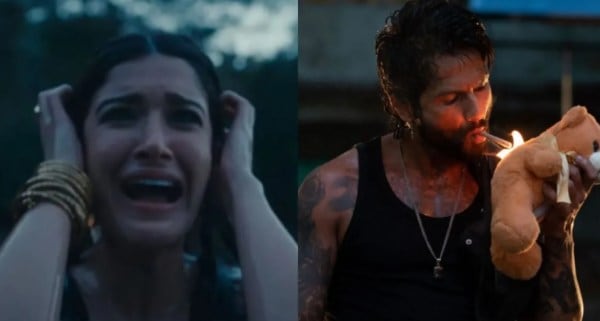 Tu Yaa Main and O’Romeo are the Valentine’s Day releases this year.
Shahid (Kabir Singh, 2019) and Triptii (Animal, 2023) have been a part of the Sandeep Reddy Vanga school of love that takes an eye for an eye, a slap for a slap as default in a romantic relationship. The fact that they’ve been a part of seminal rom-coms like Jab We Met (2007) and Laila Majnu (2018) respectively doesn’t stop them from advocating a love of a higher degree of intensity, and often moral ambiguity, since that’s in vogue today.
Adivi Sesh, who has written Dacoit: A Love Story, yet another upcoming action romance in which he stars opposite Mrunal Thakur, feels India doesn’t know how to treat love casually. “As a culture, we treat love very deeply. We don’t mingle this easily, nor do we abandon that easily. As opposed to San Francisco, where I grew up, and where it wasn’t very uncommon to see people get divorced. We have a thehrao here. Even when things are going bad, we want to see what happens,” he tells SCREEN.
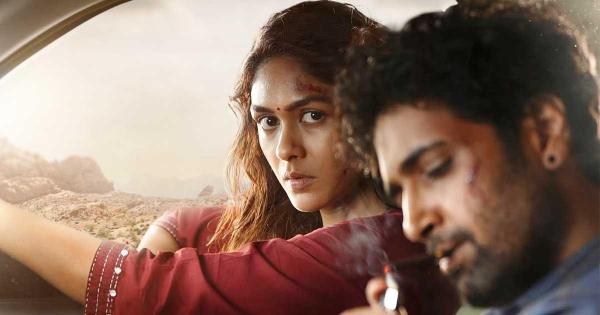 Mrunal Thakur and Adivi Sesh’s Dacoit: A Love Story is a clash between ex-lovers.
With that, he echoes what Shah Rukh Khan once said about the two extreme ends of love he’s played on screen, from the possessive kind in Yash Chopra’s Darr (1991) to the swashbuckling archetype in his son Aditya Chopra’s Dilwale Dulhania Le Jayenge (1995) — both have to do with obsession of the positive kind or the negative. His range begs the question, why are we chasing the Darrs, the Anjaams, and the Baazigars, instead of the DDLJs, the Kuch Kuch Hota Hais, or even the Kabhi Haan Kabhi Naas, Kundan Shah’s 1994 masterclass in gentle, harmless stalking. Well, his Ra.One director would partly blame the star for that, for turning to action with Pathaan, Jawan, and the upcoming King.
Story continues below this ad
Action is in
Anubhav Sinha, who’s previously helmed the rom-com franchise Tum Bin, has organically evolved to more sociopolitical dramas like Mulk, Article 15, Thappad, and the upcoming Assi. But unlike most filmmakers in the industry who merely bank on trends, there’s been a gradual shift within him. He recalls feeling screwed once he walked out after watching Atlee’s 2023 action thriller Jawan, starring Shah Rukh Khan. “I thought now for the next six years, there’ll be only action films. Everybody would want to make a Jawan,” recalls Sinha.
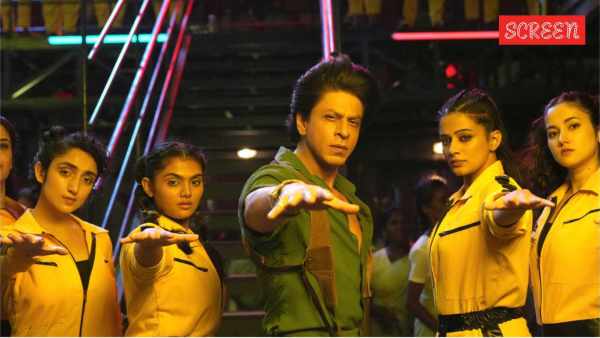 Shah Rukh Khan, the face of India’s top romances, has become an action star with Jawan.
Although the romance in Jawan was fleeting and unproblematic, to have the brand ambassador of the Indian rom-com trade guns for roses came as a rude shock to a huge chunk of his core fanbase. Two years later, Yash Raj Films, which once defined romance for an entire generation or two, sprang up a surprise with Mohit Suri’s Saiyaara, which became the highest grossing film ever with newcomers, Ahaan Panday and Aneet Padda.
“I hope that’s a trend that catches on because when there’s a successful film of certain kind, we follow that formula, so to say. Just hoping it doesn’t become formulaic love stories,” says Gauri Shinde, who last directed Dear Zindagi (2016). But even a Mohit Suri had to knock on many doors before he could get a Saiyaara greenlit, without compromising on his signature voice of telling a tortured but pulsating love story. And moreover, it’s still an intense love story with a very angry protagonist.
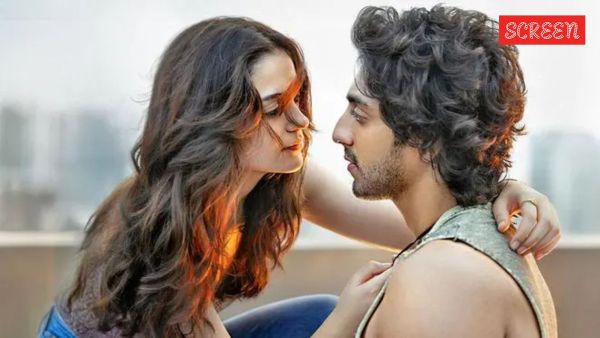 Aneet Padda and Ahan Panday’s Saiyaara was the surprise hit from last year.
That explains why an O’Romeo takes precedence on the eve of Valentine’s Day over Ravi Udyawar’s more breezy rom-com, Do Deewane Seher Mein, starring Mrunal Thakur and Siddhant Chaturvedi, which has been pushed to the following week. Romance has to come conjoined with intensity now, as much as comedy must not let go of horror or action. It’s this hybrid mix that seems to be working the best at the box office, whereas purists like genre films (thrillers, supernatural or psychological) and rom-coms have now been relegated to streaming.
Story continues below this ad
Rom-coms’ new home
The pandemic has accelerated the inevitable — the audience now prefers to step out of their homes to visit theatres mostly for spectacles. Yes, Karan Johar’s rom-coms like Kuch Kuch Hota Hai and Kabhi Khushi Kabhie Gham did make for sprawling spectacles, but even the filmmaker now admits that this bracket of mid-sized cinema — rom-coms or high-concept movies — has been obliterated completely from the theatrical ecosystem as it’s found a new home in streaming.
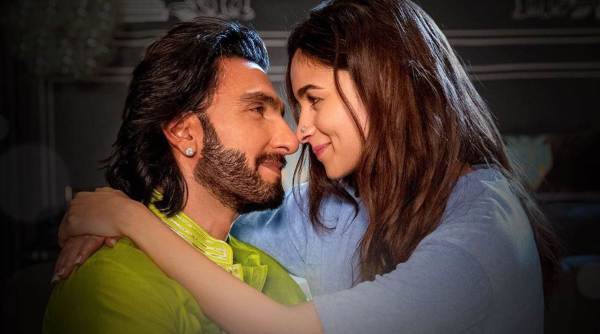 Ranveer Singh and Alia Bhatt’s Rocky Aur Rani Kii Prem Kahaani is one of the better rom-coms in recent memory.
“Big screens are now reserved for spectacle films that feel like events. Romance, on the other hand, has quietly migrated to the living room, becoming a comfort watch meant for personal screens rather than collective viewing,” points out Ishita Moitra, screenwriter of Johar’s last directorial Rocky Aur Rani Kii Prem Kahaani (2023), one of the few standout rom-coms in recent memory. “While structurally it was a classic rom-com, scratch beneath the surface and the film carried far more. As Karan calls it, it was really a ‘fam-com’. It had the buoyancy and charm of a romantic comedy, but the emotional architecture of a family drama,” argues Ishita.
But even Rocky Aur Rani Kii Prem Kahaani was three years ago. Dharma’s rom-coms from last year, like Shauna Gautam’s Nadaaniyan and Shashank Khaitan’s Sunny Sanskari Ki Tulsi Kumari, bombed miserably whether on Netflix India or in theatres. What’s the point of a love story if the only lens you’re left with is hate watching? Yet there’s also been Vivek Soni’s Aap Jaisa Koi, starring Fatima Sana Shaikh and R Madhavan, which is an antithesis to the angry romances, the Ikkis to a Dhurandhar. But the tragedy is that such rom-coms are too much of a gamble to release in theatres because their trade expectations are painted with the same brush as the oversized spectacle.
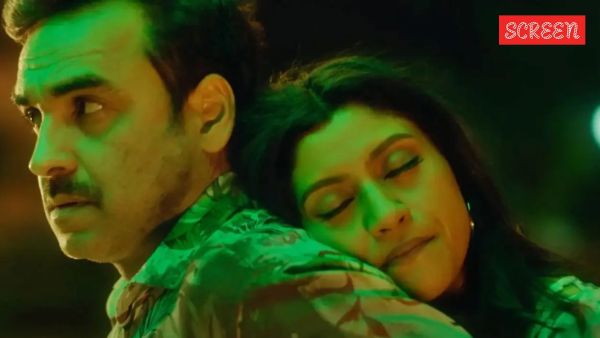 Anurag Basu’s Metro… In Dino is an example of a successful rom-com from last year.
Anurag Basu’s musical romance Metro… In Dino is no Rs 100 crore club member. But it more than recovered its budget of Rs 47 crore with a Rs 67 crore worldwide haul. But to even get there, it took a lot fo weeks, as is the need of the rom-com genre which operates more on word of mouth than marketing muscle. This is why Ashwiny Iyer Tiwari, who helmed the 2017 rom-com Bareilly Ki Barfi, starring Ayushmann Khurrana, Kriti Sanon, and Rajkummar Rao, doesn’t see the relegation of rom-coms to streaming as unfortunate. “I’d call it a transition and a phase which should be embraced with a positive attitude. Streaming has allowed many intimate, gentle stories to reach audiences without the pressure of opening weekend numbers,” she says, hopeful that theatres also will soon make room for fuzzy feelings instead of vacant thrills.
Story continues below this ad
Cynicism over escapism
Rom-coms shifting from dark cinema halls to cozy living rooms has also got to do with how escapism is being consumed today. What was once a collective experience of escaping one’s loveless life through frothy rom-coms like Kal Ho Naa Ho, Salaam Namaste, Bunty Aur Babli, and Socha Na Tha, has become a private experience on one’s smartphone because it goes against the grain of the crop burning out there. “There was a lot of unrest around the world in 2008-2010 too, but escapist rom-coms never left the scene,” recalls Aanand L Rai. There were rom-coms despite that phase, like his Tanu Weds Manu (2011), Jaane Tu Ya Jaane Na (2008), and Yeh Jawaani Hai Deewani (2013).
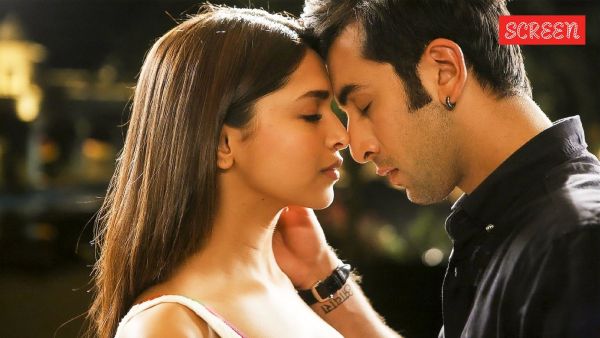 Deepika Padukone and Ranbir Kapoor’s Yeh Jawaani Hai Deewani performed exceptionally even after its re-release last year.
Now, the trouble is that cynicism isn’t confined to doomscrolling and news channels, but has also entered dating life. “With endless choices available at the swipe of a finger, romance today is faster, more transactional, and far less patient. And patience is essential to love. Romance demands time, attention, and emotional investment,” says Ishita Moitra. “In Hindi cinema, mohabbat was often co-related with bandagi — devotion, devotion, surrender, a kind of reverence. Love was something to be placed on a pedestal. The modern, hyper-practical approach to relationships stands in direct contrast to this idea, making old-fashioned cinematic romance feel increasingly out of sync with the world we now inhabit,” she adds.
Gauri Shinde also admits a good rom-com is “difficult to write”, and Anubhav Sinha laments there’s no history of 50 First Dates (2004) or the Julia Roberts rom-com in India. That’s why an Imran Khan has to do a desperate Katti Batti after being the poster boy of urban rom-coms. It’s taken him a decade to strike back with Danish Aslam’s Adhoore Hum Adhoore Tum, being touted as a ‘mature rom-com’. Or the metrosexual man of the early 2000s, Saif Ali Khan, slowly and surely transitioned into character roles than being hailed as the rom-com star he was. One of the architects of his metrosexual persona, Kunal Kohli, doesn’t believe the fading of the genre has to do with the audience as much as it’s to do with the actors themselves.
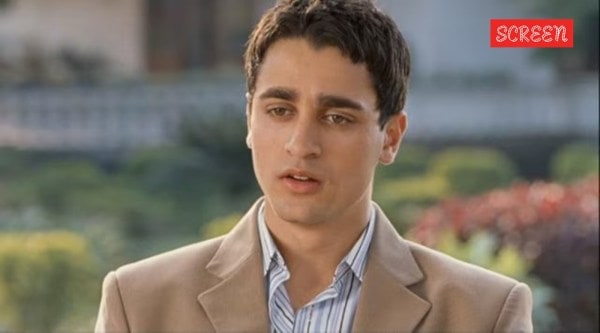 Imran Khan returns to movies and rom-come after 10 years.
“Hum Tum worked because even though it had a new packaging, the basics weren’t trying to be modern. Our soul was desi,” says Kohli. “Now, where the rom-coms go wrong is they try to bring in silly phrases like ‘situationship’ and ‘benching’. People don’t care about them. These phrases come and go. Modern is a new thought process, it’s not a new word,” argued the filmmaker. He believes what’s also stopping rom-coms from embracing modernity is the unwillingness of the men involved to change with the times.
Story continues below this ad
Women at par with men
“The heroes want to be the be-all and end-all of the film. You hear Mohit Suri saying how many women turned down Saiyaara because they felt it’s the girl’s story, not the boy’s story,” says the Hum Tum director who feels women need to be at par with men in every good love story. “Mughal-e-Azam can’t only be about Salim, there has to be an Anarkali. Kajol’s role in DDLJ is as important, if not a little more, than Shah Rukh’s. In Kuch Kuch Hota Hai, the narrative is from Kajol’s point of view,” argues Kohli.
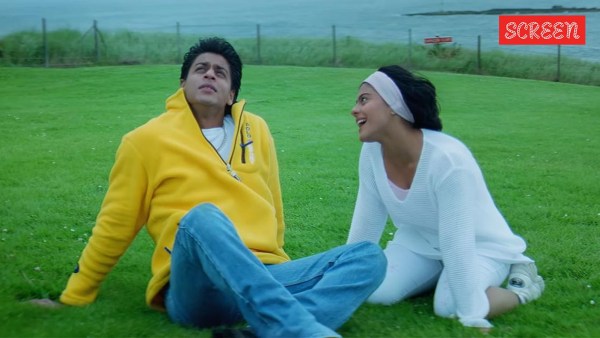 Shah Rukh Khan’s Kuch Kuch Hota Hai was as much about its leading lady, Kajol.
Shinde also attributes patriarchy as a cause behind sidelining of the rom-com genre. “Female audiences are considered the majority of rom-com viewership. They say men are men, they won’t watch love stories. But that’s not true. Men also secretly enjoy romance,” she points out. But most men out there may not relate with the men of her movies, like a Jehangir Khan (Shah Rukh) in Dear Zindagi. As women get empowered year by year, the young modern woman of the early 2000s would evolve into an increasingly uncompromising one. As Sridevi’s character says in Shinde English Vinglish (2012), she needs respect, not love.
Sample Hollywood’s most recent (anti) romcom, Sam Raimi’s Send Help starring Rachel McAdams, which has a fairly romantic setting — two unlikely fellows stranded on a tropical island (how Kaho Naa… Pyaar Hai!), but it unpredictably yet excitingly turns into a thriller, a battle of the sexes because that’s what would happen when men don’t move with the times with grace and let women have their long-awaited place in the sun. Three movies in the same year — Zara Hatke Zara Bachke, Rocky Aur Rani Kii Prem Kahaani, and Tu Jhoothi Main Makkar — revolved around the woman’s struggle to reserve a home independent of the guy’s family, a growing concern among young working women of today.
All those three films worked at the box office despite their more feminist stances. That implies men lapped it up as much as women did. But the number of those men is still quite low. Successful rom-coms of earlier days had a sexist lens only to the extent that women were only a means to the end of men’s coming-of-age. But the manic pixie dream girl looks really like a sweet dream today. Over the 2010s, rom-coms transformed from aspirational tales and international locales to rooted stories in the hinterland. As this small-town man got represented on screen — and simultaneously in life thanks to social media — their disappointment with a changing world became more vocal and also creeped into the kind of movies they wanted to watch and make.
Story continues below this ad
Also Read: Why Rajpal Yadav couldn’t repay his Rs 9 cr debt despite earning in crores, having a 30-year career
That’s how today’s angry young man is different from Amitabh Bachchan’s in the 1970s. Unlike the latter, the former is a rebel with no cause. Or the latent cause is only to secure a future where men regain the little control they’ve lost by worshipping what made them the apex predator in the first place — anger, brute strength, and a destructive streak. But evolution is testament to the fact that as time progresses, primal will give way to emotional, homogeneity to nuance, and scale to intricacies. Cinema, a reflection of society, is as cyclical. We’ve watched enough rom-coms by now to know that we live in hope, plucking one petal after another, asking the universe, “He loves me, he loves me not.” Or what’s more the need of the hour: “He respects me, he respects me not.”




 English (US) ·