.png)
 1 hour ago
21
1 hour ago
21
Heated Rivalry: I am a self-confessed sucker for love stories. I grew up on the classics, the kind of cinema that makes your chest ache and your pulse quicken. But let’s be honest, somewhere along the way, love stories stopped feeling like love stories.
They became templates.
A burnt out professional takes a holiday to some quaint location, could be a Christmas market, could be a lakeside town, could be a vineyard, and meets someone who “teaches them to live again.” Bonus points if that person dies by the end, leaving our protagonist staring out of windows forever. Change the setting, add or subtract a best friend, add in some acoustic music, and you have 90% of OTT romance content today. It feels less like filmmaking and more like seasonal content dumping.
As someone who grew up watching stories where love consumed, transformed, even destroyed, this new assembly-line romance feels oddly… hollow.
Heated Rivalry storyline
When Heated Rivalry arrived in India on Lionsgate Play, it came with social media buzz. Episodes briefly scored perfect 10s on IMDb. But as a millennial who grew up on classic love stories, I didn’t expect much.
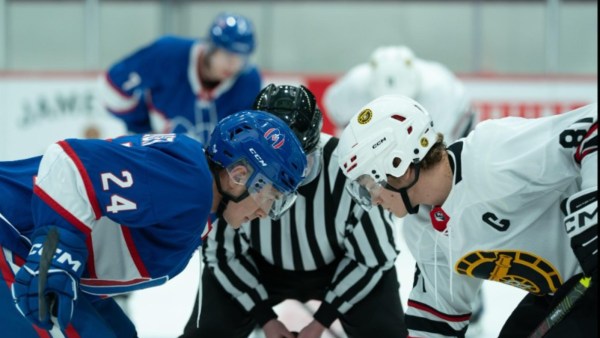 A still from Heated Rivalry.
A queer romance set in the world of ice hockey? Two things I have no personal connection with. And yet, I watched it. And I’m glad I did. Don’t misunderstand me: I’m not comparing Heated Rivalry to classic romances. But in this current drought of good love stories, this show arrived like monsoon rains – unexpected and refreshing.
Heated Rivalry, based on romance novel by Rachel Reid, at its core is about forbidden affair between two rival ice hockey players: Ilya Rozanov (Connor Storrie) and Shane Hollander (Hudson Williams). They’re enemies on the ice and absolutely, undeniably attracted to each other. In the hypermasculine world of professional hockey, their desire is dangerous. Coming out isn’t just a personal decision; it’s a professional risk that could change locker room dynamics, endorsements, leadership roles, even legacy.
The show chronicles a decade-long secret. It isn’t just about the physical pull; it’s about the agony of stopping yourself from feeling for the one person you are supposed to defeat.
Story continues below this ad
Intimate scenes, awesome chemistry, but that’s not it
The chemistry between Rozanov and Hollander is palpable, crackling with tension and want. But while the intimate scenes are electric, they aren’t the heart of the show.
What makes this show good is everything happening between those heated encounters. It’s about two men actively fighting their feelings because acknowledging them means confronting an impossible situation. Ilya is comfortable with his sexuality but comes from a background where coming out is unthinkable. Shane discovers his sexuality as the show unfolds. We watch their hesitation, their helplessness, their refusal to admit what their hearts already know, because admitting it means wanting something they cannot have.
For all its reputation as a steamy story, Heated Rivalry quietly thrives in its gentlest moment.
During a joint press conference, a foot nudge that starts as sexual teasing evolves into a silent code of support. It becomes their trademark, a way of saying “I’m here” when they can’t say it out loud.
Story continues below this ad
 A still from Heated Rivalry.
They call each other “Hollander” and “Rozanov” at first. But as feelings deepen, those barriers fall away, and they become “Shane” and “Ilya.” The intimacy of a first name feels earned.
There’s a scene where Ilya speaks to Shane in Russian about his father’s death, confessing his love—knowing Shane can’t understand the words but needing to say them anyway. Episode six, set in a cottage away from the world, is raw and honest and heartfelt, showing two people trying to figure out if love is worth the risk.
Subplot that is also equally heartfelt
In episode three and five, much of the emotional weight isn’t carried by Rozanov and Hollander but by Scott Hunter, captain of the New York hockey team, and his love interest, Kipp, an attendant at a smoothie shop. Scott is a closeted gay man suffocating under the weight of his secret. He’s resigned himself to living this half-life until retirement—until he meets Kipp. But Scott can’t come out. He won’t. And Kipp refuses to remain a secret forever. So they part ways.
Story continues below this ad
Then comes episode five. Scott wins the cup. And in that moment of triumph, with cameras flashing and crowds cheering and his entire team watching, he makes a choice. He calls Kipp from the stands and kisses him on the ice, in front of everyone.
 A still from Heated Rivalry.
It becomes a turning point — not just for Scott, but for Shane and Ilya too, watching from different teams. In his speech, Scott says he chose a field where hypermasculinity reigns supreme, where locker-room jokes and outdated attitudes made him hide who he was for years. “Fear is powerful,” he says, “but love is more powerful.”
The whole subplot is so endearing that you can’t help but feel happy for them when he finally comes out. It’s a reminder that the show is also about the courage to choose love when everything tells you not to.
The transformation of Ilya Rozanov
One of the most satisfying arcs is watching Ilya transform. He begins with a tough, don’t-care exterior, keeping everyone at arm’s length. But as his feelings for Shane deepen, we see the walls come down. By episode six, he’s a different person, softer, more open, more vulnerable. When things go awry, he comforts Shane with a tenderness that would have been unthinkable in earlier episodes. It’s a beautiful reminder of how love changes us, how it allows our true selves to emerge from behind whatever armour we’ve built.
Story continues below this ad
 A still from Heated Rivalry.
Reimagining masculinity
The show portrays masculinity in ways we rarely see – men who are ambitious, strong, successful leaders, yes, but also vulnerable, scared, and capable of deep empathy. In most mainstream romances, there are woman absorbing vulnerability or becoming an emotional anchor. Here without a female lead, we get to imagine what well-rounded masculinity actually looks like.
Love is universal (and that’s the point)
I am a heterosexual millennial woman, and I found my heart completely melting for two gay hockey players falling in love. Watching two men fall in love didn’t feel distant from the romances I grew up watching. I felt their longing. I ached during their emotional scenes. I celebrated their realisations. I rooted for them to make it work against impossible odds.
Why? Because love is universal. It transcends gender, situation, circumstance. The desire to be seen, to be known, to be chosen—that belongs to all of us.
Why Heated Rivalry works
The show doesn’t just give us steamy scenes (with sizzling chemistry). It gives us two men being emotionally available without losing their strength. It shows that love can exist in hostile spaces, vulnerability can coexist with strength.
Story continues below this ad
And most importantly, it reminds us that love doesn’t belong to any one group of people. It belongs to all of us.
For generations, gay men have rarely seen themselves as the heroes of their own love stories, especially stories with happy endings. In Heated Rivalry, they are not just present but celebrated—successful, admirable, finding happiness through their own virtues and determination. Their dreams can come true. They are the heroes.
For a millennial who thought she’d seen every trope in the book, it reminded me why I fell in love with love stories in the first place.





 English (US) ·