.png)
 2 hours ago
26
2 hours ago
26
For an entire generation, Vaishnavi Macdonald will always be Geeta Vishwas, the fearless journalist from Shaktimaan, one of Indian television’s most iconic shows that aired between 1997 and 2005. But long before she became a familiar face on television, Vaishnavi lived a life defined by struggling childhood, supernatural experiences, and a strong commitment to her personal boundaries.
Due to the volatile “ego hassles” between her parents, Vaishnavi’s early education was a casualty of their war. “We used to live in hotels because of fights between mom and dad,” she told Siddharth Kanan. “We’d move from one hotel to another. How could I go to school?”
Despite missing six years of formal schooling between the 4th and 10th grades, Vaishnavi was sharp academically. “I was very good academically; I wanted to be a scientist, not an actor,” she says.
Father’s disappearance and mother’s desperation
But fate had other plans. Just when the family moved into a rented outhouse in Hyderabad and life seemed to be settling into some stability, her father disappeared without any explanation. “At 14, I started speaking to God, asking Him if He couldn’t see our problems. Within two or three months, my father disappeared. We couldn’t trace him at all.”
With no income and no support system, her mother borrowed money and brought Vaishnavi and her younger sister to Mumbai to look for their father. They lived in a lodge and started searching for their father. With no money left for rent or food, Vaishnavi’s mother reached a breaking point and considered ending all three of their lives — something she revealed years later. “My mom thought of committing suicide and also killing us. She told us later, ‘I was going to give you something to eat (poisoned).’ I was 16 and my sister was 12. She didn’t want us to fall into the wrong hands.”
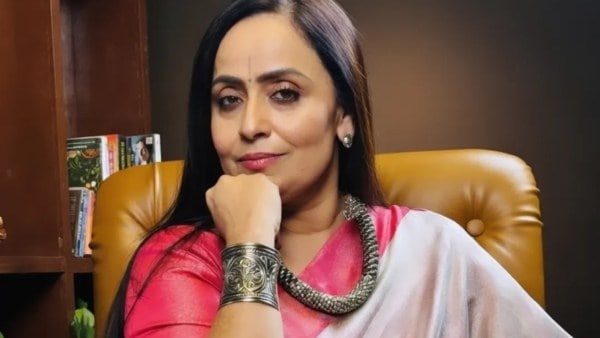 Vaishnavi Macdonald is a popular television face.
In a final act of desperation, her mother took her to a nearby church. It was there that Vaishnavi claims her life changed forever. “I had a supernatural experience. I felt the power of God and started crying.” When they returned to their lodge, they found a bundle of crisp, new 100-rupee notes outside their door—the exact amount needed to clear their bills. “Since then, I started believing in God. Within two weeks, we shifted into a fully furnished 1-BHK. It was all a miracle.”
Vaishnavi eventually reunited with her father two years after his disappearance. He had remarried, having converted to another faith, which explained why he had left. She chose forgiveness. “I forgave him… I was with him when he was on his death bed.”
Story continues below this ad
Veerana became her big break, but it was a curse
Her first brush with fame came as a child actor in the cult Ramsay Brothers horror film Veerana (1988), where she played the younger version of the possessed protagonist, Jasmine. However, the horror didn’t stay on screen. “I felt I got possessed after working in Veerana,” she says. “I used to get up and start walking. I was awake but I couldn’t stop walking. I was like this for a month.”
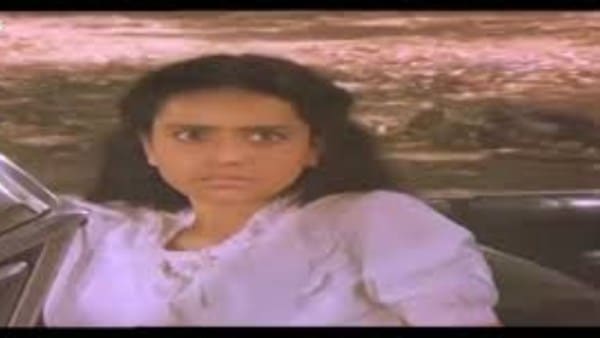 A still from Veerana.
This was not her only brush with the metaphysical; at 14, she describes a vivid out-of-body experience where she saw her own body lying on the ground while practicing yoga. These experiences convinced her that humans are “spirit beings” temporary inhabiting physical forms.
Surviving Bollywood ‘ragging’
She transitioned into adult roles out of necessity. A family acquaintance suggested she begin working since continuing education wasn’t financially possible. A portfolio shoot by photographer Jagdish Mali , done free of cost, led to film offers. “I got four films with new heroes and new producers. None of them were completed and all remained shelved. But I did get paid, which helped us get by and that’s how my journey began,” she said.
Story continues below this ad
While she gained “five-minute fame” for her appearance in the hit song Ladki Hai Kya from the film Laadla (1994), she felt deeply uncomfortable with the “item girl” image the industry tried to force upon her.
The real test came when she was signed as the lead for a big-budget film. The hero and director demanded she attend an all-men “evening gathering” alone. “My mother was always with me, and that bothered them,” she explains. When she refused to leave her mother behind for a shoot in Switzerland, she was unceremoniously dropped from the project. Even after the film’s solo song had been shot, the production chose to remove her. “They told us the posters were already printed, but I could not continue. My name was removed. My mom used to cry hearing how the hero and director talked about me. It was like ragging.”
History repeated itself when a “very big director” called her for a dinner date just after casting her for a film alongside Sharad Kapoor. When she diplomatically suggested they get to know each other first, he simply told her to “forget the film.”
Choosing television
Exhausted by the toxicity of the film industry, Vaishnavi made a choice that her mother feared would end her career: she moved to television. Despite her mother’s concerns that TV would lock her out of cinema, Vaishnavi accepted Mukesh Khanna’s offer to play Geeta Vishwas in Shaktimaan (1998). The role became a cultural phenomenon, turning her into an icon of 90s television.
Story continues below this ad
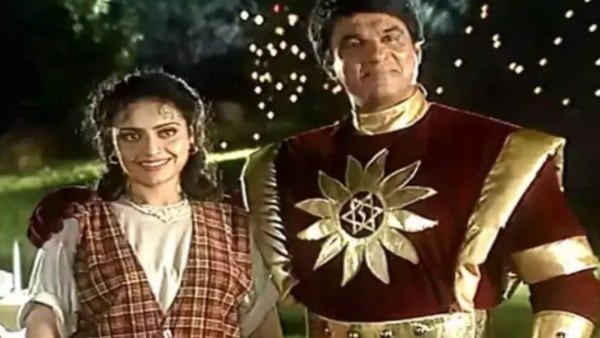 A still from Shaktimaan
It was on the small screen where she truly flourished. Over the years, she appeared in a wide range of shows across genres — from youth dramas like Miley Jab Hum Tum to family sagas like Sapne Suhane Ladakpan Ke, and later series such as Tashan-E-Ishq, Kyun Utthe Dil Chhod Aaye and Meet.
In recent years, she has continued to command the screen as Parminder Bajwa in Parineetii and through roles in shows like Hum Paanch Ab Ayega Asli Mazaa.



 English (US) ·