.png)
 48 minutes ago
5
48 minutes ago
5
3 min readJul 23, 2026 12:27 PM IST
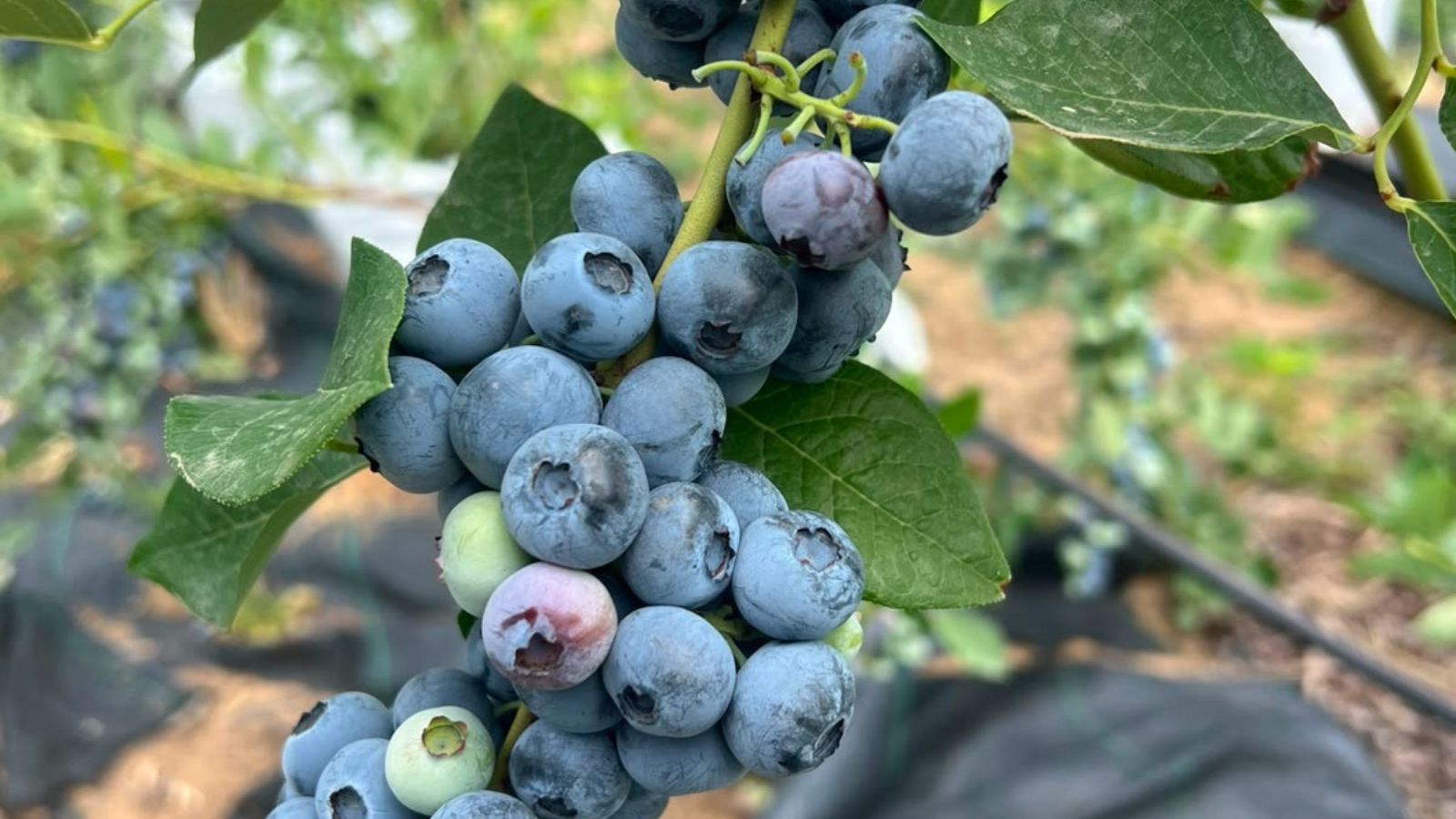 Blueberries from SKUAST's trial plantation in Kashmir. (Express Photo)
For generations, the apple has dominated Kashmir’s horticultural landscape. But recent trials in the Valley appear to have opened a new, and previously unexplored, frontier: blueberries.
An experimental plantation by the Sher-i-Kashmir Institute of Science and Technology (SKUAST) under a Department of Science and Technology (DST)-funded project appears to have shown encouraging results. Experts believe the fruit can complement Kashmir’s mainstay of apple by growing in viable horticultural lands unsuitable for apple — the foothills and marshy land.
“The results [of the trial] were phenomenal. The size of the berries, the taste is far better than we had expected. The idea is not to present it as an alternative to apples but as a fruit that will complement apples,” says Ashaq Pandit, head of Pomology department at Sher-i-Kashmir Institute of Science and Technology (SKUAST) Kashmir.
Unlike apples, which need well-drained, loamy and slightly acidic soil, blueberries need highly acidic soil — such as that found near mountains, streams and marshy land.
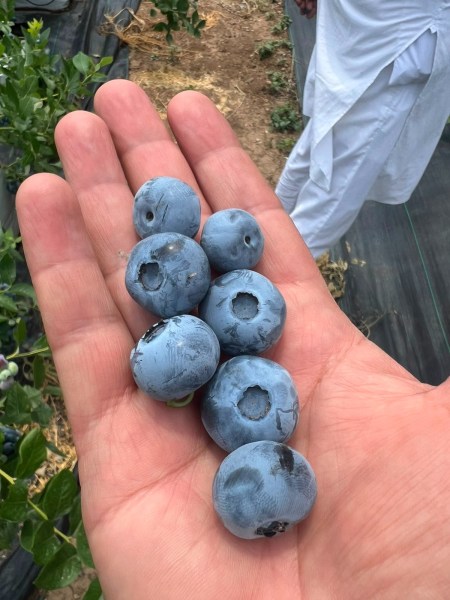 A handful of promise: Blueberries could be Kashmir’s next horticultural success.(Express Photo)
The experts say blueberries, a short bushy plant, grow well in acidic soil with a pH of 3.5 to 4.5, where apple trees can’t grow.
“We have large areas of degraded land like the land near the mountains, land surrounding streams and the marshy land,” Pandit said. “By planting blueberries, these tracts can be converted into productive land. Since we can plant them in grow bags, we can plant them in places that are prone to floods and remove them to safer places when needed.”
Growing blueberries can also be rewarding. Widely considered a superfood, blueberries are low in calories and packed with powerful antioxidants, fibre, and essential vitamins — meaning that they fetch profitable prices.
In India, blueberries sell for around Rs 2000 per kilogram.
Story continues below this ad
“On an average, we can grow around 3,200 plants on an acre of land. At a conservative estimate of two kilograms per plant, an acre of land will give us 6,400 kilograms. Since blueberry is an exotic, high-value fruit, if we assume a farmgate price of only Rs 1,000 per kilogram, it turns out to be Rs 64 lakh per acre or Rs 8 lakh for a kanal of land. Even at half of this price, it is very profitable,” Pandit, head of Pomology department at Sher-i-Kashmir Institute of Science and Technology (SKUAST) Kashmir, says.
Another advantage is that unlike apples, blueberry plants are highly disease-resistant and require very little pesticide.
“The good thing is that there are no chances of transfer of disease from blueberries to other plants,” Pandit says.
While blueberries are already grown in Madhya Pradesh, experts believe that Kashmir’s weather naturally suits their cultivation.
Story continues below this ad
“In Madhya Pradesh, they grow it under poly-house conditions. The variety produced there has different genetics and is less tasty,” he says. “Here, our weather is naturally suited for the crop.”





 English (US) ·