.png)
 21 hours ago
33
21 hours ago
33
Helen Briggs,Environment correspondentand Gwyndaf Hughes,Science videographer

 WWT
WWT
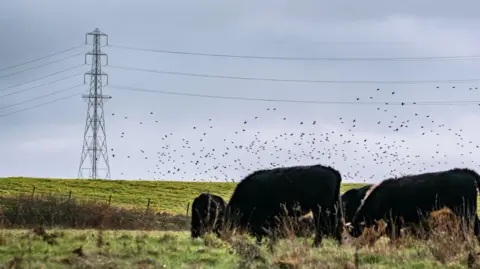
Experts are calling for urgent action to restore the natural systems that keep the economy running
Businesses risk extinction themselves unless they protect and restore the natural world, scientists across the globe are warning.
A major new report sets out how companies can shift from harmful approaches to ones that help restore nature. It comes amid major concerns over UK nature loss.
The assessment, by Ipbes (Intergovernmental Science-Policy Platform on Biodiversity and Ecosystem Services), is based on contributions from leading scientists and approved by 150 governments.
Businesses can either lead the way or "ultimately risk extinction... both of species in nature, but potentially also their own", said co-author Matt Jones, from the UN World Conservation Monitoring Centre in Cambridge.
 Getty
Getty
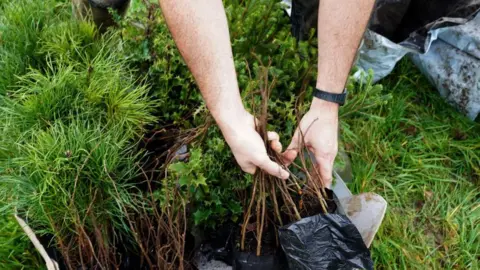
More companies are getting involved in local projects, such as community tree planting
Ipbes found that all businesses, even those seemingly far-removed from it, rely on the services nature provides for free, from clean water to fertile soils.
Co-chair, Prof Stephen Polasky, said the loss of biodiversity is among the most serious threats to business, "yet the twisted reality is that it often seems more profitable to businesses to degrade biodiversity than to protect it".
 WWT
WWT
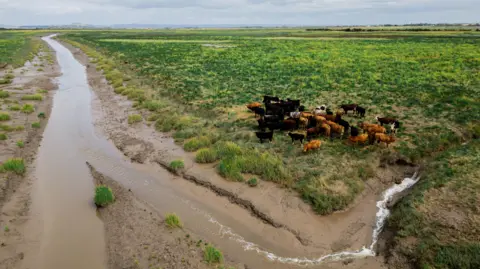
A herd of cattle stands near a muddy channel cutting through coastal wetlands at Steart, Somerset
Commenting on the report, Leigh Morris, International Director of the consortium of UK wildlife charities, The Wildlife Trusts, said we need "clear metrics and toolkits so businesses can get their own houses in order on biodiversity".
For many UK businesses, engaging with nature protection has gone from "a nice-to-do" to a "must-do", he added.
One example of how companies are working hand-in-hand with nature is at Steart Marshes in Somerset.
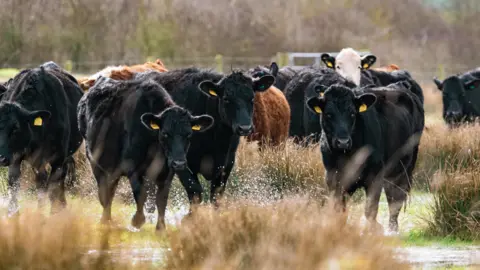
Farmers and conservationists are managing land in ways that support both wildlife and agriculture. Cattle are grazed across the marshes to create healthy habitats for birds, insects and plants.
Local farmer, Andy Darch, said the animals are helping in conservation.
"They are eating different types of grasses and trampling areas that are important for wildlife," he said. "And because they are eating such a variety of plants, it produces a really high-quality beef at the end of the day."
 WWT
WWT
Steart Marshes – one of the UK's largest new wetland reserves - creates habitat for wildlife and agriculture
Steart Marshes also demonstrates how restoring nature can benefit local communities.
Newly engineered flood banks protect nearby villages from rising waters, while the wetlands help absorb carbon and reduce pollution.
Alys Laver, from the Wildfowl and Wetlands Trust, which runs the nature reserve, said farming and conservation are working hand-in-hand.
"Not only are those flood banks an engineering marvel, they're providing flood protection for the local villages," she says.
"On the back of that we're getting a product the farmers can utilise. So it's not a loss of farming it's just a change."
 WWT
WWT
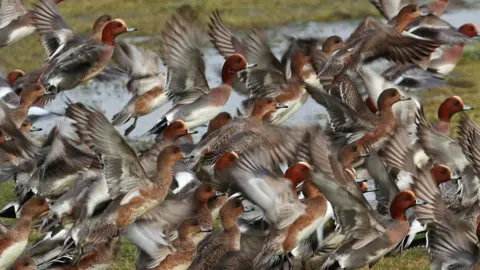
A flock of wigeon take flight over wet grassland at Steart marshes
The report pointed to everyday incentives that are driving nature's decline:
- Large subsidies that damage biodiversity rather than repair it, fuelled by lobbying from businesses and trade associations
- Confusion and a lack of meaningful action on how businesses measure their impacts and reliance on nature.
It said better stewardship of nature is not a distant environmental issue but a core challenge for every boardroom.
Yet, less than 1% of publicly reporting companies mention their impacts on biodiversity in their reports.






 English (US) ·