.png)
 14 hours ago
38
14 hours ago
38
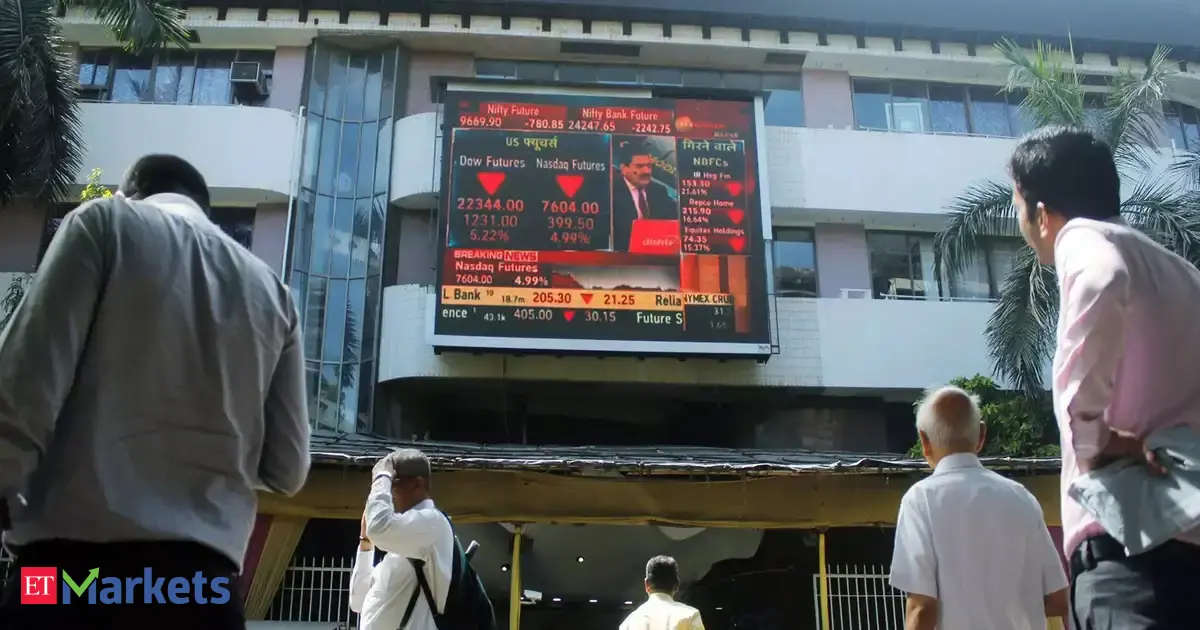
Benchmark indices Sensex and Nifty ended the week on a bearish note, closing over a percent lower each as a deepening selloff in IT stocks rattled investor sentiment amid mounting fears of AI-led disruption. Further, stronger-than-expected jobs data for January dampened hopes of a US Fed interest rate cut.
Here are 7 factors that could decide market action in the coming week:
1.) Infosys, Wipro ADRs rebound - After a brutal two-day selloff that saw Infosys and Wipro ADRs plunge as much as 14.5%, Friday’s session brought a much-needed breather. Bargain hunting kicked in at lower levels, sparking a sharp rebound as Infosys climbed 3% while Wipro gained 4%—helping both stocks close the week on a far stronger note. International brokerage firm JP Morgan has a message for panic-stricken investors: IT services firms are the indispensable "plumbers of the tech world" and their dividend yields have now hit levels last seen only during the global financial crisis and COVID-19.
As Rs 5.7 lakh crore evaporates from the sector in just eight trading sessions and the Nifty IT index crashes 19% in the short span, the Wall Street giant is turning contrarian, declaring "deep value" buying opportunities in bloodied bellwethers Infosys and TCS.
2.) US CPI numbers lift rate cut bets - U.S. inflation data lifted expectations of monetary easing after the Consumer Price Index rose 2.4% year-on-year, slightly below economists’ estimates of 2.5%, according to a poll by Reuters. The softer print boosted market bets that the Federal Reserve could deliver at least two rate cuts this year.
The moderation in overall inflation drew a positive response from the White House, with a spokesperson saying on social media that America’s economy could gain further momentum through long-awaited interest rate cuts from the Federal Reserve. Even so, concerns over the labour market and rising living costs continue to weigh on public sentiment, with many Americans expressing unease about economic conditions and voicing dissatisfaction with Donald Trump’s handling of the economy.
3.) How FIIs navigate AI-led disruption fears - VK Vijayakumar, Chief Investment Strategist at Geojit Investments Limited FIIs remained net sellers to the tune of Rs 1,374 crore for the month so far. The overall figure was skewed by a sharp selloff of Rs 7,395 crore on February 13, when the Nifty fell 336 points amid heavy selling in IT stocks following the Anthropic-related shock, with the IT index plunging 8.2% during the week ended February 13.
Vijayakumar added that market sentiment has strengthened after the fiscally prudent and growth-oriented 2026 Budget and the India–US trade agreement, with large-cap valuations appearing fair given improving corporate earnings prospects for FY27. He expects FIIs to turn buyers once volatility in the IT sector subsides, adding that any extended unwinding of the AI trade in the US could further encourage foreign flows into India, which he described as a non-AI market.
4.) Rupee vs Dollar - The Indian rupee closed at 90.64 per U.S. dollar, little changed from its previous close of 90.59. A strengthening U.S. dollar, which has risen for a third straight session to 96.95 is generally negative for equities as it can trigger foreign fund outflows from emerging markets like India toward safer assets in the United States.
“USD/INR remains in a short-term corrective consolidation after rejecting recent highs but continues to trade comfortably above rising channel support near 90.20–90.40. The 90.00 zone remains the structural pivot; as long as this base is defended, the broader upward bias remains intact. A phase of consolidation appears likely before a renewed attempt toward 91.80–92.50, which in turn continues to provide underlying support to domestic bullion pricing dynamics,” Ponmudi R, CEO of Enrich Money said.
5.) Technicals flashing weakness - The Nifty has broken decisively below its recent consolidation range, closing under 25,500 after testing lower levels and forming a strong bearish candle amid rising downside momentum, largely led by weakness in IT stocks. The index is now hovering near a critical support zone of 25,400–25,300, which coincides with the 200-DMA and 200-EMA cluster, while a deeper safety net is seen around 25,200–25,000, says Ponmudi R, CEO of Enrich Money.
Immediate resistance is placed at 25,550–25,600, near the 20-SMA and a previous support area. A sustained move above 25,700–25,800 will be required to signal stabilization and potentially pave the way toward 26,000, where strong overhead supply remains.
As long as 25,300 holds on a closing basis, the broader structural uptrend stays technically intact. However, a decisive breach below this level could trigger sharper downside pressure toward lower supports. Options data suggests a bearish bias, with aggressive call writing at higher strikes and fresh put buildup at lower levels. The near-term trading range is seen between 25,200 and 25,700, with a strategy leaning toward selective dip buying at strong support zones while closely tracking global cues and shifts in open interest.
6.) US GDP data next week - Market participants will closely track the upcoming minutes of the Federal Reserve’s latest policy meeting, along with U.S. GDP data for the October–December quarter, both due next week. These releases are expected to offer clearer signals on the central bank’s policy trajectory and the near-term outlook for interest rates.
For Indian markets, such global cues carry added weight, particularly amid volatile Foreign Portfolio Investor (FPI) flows. While there were early indications of a pickup in inflows, sentiment turned cautious after sharp selling on the final trading day of the week during a global technology-led rout.
7.) Geopolitical tensions - The U.S. military is preparing for the possibility of sustained, weeks-long operations against Iran if US President Donald Trump authorises military action, Reuters reported, citing two officials, signalling the risk of a far more serious escalation between the two countries. The disclosure has raised the stakes for ongoing diplomacy, even as U.S. and Iranian representatives recently met in Oman in an effort to revive talks over Tehran’s nuclear programme after a buildup of American forces in the region heightened tensions. Meanwhile, the Pentagon has begun deploying an additional aircraft carrier to the Middle East, along with thousands of troops, fighter aircraft and guided-missile destroyers, strengthening both offensive and defensive military capabilities.
(Disclaimer: Recommendations, suggestions, views and opinions given by the experts are their own. These do not represent the views of The Economic Times)




 English (US) ·