.png)
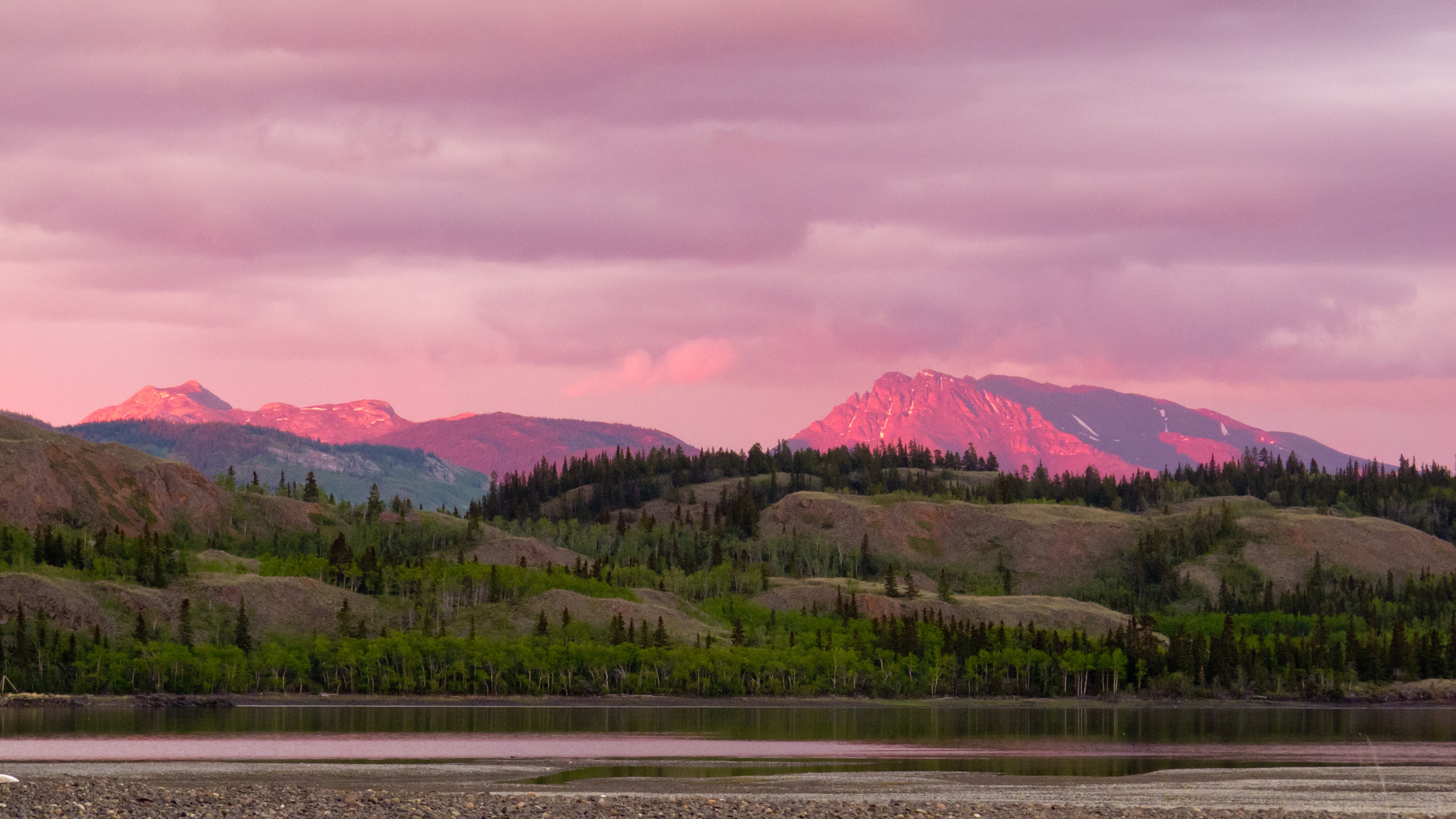
Canada could remove more than five times its annual carbon emissions from the atmosphere by the end of the century by planting trees along the northern edge of its boreal forest, a new study suggests.
In recent decades forests have slowly moved north in response to climate change — in particular the taiga area on the edge of the boreal forest, the massive belt of forest stretching across northern Canada, Europe, and Russia, where it transitions to Arctic tundra. This movement suggests a potential way to boost carbon sequestration in the area, said study lead author Kevin Dsouza, a postdoctoral researcher in Earth and environmental sciences at the University of Waterloo in Canada.
In the new study, his team used satellite data to identify forest composition and empty spaces in the northern boreal forest, and ran simulations using models from the forestry industry that included fire probabilities, climate variables, seedling mortality and land type to estimate how much carbon the ecosystem could sequester over the next 75 years.
The simulations identified around 6.4 million hectares (15.8 million acres) of land suitable for reforestation — an area about twice the size of Vancouver Island — across Canada's north. Planting trees on this land would remove almost 4 gigatons of carbon from the atmosphere by 2100, about five times Canada's current annual emissions. But that 6.4 million hectares is a fairly conservative estimate of the available land, Dsouza said. Scaling it up to 32 million hectares (79 million acres) could sequester almost 20 gigatons.
The work was published Nov. 13, 2025, in the journal Communications Earth & Environment.
Canada did have an ambitious plan to plant 2 billion trees by 2031, but it was canceled last year. As of June 2025, 228 million trees had been planted, and the government plans to honor other agreements that should see 988 million trees planted across the country.
Dsouza said the 2 billion-tree plan ran into trouble due to complicated logistics and a lack of funding, rather than any problem with the science of reforestation. "It wasn't planned well, just trying to hit a number is not the right strategy," he said. "It needs to be more strategic, planting in the right places, with economic and community benefits so it is sustainable."
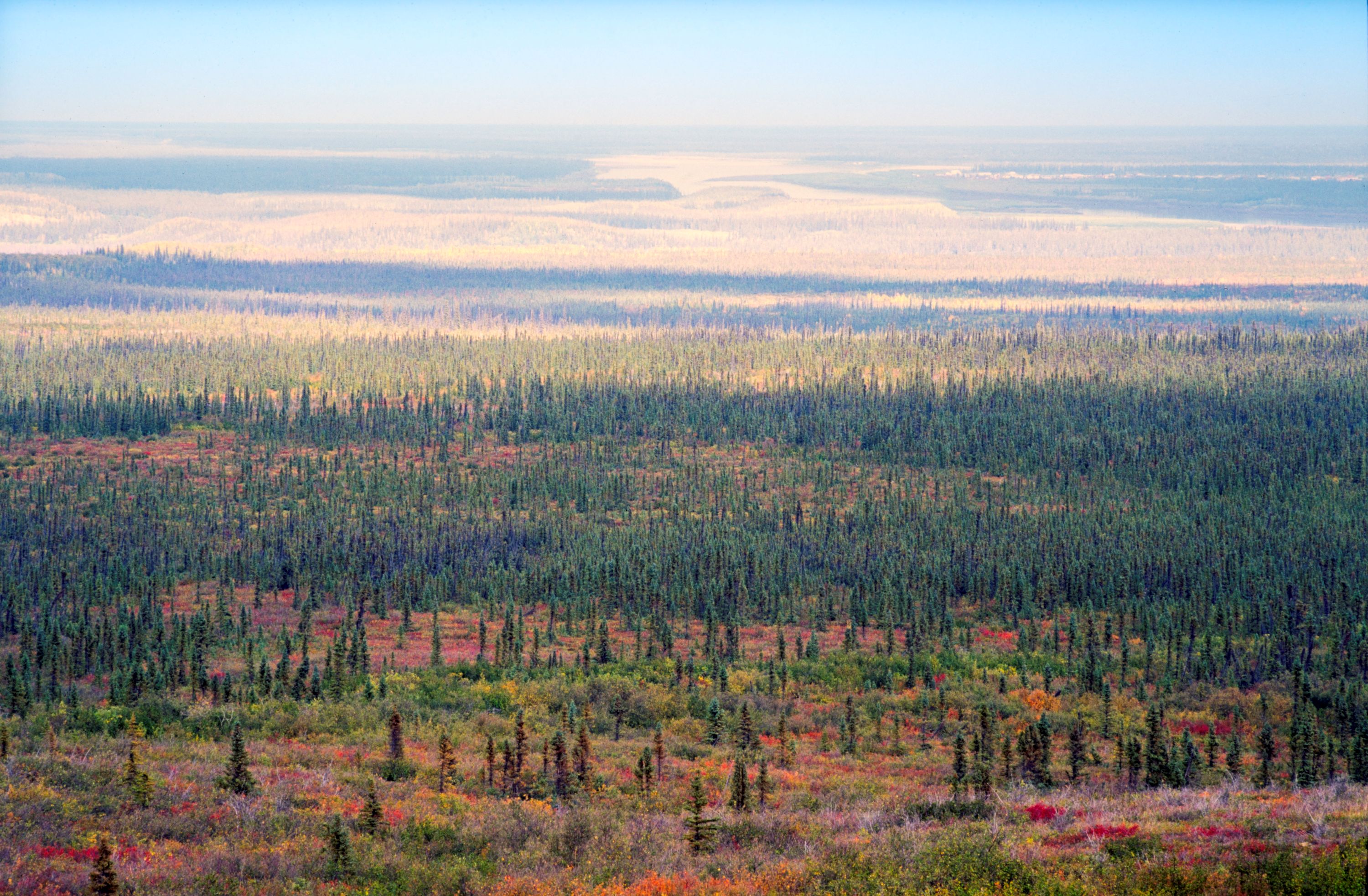
Focusing on northern areas could have the added benefit of helping to stabilize permafrost, which can release huge amounts of methane — a much more potent greenhouse gas than carbon dioxide — when it thaws, Dsouza added.
Longer term thinking needed
However, a separate team of experts disagrees with this solution and has instead proposed another way to use trees to reduce CO2.
Ulf Büntgen ,professor of Environmental Systems Analysis at the University of Cambridge in the U.K. who was not involved in the research, told Live Science that while planting trees is good for removing carbon in the short term, few advocates consider the longer term problem of carbon storage.
"Planting trees is good but it's not solving anything, it's just buying time," he said. "While the tree is growing it helps, but eventually it will die and release the carbon again."
In a study published Jan. 3 in the journal NPJ Climate Action, Büntgen and his colleagues proposed a more long-term solution: cutting down trees in the boreal forest and sinking them deep in the Arctic Ocean. They suggest targeting large mature trees in specific plots of land in Canada, Russia and Alaska, which are most susceptible to fire and store carbon less efficiently than younger trees. The deep, cold and oxygen-poor water of the Arctic Ocean would preserve the trees, and the carbon they contain, for thousands of years, he said. The harvested areas could then be replanted with new trees to restart the carbon-capturing cycle.
The team suggested that managing just 1% of the boreal forest in this way would remove 1 gigaton of carbon dioxide from the atmosphere each year.
"There's already a lot of carbon in the timber that naturally finds its way to the ocean," he said. "We could accelerate this natural process."
Dsouza, K. B., Ofosu, E., Boudreault, R., Moreno-Cruz, J., & Leonenko, Y. (2025). Substantial carbon removal capacity of Taiga reforestation and afforestation at Canada’s boreal edge. Communications Earth & Environment, 6(1), 893. https://doi.org/10.1038/s43247-025-02822-z




 English (US) ·