.png)
 2 hours ago
24
2 hours ago
24
PRIME MINISTER Narendra Modi chaired a meeting of the Cabinet Committee on Security Sunday night and in what could be taken as New Delhi’s first comments following the US-Israel massive air strikes on Iran, he said, India strongly condemned the attack on UAE and supported “de-escalation, regional peace, security and stability”.
The New York Times reported that at least four people were killed and more than 100 others were injured across the UAE, Kuwait, Qatar, Bahrain and Oman, in the missile and drone attacks by Iran in response to the American and Israeli assault.
While New Delhi did not release any statement after the CCS or the killing of Iran’s Supreme Leader Ayatollah Ali Khamenei, Modi condoled the deaths in the UAE during a conversation with President Sheikh Mohamed bin Zayed Al Nahyan on Sunday.
“Spoke with President of the UAE, my brother Sheikh Mohamed bin Zayed Al Nahyan. Strongly condemned the attacks on the UAE and condoled the loss of lives in these attacks. India stands in solidarity with the UAE in these difficult times. Thanked him for taking care of the Indian community living in the UAE. We support de-escalation, regional peace, security and stability,” Modi said on X.
Indian expats account for 35 per cent of UAE’s population, and form its largest ethnic community.
Beyond the nine million Indians living in the extended West Asian neighbourhood, what frames India’s diplomatic challenge at this juncture are its own beliefs on sovereignty and territorial integrity, a complicated relationship with Khamenei over the last few decades, sensitivities of the domestic minority community, and evolving partnership with the US.
The CCS meeting was attended by Home Minister Amit Shah, Defence Minister Rajnath Singh, Finance Minister Nirmala Sitharaman and External Affairs Minister S Jaishankar, besides NSA Ajit Doval, Secretaries in the PMO, P K Mishra and Shaktikanta Das, Cabinet Secretary T V Somanathan, CDS General Anil Chauhan and Foreign Secretary Vikram Misri. So far, there has been no official statement expressing condolences for the Iranian leader.
Story continues below this ad
The Iranian embassy in Delhi on Sunday urged governments around the world to strongly condemn the US-Israel attack on Iran and the killing of its Supreme leader. It said the US and Israel will have to endure the “grave consequences of this unforgivable crime”.
India’s attempts to navigate the West Asian crisis
Over the last few days, and weeks, India is stretching its diplomatic muscle to navigate the current crisis — from a quiet trip to Iran by India’s Deputy NSA in January to Prime Minister Modi’s recent trip to Israel, and phone calls by to foreign ministers of countries in the Middle East — External Affairs Minister Jaishankar called up Oman’s Foreign Minister. Oman has been playing a key role in mediating between the US and Iran.
The last statement from New Delhi before Khamenei’s killing expressed deep concern at the “recent developments” in Iran and the region. This was seen as neutral and well-hedged. It did not mention the attacks by US and Israel, and the counter-attacks by Iran, and appeared diplomatically distant and neutral. But some in the Gulf have perceived this as a non-acknowledgement of the serious nature of the violations of international law.
So, the first big challenge will be to frame its response post the killing of the Iranian Supreme leader, his family members, and key officials including defence minister.
Story continues below this ad
The earlier statement did call for “respect” for sovereignty and territorial integrity— a thinly veiled reference to violation of Iran’s sovereignty — and asked for “dialogue and diplomacy”.
This framing was seen as being supportive of Iran’s position, which — in its official statement —strongly condemned the attacks carried out by Israel and the US against the “sovereignty and territorial integrity” of Iran.
Khamenei and India — not an easy relationship
Secondly, India did not have an easy relationship with Iran under Khamenei. He was routinely critical of India’s treatment of minorities and his statements after the Babri masjid demolition in 1992 and Delhi riots in 2020 have not gone down well with New Delhi.
But, many diplomats recall how Tehran came to India’s rescue at the UN Human Rights Commission in March 1994, where a consensus on Kashmir – which was on the boil – was blocked by it. That was the early days of Khamenei’s leadership as the spiritual leader. While the then Prime Minister PV Narasimha Rao diplomatically dealt with him, Delhi was extremely obliged to him.
Story continues below this ad
That be so, Khamenei never held back his punches on India’s treatment of minorities.
On December 7, 1992, a day after the Babri Masjid was demolished on December 6, then Indian ambassador to Iran Hamid Ansari — who later became India’s Vice President — was summoned by the Iranian government. The Foreign ministry issued a demarche, made a public statement, and conveyed the Supreme Leader Khamenei’s concerns to the Indian envoy “behind closed doors”.
Tehran radio said that Khamenei asked Iranian Foreign Minister Ali Akbar Velayati to convey to Delhi through diplomatic channels that Muslims in Iran and elsewhere in the world could not tolerate the destruction of the Babri mosque in Ayodhya by a Hindu mob. A radio dispatch quoted Khamenei as saying the destruction of the mosque was ‘not just a local issue’
In 2019, Khamenei raised the issue of Kashmir after the government revoked Kashmir’s special status under Article 370 in August.
Story continues below this ad
Shia community, and domestic sensitivities
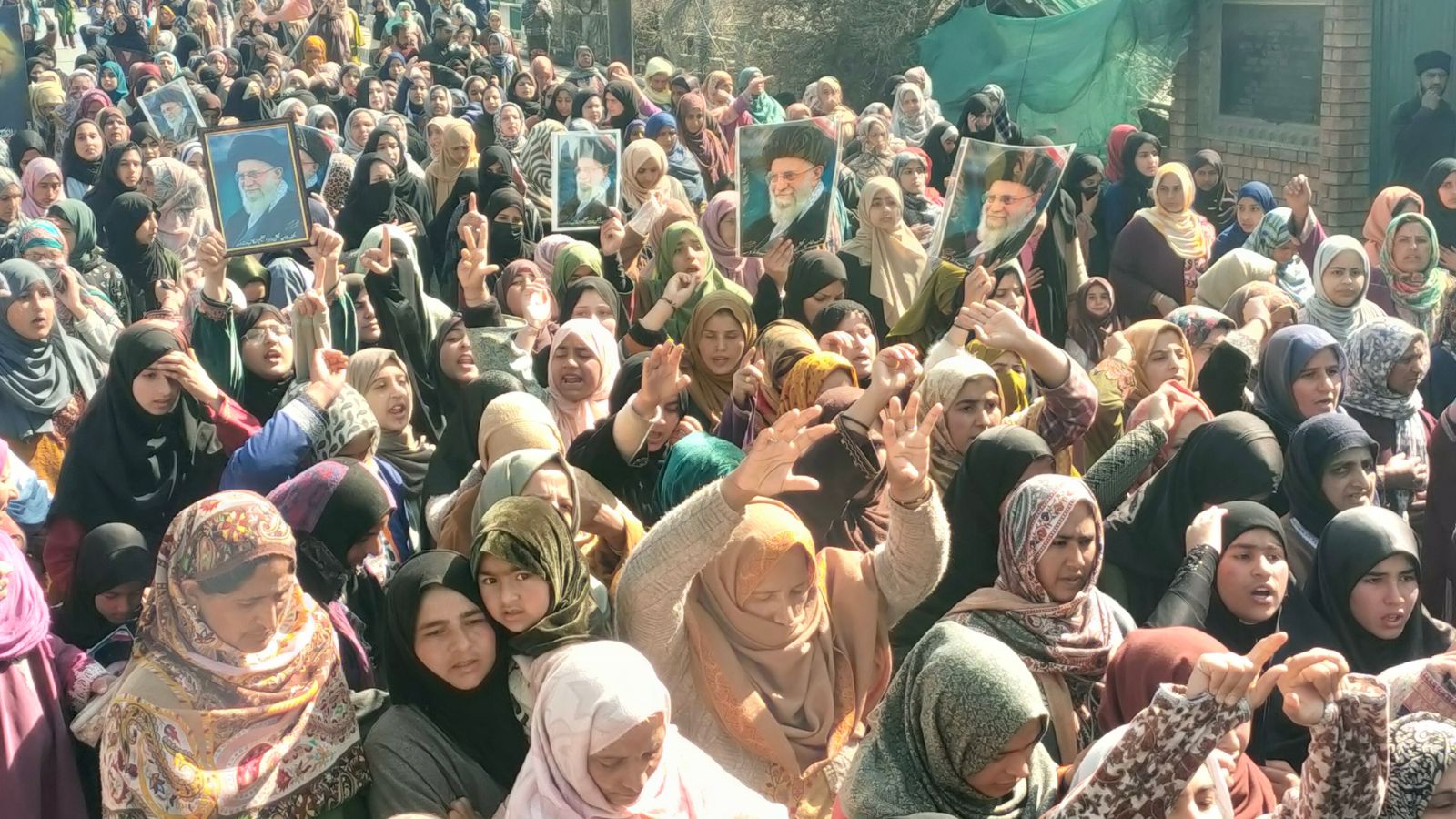
Delhi, however, understands that the Supreme leader is revered by the Shia community in the country, and has a huge following in Kashmir, Lucknow, Hyderabad — pockets of Shia population.
His killing, along with his family members including his daughter, son-in-law and grandson, makes him a “martyr”, and that is how it has been projected by the Iranian establishment. Diplomats, who have dealt with Iran, say martyrdom in the Shiaite faith is an honourable act, and the community and the nation tend to unite and mourn their elder — despite their own misgivings about his violent repressive track record.
So, it is mindful of the sensitivities about any Indian government response or non-response, and wants to assess the repercussions of the protests that have gathered momentum on Sunday.
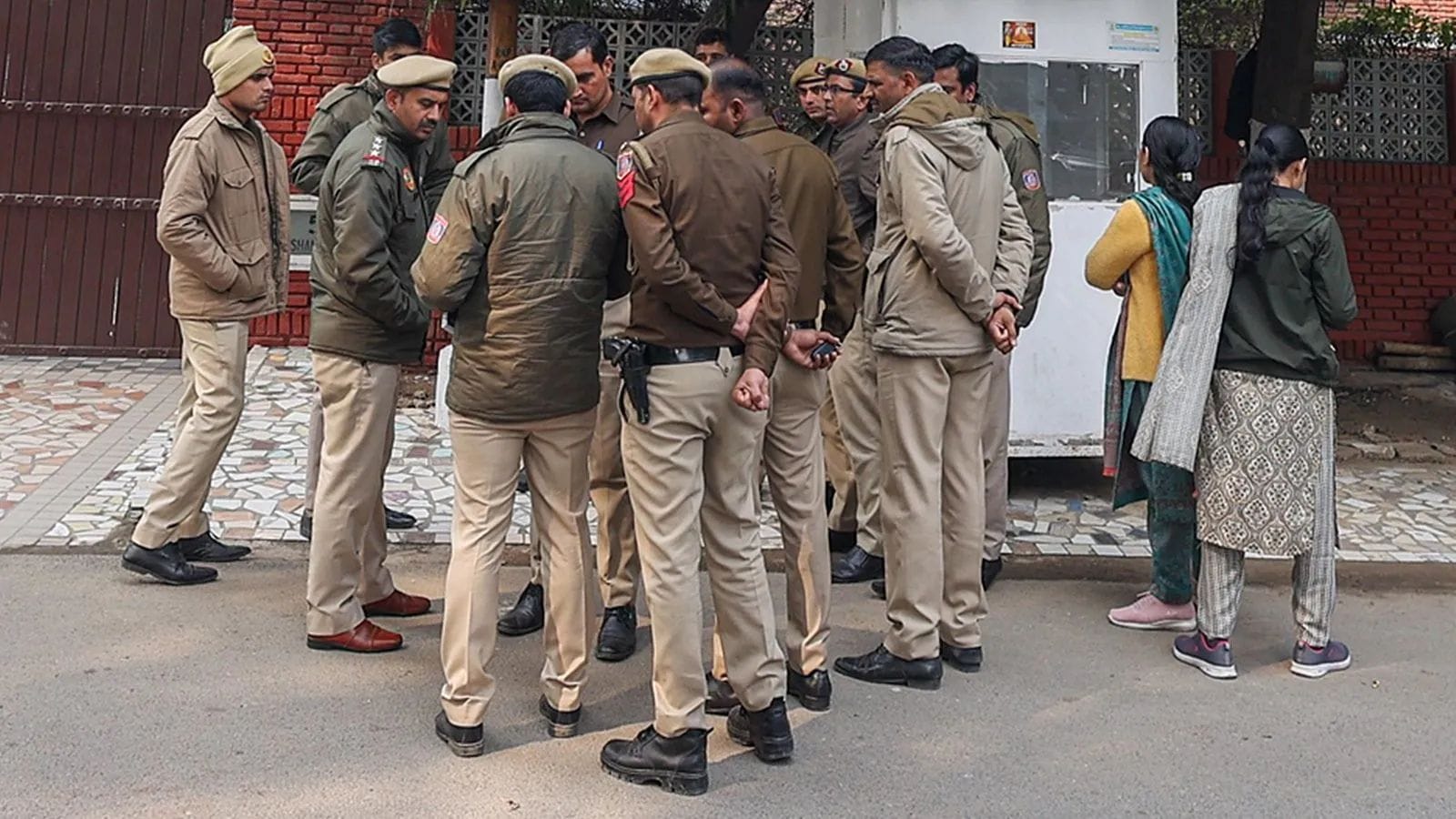
This puts the Indian security and diplomatic establishment in tenterhooks. They are continuously assessing if there is any material threat to Iranian, American or Israeli diplomatic establishments in India. There have been attacks in Pakistan on the US consulate in Karachi.
Story continues below this ad
India and Iran, going forward
India’s own engagement with Iran’s regime in the coming months is another aspect that New Delhi is very mindful of. The regime in Iran has held out on Sunday, and has signalled continuity as the Iranian state news agency IRNA said on Sunday morning that Iran’s president, the head of the judiciary and a jurist of the Guardian Council would be in charge during the transition period.
Delhi has maintained quiet channels of communication with the members of regime, and a quiet visit by Deputy National Security advisor Pavan Kapoor in January where he met Iran’s NSA Ali Larijani and other senior members of the regime is reflective of the diplomatic outreach from Delhi to Tehran.
Diplomats said that the Iranian regime has a continuity plan of upto 40 leaders in the hierarchical ladder, in case of decapitation of the top 39 leaders in the regime. That makes the regime quite deep and strong.
And, Delhi is preparing to deal with the new leadership, as its envoy in Tehran and his team has been meeting the key players over the past two years — despite the usual security and diplomatic challenges
Story continues below this ad
But, the Iranian regime has vowed full-scale revenge against the American and Israeli attacks, and the South Block will watch out for how long that lasts.
Maintaining ties with other West Asian countries
India’s engagement with the strategic partners in the region, from PM’s visit to Israel to External Affairs minister S Jaishankar’s calls to the regional partners including Iran, Israel, Saudi Arabia, UAE, Qatar, Kuwait and Bahrain. This outreach is an effort to reach out to all the partners across the aisle, and warring against each other, so that Delhi’s deep strategic and economic stakes and diaspora interests are protected.
How war will Trump push against Iran
How far will US President Donald Trump go in pushing ahead with the kinetic actions and how resilient is the Iranian regime are issues that are still unravelling.
The US administration has mobilised the largest buildup of US military in two decades to the Middle East, since the war in Iraq in 2003, and is poised to be offensive against Iran and defend its own assets and personnel.
Story continues below this ad
“This is an uncharted territory, and we don’t have the past frameworks to lean on. So we will try to be agile and nimble to deal with the situation, which is unfolding in real time,” a government source told The Indian Express.





 English (US) ·