.png)
 1 hour ago
8
1 hour ago
8
4 min readJul 22, 2026 01:22 PM IST
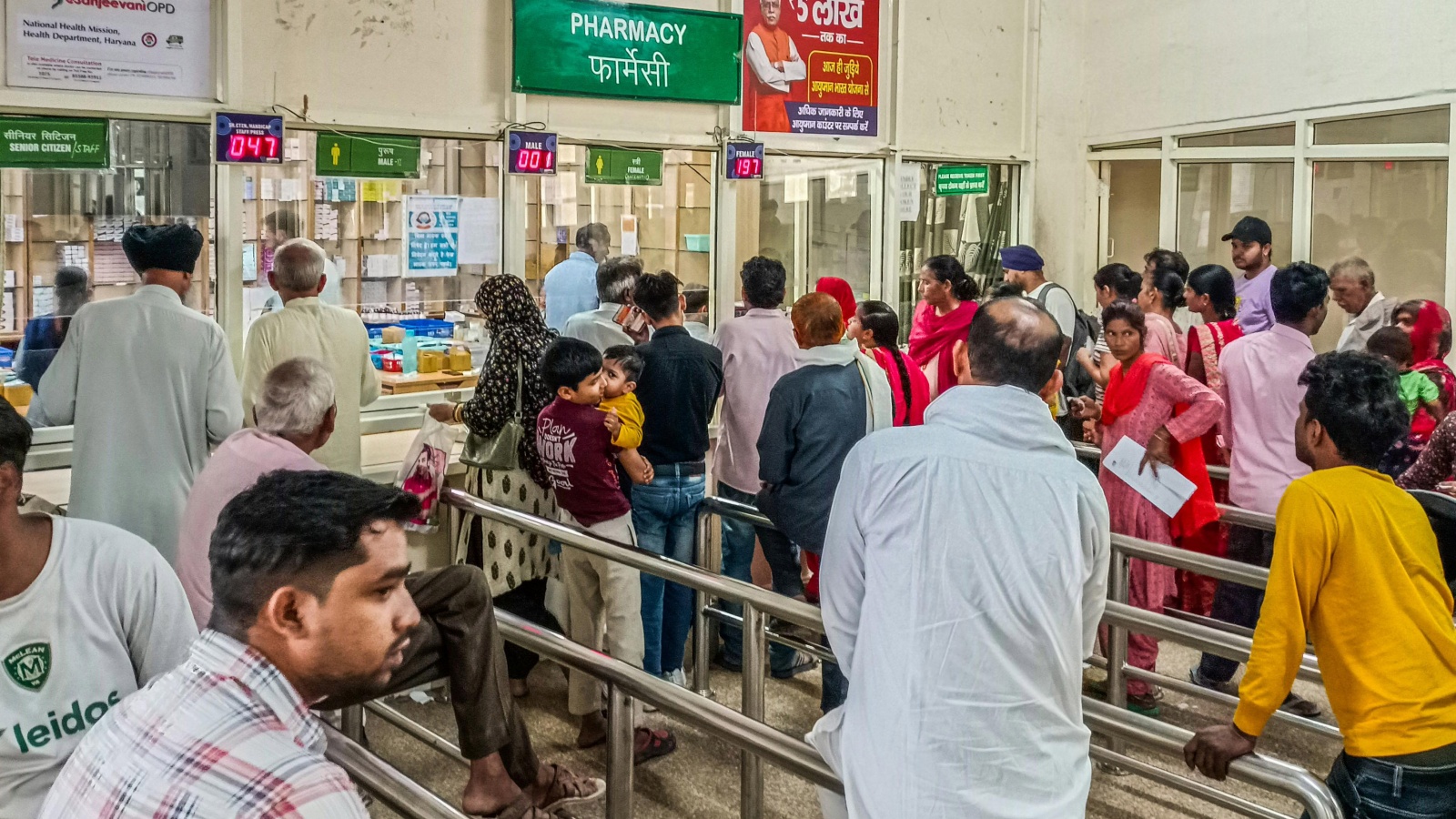 Patients line up to take medicine from a pharmacy in Civil Hospital. (Source: Express Archives)
While the Indian generic pharmaceutical industry so far remained unscathed during several rounds of US tariff announcements, US President Donal Trump on Wednesday in a Truth Social post said tariffs on economical generics from India will be raised to 200% over the next three years. The president said that the current zero percent tariff would continue for a period of another two years, which is a source of relief for the Indian industry, considering US is the biggest foreign market for them.
Experts, however, emphasised that unstable tariffs have led to the Indian pharmaceutical industry moving away from the US in the last year.
Trump in his truth social post on Wednesday early morning (India time) said: “Effective August 1st, 2026, all Generic Drugs being brought into the United States will continue to have a TARIFF of ZERO PERCENT for a two year period of time, after which the TARIFF will be raised to 100% for a one year period of time, and 200% thereafter.”
He added: “This is done in order to RESHORE Generic Pharmaceutical Production into America, with a penalty to those Companies that decide not to build Plant and Equipment within the stated period of time given to them.”
Not a serious threat
Former DG of Pharmaceutical Export Promotion Council of India (Pharmexcil) Udaya Bhaskar said: “Even during his previous presidency, at the time of Covid-19, he had said that he would support domestic manufacturing of generics and active pharmaceutical ingredients, but nobody really came forward. It is not easy for a US company to set up generic manufacturing and even if they do it is likely to cost at least 30% more than the Indian generics. Moreover, US companies would not be able to produce the kind of volumes Indian companies do.”
“It is important that we play to our strengths — we can provide quality generics at reasonable costs at scale. The generics market across the world is huge,” he said.
And, this shift to other destinations is apparent. There has been a 7.9% decline in exports to NAFTA region in 2025-26, largely driven by exports shifting from the US, according to yet-to-be released trade data provided by sources.
Story continues below this ad
Bhaskar said that the US president has been known to change his mind and take u-turns on big policy decisions so this should not concern the Indian industry at the moment. He added: “The president has said no tariffs for next two years. After that he will no longer be the president so the industry will have to wait and watch.”
At present, there is virtually zero duty imposed by the US on Indian pharmaceutical products, while India imposes around 10% duty on products it imports from the US.
The United States accounted for 34.5% of India’s total pharmaceutical export in FY2025, valued at USD 10.5 billion. To compare, the next biggest buyer was the United Kingdom that accounted for 3% of the country’s total pharmaceutical export, valued at just USD 913.9 million, according to data from Pharmexcil.
Impact in US
Any increase in tariffs on Indian generic medicines will adversely affect the US citizens. Indian companies supply 47% of all generic medicines prescribed in the US. More than half of the prescriptions of five of the ten most common therapy areas — hypertension, mental health, medicines to control lipids, medicines for nervous system disorders, and anti-ulcer drugs — were supplied by India too, according to data from IQVIA. Medicines from Indian companies provided $ 219 billion in savings to the US healthcare system in 2022, it said.
Story continues below this ad
Indian therapies have been key to expanded access in the US. An example cited by ORF said that the number of Americans, who were able to afford the cholesterol lowering drug Rosuvastatin after an Indian generic entered the US market, doubled between 2016 and 2022.







 English (US) ·