.png)
 2 hours ago
22
2 hours ago
22
Jersey’s parliament has given final approval to a bill to legalise assisted dying for terminally ill adults who live on the island.
Members of the States Assembly voted by 32 to 16 on Thursday in favour of the bill, which will now need royal assent before it becomes law.
A private member’s bill to legalise assisted dying in England and Wales is being scrutinised by the House of Lords, with some campaigners accusing peers of obstructing its passage.
The bill, introduced by the Labour MP Kim Leadbeater in October 2024, would allow adults with a prognosis of six months or fewer to live to have the option of an assisted death.
It can become law only if both Houses of Parliament agree on its final wording. This must happen before early May, when the parliamentary session is due to end.
Members of the Lords have proposed more than 1,000 amendments to the bill, raising concerns among its supporters that they are trying to block it from becoming law despite having been approved by elected MPs.
In Wales, the Senedd voted this week in favour of assisted dying services being made available on the Welsh NHS if Leadbeater’s bill becomes law. If the proposal had been rejected, assisted dying services in Wales would have been available only privately.
Under the Jersey legislation, mentally competent adults with a terminal illness who have been resident on the island for 12 months would be eligible to opt for an assisted death. An assisted dying service is expected to take at least 18 months to set up.
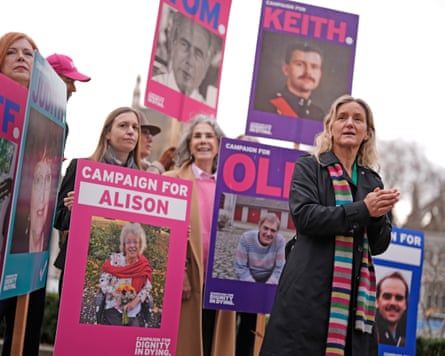
Jersey residents had indicated their support for the legalisation, with 61% backing it in a 2024 poll. A citizens’ jury in 2021 recommended that assisted dying be permitted in Jersey under specified circumstances.
Matthew Jowitt, Jersey’s attorney general, said he would be “astonished” if royal assent was not granted. He told the States Assembly: “If it [wasn’t], we would be facing a constitutional difficulty of some magnitude.”
The minister for health and social services in Jersey, Tom Binet, said: “Jersey would have one of the safest and most transparent assisted dying laws in the world.”
Louise Doublet, a States Assembly member, said: “This is one of the most meaningful things we can do for our island.
“It is a compassionate gift we are giving our island. As a humanist, I am guided by principles of compassion … It will make some really difficult moments in people’s lives a little bit less painful.”
The Isle of Man became the first place in the British isles to legalise assisted dying for terminally ill people last March, but the legislation has yet to receive royal assent.
Under the provisions of the bill, adults with a prognosis of fewer than 12 months to live who have been residents on the island for five years would be given the right to an assisted death.
Royal assent is usually granted between three and six months after a bill passes all its stages in parliament.
According to data obtained by the Press Association, the Ministry of Justice took an average of 88 days to process Isle of Man legislation over the past six years. But the MoJ has yet to process the assisted dying legislation after 337 days.
Alex Allinson, who brought the private member’s bill to the Isle of Man’s parliament, the Tynwald, said this month that he had written to David Lammy, the lord chancellor, to ask the reasons for the delay.
He said it was “important to stress our close links with the United Kingdom, but also our constitutional relationship as an independent nation”.
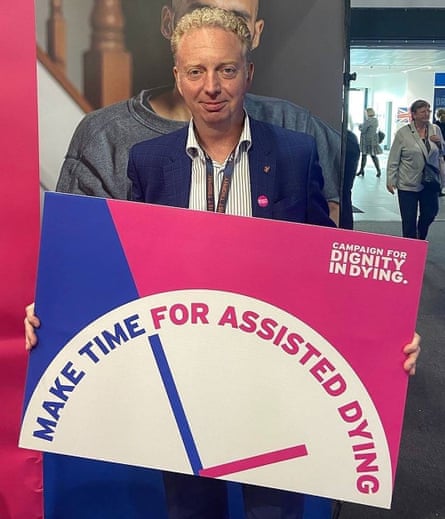
He added: “With our own parliament, we pass our own laws and we, as parliamentarians, are responsible for that.”
Allinson suggested that it was not a coincidence that royal assent on the Isle of Man bill was delayed at the same time that a private member’s bill to legalise assisted dying going through the Westminster parliament was being held up in the House of Lords.
The Isle of Man assisted dying service is expected to be operational between 18 months and two years after royal assent is granted.
The Humanists UK chief executive Andrew Copson called the vote a “historic moment” that was a “momentous vote of confidence for compassion, dignity, and choice at the end of life”.








 English (US) ·