.png)
 2 hours ago
19
2 hours ago
19
Last Updated:February 08, 2026, 10:00 IST
News18 has accessed NHPC documents inviting companies on February 5 to build the Sawalkote Hydroelectric Project in the Udhampur and Ramban districts of J&K


News18 reported last month that the Centre has issued firm directions to fast-track four major hydropower projects on the Chenab river system. File pic/PTI
India has started work on the mega Rs 5,129 crore worth Sawalkote Hydroelectric Project on the River Chenab in Jammu and Kashmir—the first such new project to get the green light from the Narendra Modi government after the abrogation of the Indus Water Treaty.
News18 has accessed the documents of the National Hydroelectric Power Corporation (NHPC) Limited inviting companies on February 5 to build this mega project in the Udhampur and Ramban districts of Jammu and Kashmir. The Sawalkote Hydroelectric Project, which in Stage One will see a 1,406 MW project coming up and a 450 MW project in Stage Two, is located on the Chenab River between the Baglihar Project to its upstream and the Salal Project to its downstream. This will be a “run of the river" project.
“Construction methodology and selection of equipment have been planned with the aim to commission the project as early as possible," reveal the documents accessed by News18, showing the urgency. Acting swiftly on projects of strategic significance following the suspension of the Indus Water Treaty, an expert committee of the environment ministry cleared the 1,856 MW project last October. Now, NHPC has invited bids to build it.
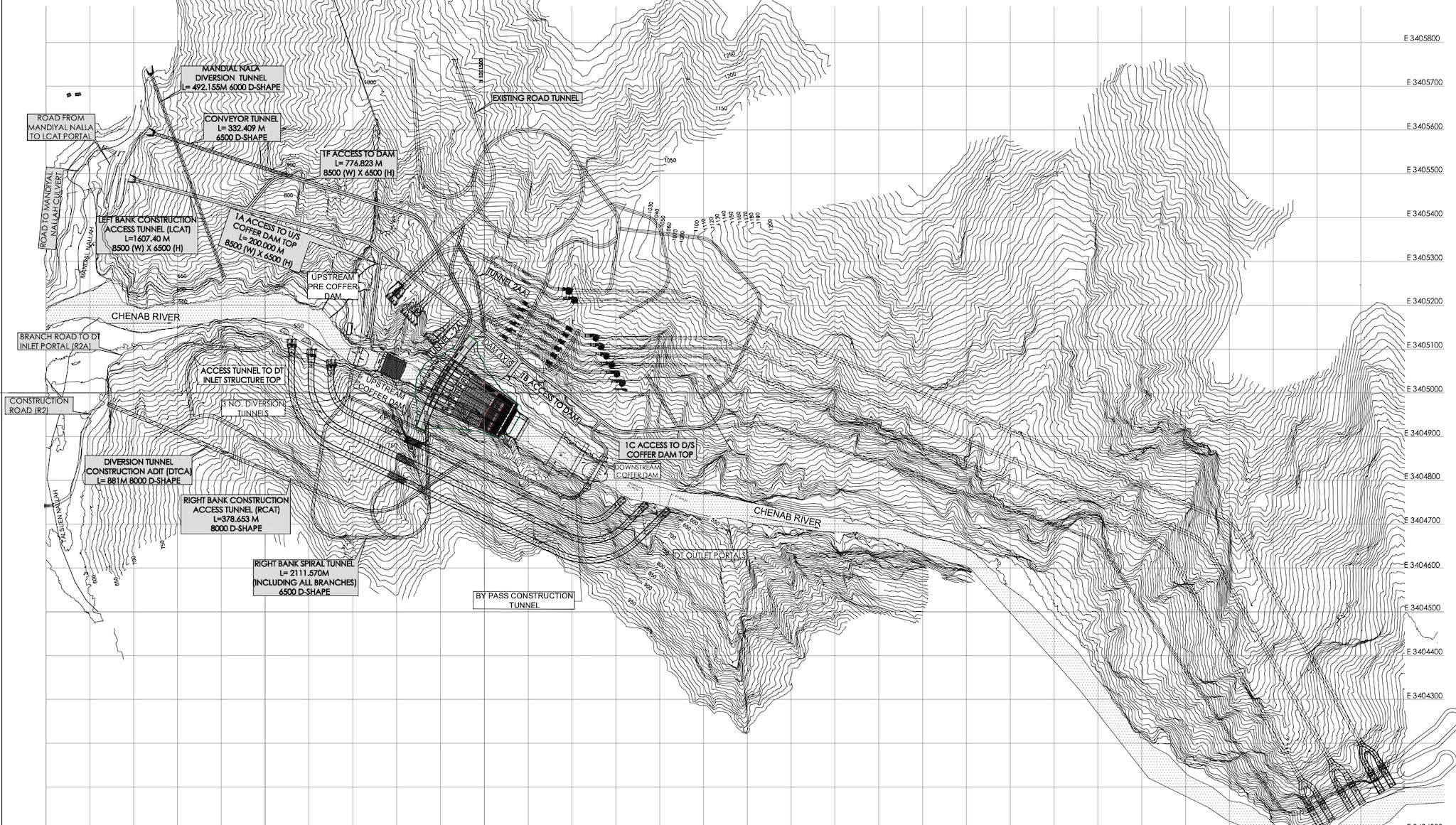
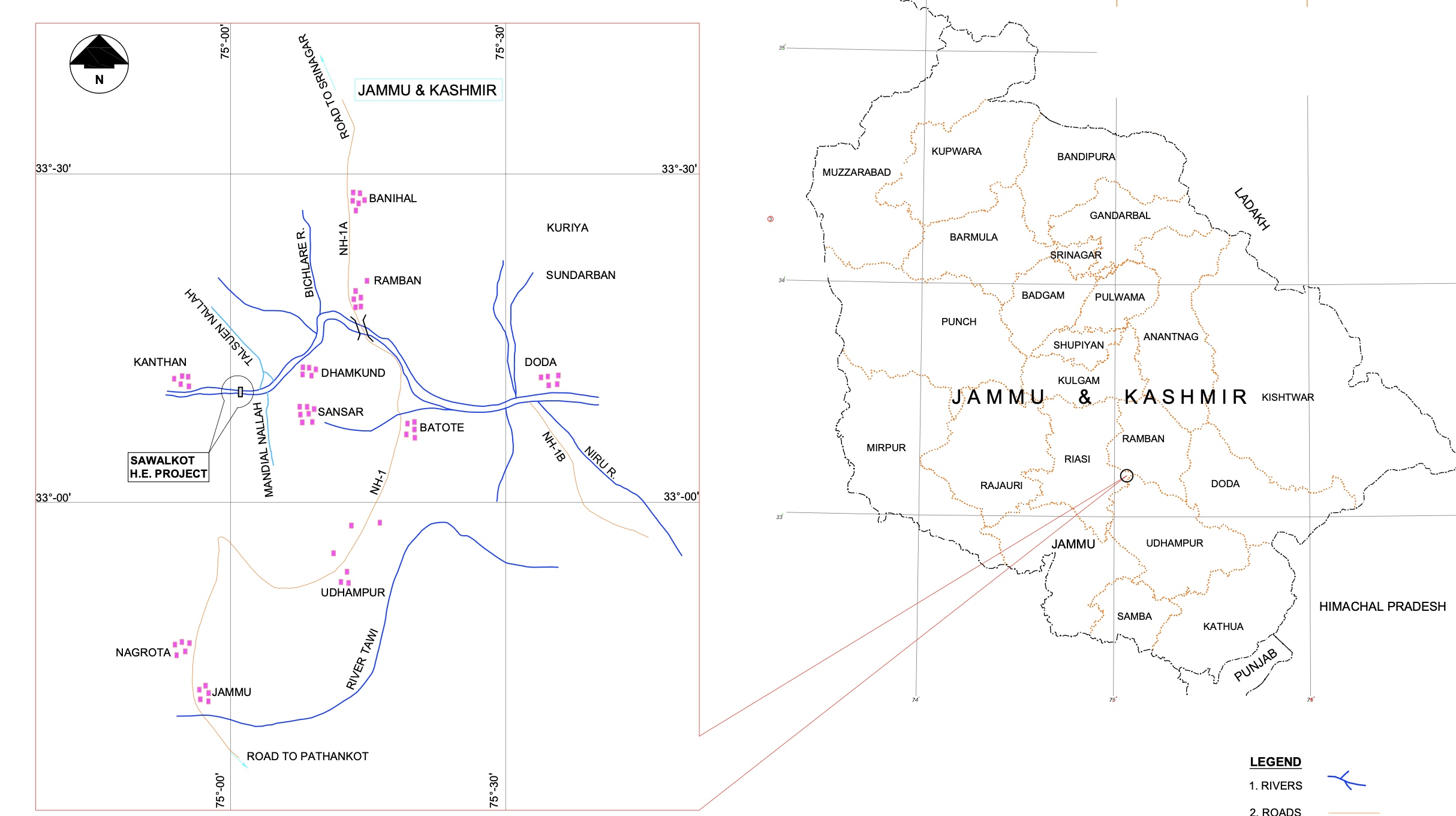
The documents say that the major construction works shall start after necessary initial mobilisation. “Available working season in a year in the project area shall be 12 months for all underground works & for surface works with full progress rate during non-monsoon period and with 50% progress rate in monsoon period."
The project could take 9 years to complete, as per the documents.
Frantic Pace of J&K Projects
News18 reported last month that the Centre has issued firm directions to fast-track four major hydropower projects on the Chenab river system. Officials had been asked to commission the Pakal Dul and Kiru projects by December 2026, complete the Kwar project by March 2028, and accelerate construction on the strategically sensitive Ratle Dam.
The most consequential of the projects is the Pakal Dul hydropower project in Kishtwar. At 1,000 MW, it is the largest project in the Chenab basin and, at 167 metres, the highest dam in India. Crucially, it is India’s first storage project on a western river that flows into Pakistan. Built on a tributary of the Chenab, the project was inaugurated by Prime Minister Narendra Modi in May 2018.
With the Indus Waters Treaty effectively in abeyance, the Centre has now ordered that Pakal Dul be commissioned by December 2026. Once operational, it will give India the ability not just to generate power but to regulate the timing of water flows—a capability Pakistan has long viewed with concern.
Running parallel is the Kiru project, also located in the Kishtwar district. The Kiru Dam, rising 135 metres on the Chenab, is a run-of-the-river project, but its strategic value lies in how it fits into a chain of projects upstream and downstream.
The Centre has set the same December 2026 deadline for Kiru, making it clear that both projects are expected to come online together.
The third pillar of this push is the Kwar project, another run-of-the-river dam on the Chenab with a height of 109 metres. A major engineering milestone was achieved in January 2024 when the Chenab was successfully diverted to enable construction. That diversion was closely tracked in Pakistan. The Centre has now directed that Kwar be commissioned by March 2028, locking in a firm timeline.
Then there is the Ratle project, perhaps the most contentious of them all. The 850 MW project involves a 133-metre-high dam on the Chenab and has been opposed by Pakistan for years, particularly over the design of its spillways. During his recent visit, the Power Minister laid the foundation stone for the dam’s concreting works, signalling that Ratle is now being fast-tracked. The Chenab was diverted through tunnels for this project in 2024, and the dam is expected to be ready by 2028.
Beyond these headline projects, India is also moving ahead with Dulhasti Stage-2 on the Chenab. The project received clearance from the Environment Ministry’s panel last December and will come up after Dulhasti-I, which is already operational. Pakistan has recently objected to this clearance as well, arguing it was not informed—an objection India has rejected.
Why This Worries Pakistan
The Chenab is part of the Indus basin—Pakistan’s lifeline. Nearly three-fourths of Pakistan’s water originates from the western rivers that flow from India into Pakistan. Over 90 per cent of Pakistan’s agriculture depends on this basin, and almost the entire network of its dams and canals is built around it. In effect, nine out of ten Pakistanis rely on water that first flows through Indian territory.
India has skipped all Indus Waters Treaty (IWT) proceedings following the Pahalgam attack.
Handpicked stories, in your inbox
A newsletter with the best of our journalism
First Published:
February 08, 2026, 10:00 IST
News india Modi Govt Kicks Off Mega Dam Project On Chenab After Pausing Indus Treaty With Pakistan | Exclusive
Disclaimer: Comments reflect users’ views, not News18’s. Please keep discussions respectful and constructive. Abusive, defamatory, or illegal comments will be removed. News18 may disable any comment at its discretion. By posting, you agree to our Terms of Use and Privacy Policy.
Read More







 English (US) ·