.png)
 1 hour ago
11
1 hour ago
11
4 min readShimlaMay 22, 2026 10:17 PM IST
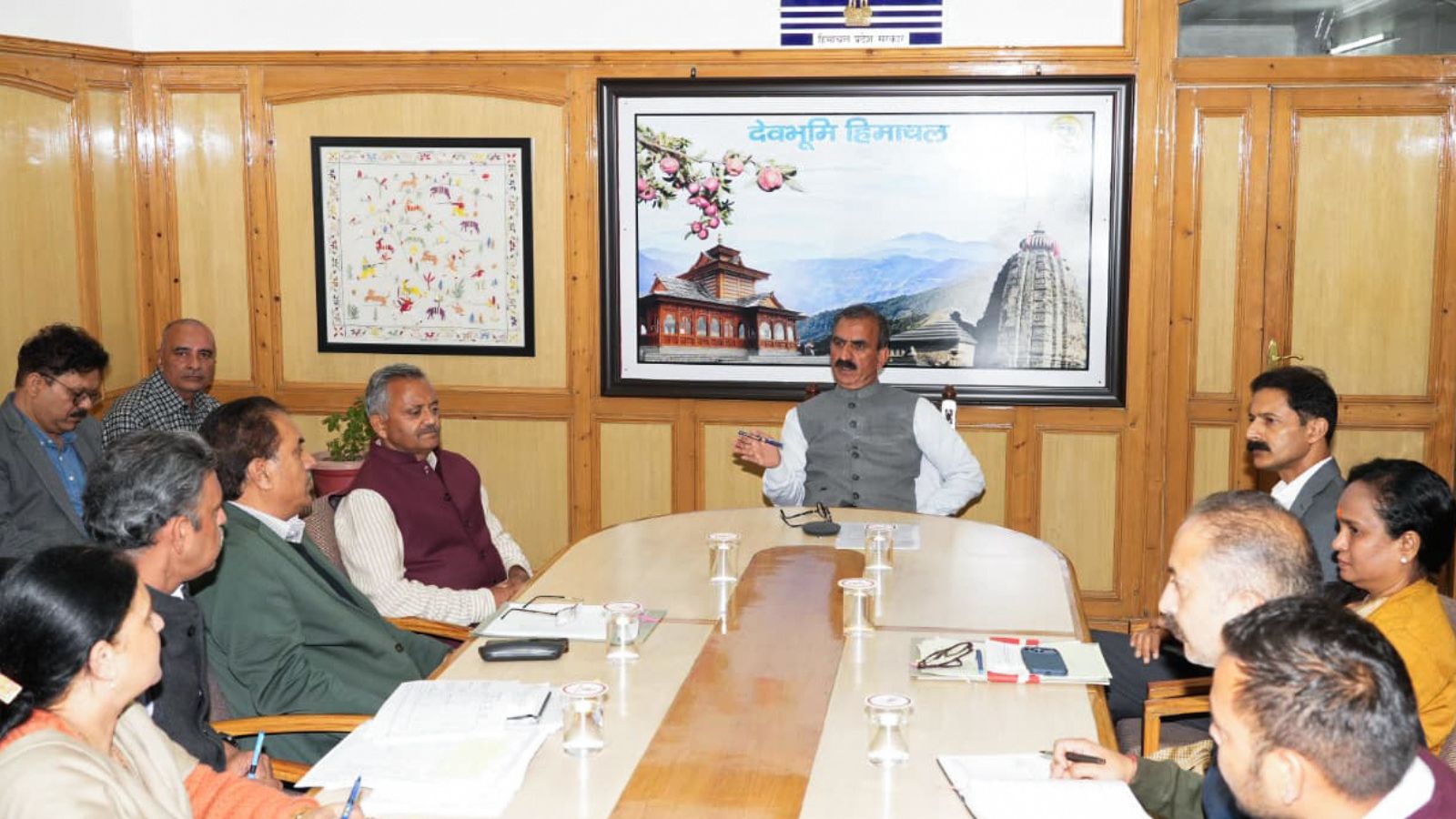 Himachal Pradesh State Electricity board has officially ended its seasonal power banking agreements with Punjab, Haryana, and Delhi after the state government withdrew 1,800 million units of subsidized power. (ANI)
In a major policy shift, the Himachal Pradesh State Electricity Board Limited (HPSEBL) has decided to stop supplying electricity to neighbouring states under the long-running “power banking” system after the state government decided not to provide 1,800 million units of power to the Board.
The move comes after the state government chose to sell its share of electricity in the open market to generate higher revenue instead of supplying it to the Board at subsidised rates. The neighbouring states primarily affected include Punjab, Haryana and Delhi.
A senior HPSEBL official privy to the development said, “The State Electricity Regulatory Commission has principally approved this. There are two primary reasons behind this move. First: Two mega electricity generation projects, including the Nathpa Jhakri Hydroelectric Power Station and SJVN Limited, are now under the state government. Earlier, we directly procured electricity from these two projects. Second: We will have to cater to domestic consumption.”
The official added, “This move doesn’t mean that the long-running ‘power banking’ system will completely shut, but indeed, it will be reduced to a great extent. We are yet to receive final approval, which is expected to come in the coming weeks.”
Explaining the existing system, the official said, “Under the ‘power banking’ system, we supply electricity to selected consumer states through the standard tender process. The state which used to offer the maximum price would get the majority of power. As now we are out of the picture, all these affairs fall under the purview of last year’s Himachal Pradesh Energy Management Centre (HPEMC).”
When asked whether neighbouring states could challenge the move legally, the official said, “Himachal has absolute right on how to utilise its electricity, which is generated within the state. We don’t think that there is any right with our counterparts to challenge our move.”
Secretary (Energy) Rakesh Kanwar said, “The HPEMC is trading in electricity as per the rules.”
Story continues below this ad
The HPEMC was constituted in October 2025 to efficiently manage the sale and purchase of electricity with the objective of maximising state revenue and minimising power procurement costs.
For years, the Himachal government supplied its electricity share to HPSEBL at around Rs 3.50 per unit. The Board would then provide surplus summer power to states such as Punjab, Haryana and Delhi under a banking arrangement and retrieve the same quantity during winters when demand increased and hydropower generation declined.
Under the electricity banking model, a state with surplus power supplies electricity to another state during periods of excess production and later receives the same quantity back when required. Hydropower-rich Himachal Pradesh benefited significantly from the arrangement because electricity generation rises sharply during summers due to snowmelt and increased water flow in hydroelectric projects.
Officials said rising temperatures and melting snow have increased water availability in hydropower projects across the state, with Himachal currently generating nearly 400 lakh units of electricity daily.
Story continues below this ad
However, experts warned that scaling down the banking arrangement could create challenges during winter months, particularly between November and February, when water levels fall and hydropower generation drops sharply.
Energy experts believe the decision could force HPSEBL to purchase electricity from the open market at significantly higher rates during winters, increasing the financial burden on the Board. The development is also expected to impact regional power-sharing dynamics across northern states that have long depended on Himachal’s seasonal surplus electricity.

Saurabh Parashar is an Assistant Editor at The Indian Express, primarily responsible for the publication’s coverage of Himachal Pradesh. He is a seasoned journalist with over 17 years of experience in print media, specializing in crime, legal affairs, and investigative reporting. Professional Background Education: He holds a Master’s degree in Mass Communication from Guru Jambheshwar University of Science & Technology (Hisar) and a Law degree from Himachal Pradesh University (HPU), Shimla. This legal background significantly informs his reporting on complex judicial and administrative matters. Career Path: Before joining The Indian Express in 2017, he spent 12 years with The Times of India. Core Beats: His primary focus is the socio-political landscape of the hill state, with a specific emphasis on the environment, forest conservation, drug menace (specifically "Chitta"), affairs related to tribal and archaeology and the unique challenges of governance in high-altitude regions. Recent Notable Articles (Late 2025) His recent reporting highlights the critical intersection of policy, law, and social safety in Himachal Pradesh: 1. "Himachal’s battle against Chitta: Why the border areas are most vulnerable" (Late 2025): An investigative look at the transit routes from Punjab and the impact on local youth. 2. "Shimla ropeway clears key hurdle as 820 trees face the axe :According to the Forest Survey of India’s 2021 assessment, 47.21 percent of Shimla’s 5,131 sq km geographical area is under forest cover (Nov 17, 2025). 3. "Himachal to handover 2.7427 ha of non-forest land for Shimla Ropeway: Given the land’s non-forest nature, RTDC and the state will not require permission from MoEFCC" (Nov 18, 2025) 4. "How the centuries-old Jodidara tradition is fading in Himachal’s Trans-Giri region: Jodidara: a form of fraternal polyandry—has long been part of Hatti tribal culture in the Trans-Giri region of Himachal Pradesh and adjoining Uttarakhand. It is believed to have evolved to prevent division of ancestral land and maintain unity among brothers in the harsh, mountainous terrain" (Aug 18, 2025) Legal & Agricultural Affairs "Kisan Sabha hails SC’s setting aside Himachal HC order to remove orchards from forest land" (Dec 18, 2025): Covering a major Supreme Court victory for farmers, where a High Court order to remove fruit-bearing apple orchards was overturned. "Himachal Cabinet nod to new tourism policy; focus on home-stays in tribal areas" (Dec 11, 2025): Detailing the legislative push to decentralize tourism and bring economic benefits to Lahaul-Spiti and Kinnaur. 3. Governance & Environment "Forest rights and development: Why Himachal is seeking more leeway from Centre" (Dec 19, 2025): Reporting on the legal hurdles faced by the state in infrastructure projects due to the Forest Conservation Act. "Cloudbursts and resilience: How Himachal’s remote villages are building back better" (Nov 2025): Following up on the long-term rehabilitation efforts after monsoon-related disasters. Crime especially cyber crimes, crypto currency etc: crypto currency: "Agents in uniform, motivational speeches, lavish parties: How a Himachal crypto con went unnoticed:A serial conman, a ‘Nelson Mandela Nobel Peace Award winner', and retired policemen got together to pull off a Rs 1,740-crore fraud" (Nov 10, 2023) Signature Beats Saurabh is recognized for his tenacious reporting on the state's drug epidemic. His deep familiarity with the topography and tribal culture of Himachal allows him to report from remote locations like Spiti, Pangi, Shillai, which are often overlooked by national media. His legal expertise makes him a primary choice for covering the Himachal Pradesh High Court on issues ranging from local body elections to environmental PILs. X (Twitter): @saurabh_prashar . ... Read More
Stay updated with the latest - Click here to follow us on Instagram
© The Indian Express Pvt Ltd






 English (US) ·