.png)
 5 hours ago
24
5 hours ago
24
4 min readChennaiFeb 8, 2026 07:05 AM IST
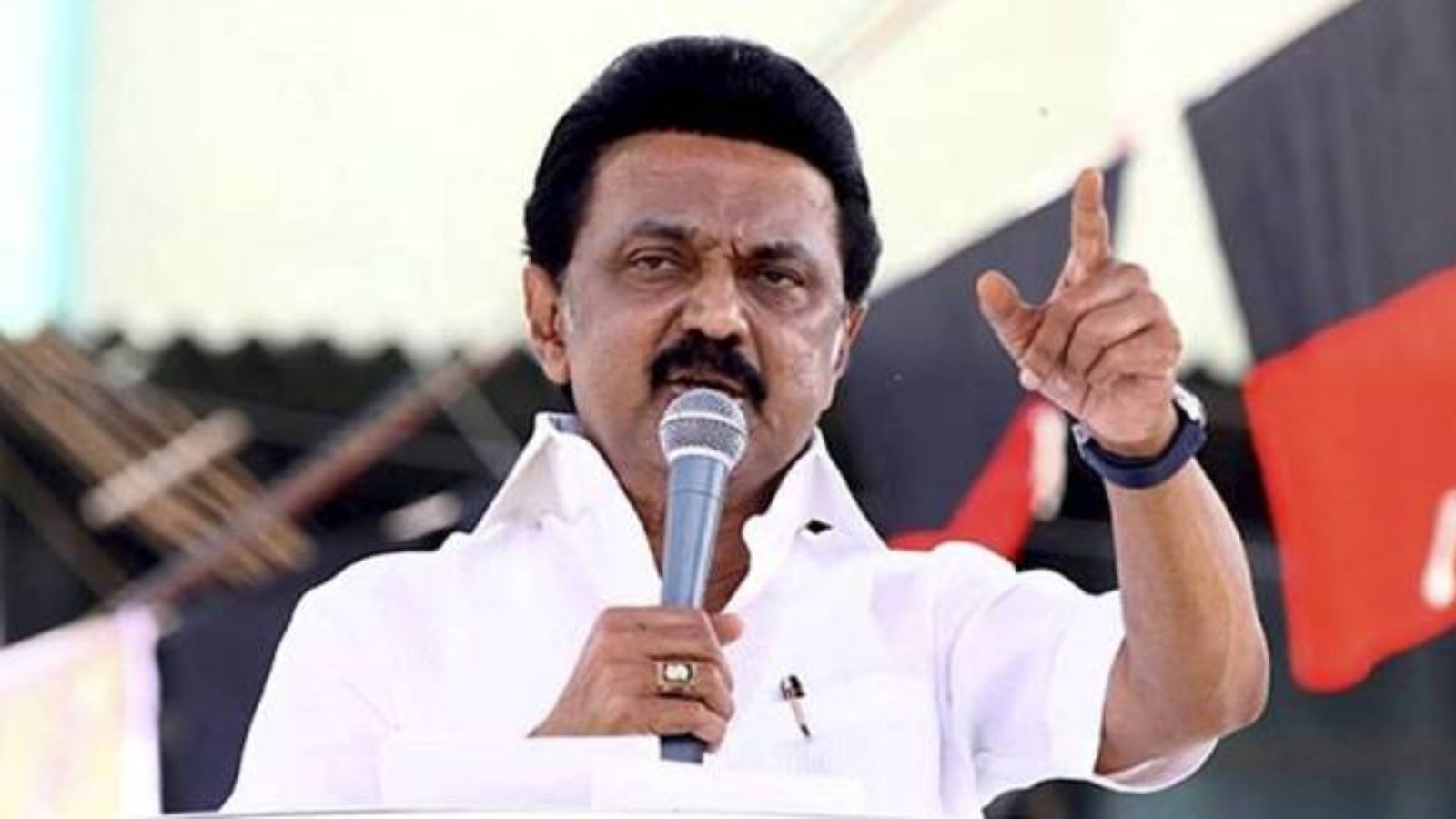 Tamil Nadu CM M K Stalin. (File Photo)
Tamil Nadu’s ambitious plan to build a greenfield airport in Hosur — pitched as a future logistics and industrial gateway for the state — has entered a cautious phase. With Assembly elections approaching and scattered protests surfacing in villages marked for acquisition, the DMK government seems to have decided to slow the pace of land procurement even as it continues to pursue clearances from New Delhi and advance paperwork behind the scenes.
The recalibration, officials say, is tactical rather than retreat. About 3,000 acres are required for the project, including 800 acres of government land, to develop an airport capable of handling 30 million passengers a year. Of this, roughly 2,134 acres are private holdings, much of it agricultural, spread across 12 villages in Hosur and Shoolagiri taluks.
Hosur is not a sleepy border town anymore. Over the past three decades, it has grown into one of Tamil Nadu’s most concentrated manufacturing belts — home to automotive, electronics, aerospace and electric vehicle plants, and thousands of small and medium enterprises. More than 500 large industries and nearly 3,000 MSMEs operate here, feeding supply chains that stretch from Bengaluru to Europe and East Asia.
A senior official involved in the process said they are continuing with the work to issue the government order but that they might go slow till elections due to some public protests. “This delay won’t have any impact on the project,” he said. The Krishnagiri district administration is currently revising its Land Development Plan after suggestions from the Commissioner of Land Administration. Only after a Government order is issued can acquisition formally begin. For now, officials are choosing to buy time.
The decision reflects a familiar election-season calculus: infrastructure projects promise growth, but land acquisition risks political friction. Even small protests, in a tightly contested electoral cycle, can become symbolic.
Yet, the state has not pressed pause entirely. Earlier this month, Tamil Nadu applied for site clearance from the Union Civil Aviation Ministry, the first of several approvals required. It has also floated bids to appoint a consultant for a Detailed Techno-Economic Report, indicating that the administrative machinery remains active even if bulldozers are not.
Beyond land, the project faces another obstacle — the sky itself. In January, the Defence Ministry indicated that allocating airspace could be difficult due to operations of Hindustan Aeronautics Limited around Bengaluru. Much of Krishnagiri’s airspace overlaps with defence and test-flight corridors.
Story continues below this ad
A senior official said there is time to negotiate since the project remains at an early stage. Tamil Nadu must also secure a No Objection Certificate (NOC) from Bengaluru International Airport Limited, whose concession agreement restricts new airports within 150 km until 2033. The state hopes to either negotiate an exemption or time operations accordingly.
The proposed airport site — the Hosur–Berigai–Bagalur–Shoolagiri quadrilateral — lies close to the Tamil Nadu section of the Bengaluru Satellite Town Ring Road, making it accessible not just to Krishnagiri but to south Bengaluru’s tech and manufacturing clusters.
For years, industries here have relied on Bengaluru’s Kempegowda airport for both passenger and cargo movement. The new facility promises something different: shorter turnaround times, dedicated freight handling, and the possibility of turning Hosur into a logistics hub in its own right.
Senior officials of Tamil Nadu attached to the project describe the airport as less an amenity than an economic instrument — a way to anchor investment and prevent industries from drifting across the border into Karnataka.

Arun Janardhanan is an experienced and authoritative Tamil Nadu correspondent for The Indian Express. Based in the state, his reporting combines ground-level access with long-form clarity, offering readers a nuanced understanding of South India’s political, judicial, and cultural life - work that reflects both depth of expertise and sustained authority. Expertise Geographic Focus: As Tamil Nadu Correspondent focused on politics, crime, faith and disputes, Janardhanan has been also reporting extensively on Sri Lanka, producing a decade-long body of work on its elections, governance, and the aftermath of the Easter Sunday bombings through detailed stories and interviews. Key Coverage Areas: State Politics and Governance: Close reporting on the DMK and AIADMK, the emergence of new political actors such as actor Vijay’s TVK, internal party churn, Centre–State tensions, and the role of the Governor. Legal and Judicial Affairs: Consistent coverage of the Madras High Court, including religion-linked disputes and cases involving state authority and civil liberties. Investigations: Deep-dive series on landmark cases and unresolved questions, including the Tirupati encounter and the Rajiv Gandhi assassination, alongside multiple investigative series from Tamil Nadu. Culture, Society, and Crisis: Reporting on cultural organisations, language debates, and disaster coverage—from cyclones to prolonged monsoon emergencies—anchored in on-the-ground detail. His reporting has been recognised with the Ramnath Goenka Award for Excellence in Journalism. Beyond journalism, Janardhanan is also a screenwriter; his Malayalam feature film Aarkkariyam was released in 2021. ... Read More
Stay updated with the latest - Click here to follow us on Instagram
© The Indian Express Pvt Ltd






 English (US) ·