.png)
.png) 3 hours ago
12
3 hours ago
12

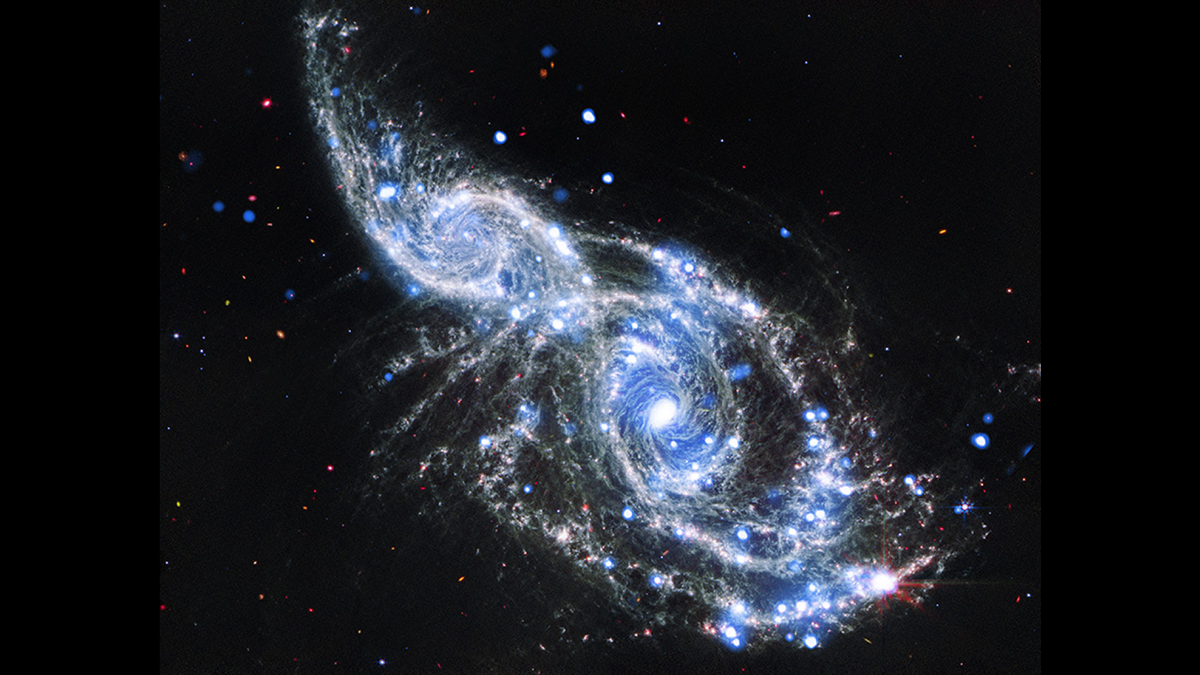
A: A superkilonova is a rare kind of cosmic explosion.
When two neutron stars smash into each other, the material tossed into space includes heavy, radioactive elements like gold, platinum, and neodymium. Over time the elements decay and the emissions in the optical and infrared parts of the spectrum are called a kilonova.
A superkilonova has an additional energy source. In one version, after the merger, some ejected matter may fall back towards the merged object and become hotter. This heat can heat up the surrounding ejecta, making it brighter and bluer than a kilonova alone, and perhaps for longer too.
In a study published on December 15, an international research team -- including from IIT-Bombay and the Indian Institute of Astrophysics, Bengaluru -- reported a possible second version. They zeroed in on a source of bright light 1.3 billion lightyears away. The team found its brightness and light ‘fingerprint’ could be explained by a superkilonova where a supernova blows up a massive star into two neutron stars, which then merge to produce a kilonova.
“At first, for about three days, the eruption looked” like a kilonova, director of Caltech’s Palomar Observatory Mansi Kasliwal, said in a statement. “Everybody was intensely trying to observe and analyse it, but then it started to look more like a supernova, and some astronomers lost interest. Not us.”
The team has said astronomers will need more data about such events before being sure, “but the event nevertheless is eye opening”.





 English (US) ·