.png)
 13 hours ago
23
13 hours ago
23
Latest

Two U.S. soldiers were killed and a third service member was missing after an Iranian attack on a base in Jordan on Friday, the U.S. military said. The American troop deaths were the first from hostile fire since a truce in early April.
The Jordanian base came under fire from Iranian ballistic missiles and drones, according to a statement on Saturday from U.S. Central Command. Sixteen U.S. service members have been killed since the United States and Israel launched attacks on Iran in February.
The latest deaths prompted retaliation from American forces, which began striking Iran early Sunday morning local time. The barrage was meant to “swiftly punish Islamic Revolutionary Guard Corps forces who launched attacks against American service members in Jordan last night,” according to a Central Command statement posted to social media.
The United States and Iran have expanded the scope and intensity of their attacks, with no sign of an off-ramp to end the fighting.
Iranian state media reported on Saturday that bridges and roads in southern Iran were damaged and said that a water desalination plant in Jask was hit. It cited a local official as saying that about 10,000 people were facing water shortages. The U.S. military did not immediately respond to a request for comment on those claims.
Iran’s military has responded with attacks on American allies in the Middle East, targeting U.S. bases in the region.
On Saturday, Iranian missiles and drones pummeled Kuwait, where the government said another power and water treatment plant had been attacked — the second in two days — sparking fires. An oil facility was also struck, leading to injuries and “severe material losses,” according to Kuwait’s state-run petroleum corporation.
Air-raid sirens also continued to ring out in Bahrain on Saturday morning, warning of new Iranian strikes. And the Jordanian military said it had intercepted 10 Iranian ballistic missiles overnight.
The hostilities have failed to break the deadlock over the strait, a vital waterway for global oil and gas shipments that Iran has blockaded. Last month, the United States and Iran reached a cease-fire meant to reopen the strait and allow for broader negotiations. Iran, citing a clause in the agreement, has continued to assert control over the waterway, attacking ships trying to transit through routes outside its territory.
The United States has also reinstated its own blockade on Iranian ports. With no apparent negotiations taking place, the two sides appear to be sliding toward a wider war.
President Trump has repeatedly threatened to bombard Iranian infrastructure, including power plants and bridges, in an effort to force Iran’s leaders to make a deal and end the war. Analysts say there is little guarantee that stepping up attacks would force Iran to change course, and such attacks on critical infrastructure could constitute war crimes under international law.
Here’s what else to know:
Supreme leader’s message: In a written message carried by state media, Ayatollah Mojtaba Khamenei repeated Iran’s criticism of the United States as violating the cease-fire deal, calling Mr. Trump’s signature on their memorandum of understanding “worthless and invalid.” Read more ›
Fear and isolation in Iran: The resumption of fighting has added to many Iranians’ misery, one resident of Ahvaz said, adding, “The situation has become unbearable.” Read more ›
Lessons from past wars: Mr. Trump has struggled to convert American military might into a strategy that can bring victory in the war he began in late February alongside Israel. It’s a challenge the United States has faced again and again, including in Iraq and Afghanistan. Read more ›
Ismaeel Naar, Pranav Baskar and Shirin Hakim contributed reporting.

Defense Secretary Pete Hegseth said on social media earlier on Saturday that the loss of the two U.S. soldiers would stiffen American resolve.

A location near Qeshm Island in southern Iran was targeted in a military attack on Sunday, Iran’s state news agency IRNA reported, citing the local governor’s office and attributing the strikes to U.S. forces. Qeshm lies in the Strait of Hormuz close to major shipping routes and is the site of strategic military installations. IRNA also said that explosions were reported in Bandar Abbas, a city in southern Iran that is the country’s main naval hub near the waterway, without specifying their origin. Both Qeshm and Bandar Abbas have previously been targeted by U.S. strikes.

Shirin Hakim
Another site in Iran’s southern Hormozgan province was struck early Sunday. IRNA, Iran’s state news agency, said local sources reported that an area near Hajiabad was hit at about 2:10 a.m. local time and attributed the attack to the United States. U.S. Central Command did not immediately respond to a request for comment. Hajiabad has come under attack several times in recent days, including a strike on an environmental outpost that Iranian officials said killed three members of a ranger’s family.
Shirin Hakim
A location near Sirik, in Iran’s southern Hormozgan province, was struck at 1:30 a.m. local time on Sunday, the provincial governor’s office said, according to Iran’s official state news agency, IRNA. Sirik, which is near the entrance to the Strait of Hormuz and hosts maritime and military infrastructure, has come under repeated attack this week.

U.S. Central Command said in a statement on Saturday that it had begun launching a new round of airstrikes in Iran, the eighth consecutive night of U.S. bombardments in the country. The military said the attacks were designed to “swiftly punish” Iranian forces for attacks against American service members at a base in Jordan on Friday, which killed two U.S. soldiers and left one U.S. service member missing.
The State Department issued a worldwide travel warning, urging Americans to exercise caution while traveling because of heightened tensions in the Middle East, which it said had the potential to cause “unforeseen escalation.” The department added that U.S. diplomatic facilities, including outside the Middle East, have been targeted, and that groups supportive of Iran may target other U.S. interests overseas.
The last time the State Department issued a worldwide travel warning was in March, amid the war, for similar reasons.
Image
The Iranian attack that killed two U.S. soldiers and left one service member missing on Friday was the fourth in five days on U.S. forces in Jordan, multiple American officials said. Taken together, the attacks have wounded dozens of U.S. service members and damaged a number of helicopters.
The flurry of attacks and the losses they have caused are a sign that Iranian forces not only still have ample missile stocks but have also become more adept at evading U.S. air defense systems, said the U.S. officials, who were speaking on condition of anonymity to discuss operational matters.
Jordan, which hosts major U.S. air bases, grew in importance in the run-up to and the early days of the war, as the Pentagon shifted a number of troops from Bahrain, the United Arab Emirates and Qatar to relatively more secure locations in Jordan and Israel. The country’s role in U.S. operations has only increased as other American allies in the region have restricted Washington’s ability to base troops in and fly aircraft over their territories, the U.S. officials said.
In early July, Iran widened its attacks in the region, including Jordan for the first time since Tehran and Washington signed a cease-fire agreement in June.
The U.S. officials offered a recounting of the last five days of Iran’s attacks on Jordan, which the Pentagon has not yet discussed in detail publicly.
The first attack to hit U.S. forces in Jordan struck a residential facility at King Faisal Air Base, wounding as many as five U.S. service members, they said. The second hit a base in eastern Jordan where U.S. Blackhawk helicopters were operating from, damaging a significant number of them.
Then, 48 hours ago, Iranian missiles hit Jordan’s Muwaffaq Salti Air Base in Azraq, which is the same base where the troops were killed on Friday, the officials said. The earlier strike wounded about 20 U.S. troops rushing to take cover in bunkers. No one was killed in that barrage. But on Friday, when the Iranians struck the base again, two U.S. troops were killed and four other service members were injured, according to U.S. officials. Other personnel were evaluated for minor injuries and returned to duty.
The Pentagon declined to comment.
On Friday, the Iranian Army said it had launched a drone attack targeting fuel tanks at the U.S. base in Azraq. The Islamic Revolutionary Guards Corps also said it had used missiles and drones to target aircraft shelters at the base, according to Fars News Agency, a semiofficial news outlet affiliated with the Guards.
Jordan’s location allows the United States to conduct “more efficient air operations across Syria, Iraq and the broader region,” said David Deptula, a retired Air Force lieutenant general who was a main architect of the 1991 Persian Gulf air war.
“Friday’s attack was therefore not just an attack on a base,” he said in an email on Saturday. “It was an attack on the U.S. regional coalition and an attempt to make the political cost of hosting American forces greater than the security benefit.”
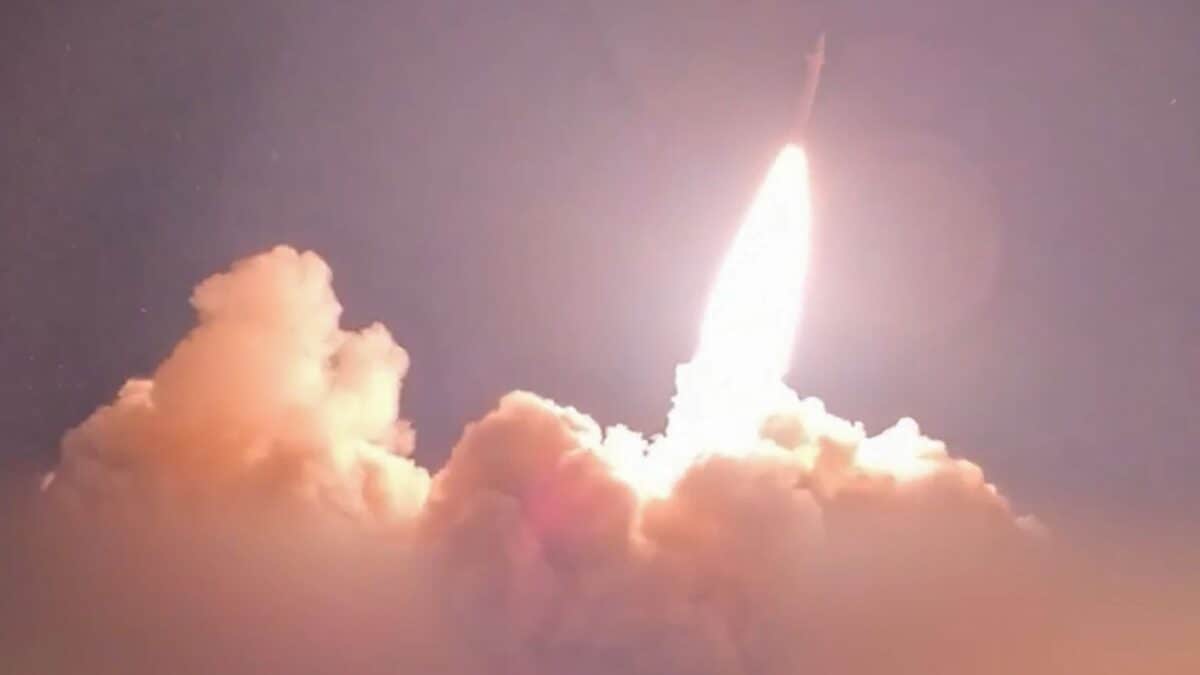
The U.S. military announced on Saturday evening that it had launched retaliatory strikes to degrade Iran’s threat to shipping in the Strait of Hormuz and to “swiftly punish Islamic Revolutionary Guard Corps forces who launched attacks against American service members in Jordan.”
Even before those strikes, President Trump signaled that he planned to increase strikes on Iran in the next week and intended to hit more Iranian infrastructure, including bridges, electrical power plants and distribution systems.
Eric Schmitt contributed reporting.
Jordan’s location allows the United States to conduct “more efficient air operations across Syria, Iraq and the broader region,” said David Deptula, a retired Air Force lieutenant general who was a main architect of the 1991 Persian Gulf air war.
“Friday’s attack was therefore not just an attack on a base,” he said in an email on Saturday. “It was an attack on the U.S. regional coalition and an attempt to make the political cost of hosting American forces greater than the security benefit.”

A video filmed at the Muwaffaq Salti Air Base in Jordan appears to show a projectile hitting the base. The short clip, which was posted on social media, shows a projectile falling in the distance and then another exploding near the person filming. It is unclear if the video captures the strike that killed two U.S. soldiers.
Exactly when the video was taken was not clear, but a NASA satellite that detects major heat-producing events recorded a large fire burning late Friday in the same location. The video was first geolocated by an online researcher, and the location was confirmed by The New York Times.
Video

Shirin Hakim
U.S. Central Command said on Saturday that it was continuing to enforce the naval blockade of Iran that resumed on Tuesday and that it had so far redirected five commercial vessels and disabled one. In its post on social media, the command included an image of the guided-missile destroyer Donald Cook sailing in the Arabian Sea with a Navy helicopter flying nearby.

Video
 Two U.S. Service Members Killed In Iranian Strike, U.S. Military Says
The deaths of two U.S. service members in an Iranian attack in Jordan on Friday bring to 16 the total number of American military personnel killed since the United States and Israel launched attacks on Iran on Feb. 28.
A U.S. official said the two most recent deaths were believed to have been caused by Iranian ballistic missiles launched in a barrage at a military base in Jordan. Several Iranian missiles were shot down, said the official, who spoke on the condition of anonymity because they were not authorized to speak publicly about the attack. But at least one penetrated U.S. and Jordanian air defenses.
President Trump has repeatedly said he would avenge the deaths of any U.S. soldiers. About 1:30 a.m. local time on Sunday, American forces launched a new round of attacks in Iran, according to Central Command.
The two U.S. service members killed were active-duty Army soldiers, the official said.
In recent days, Iran has been mixing up its tactics for attacking U.S. personnel on bases in the region, the official said, using a combination of medium-range ballistic missiles and one-way attack drones in the hopes of overwhelming air defense systems.
Six Army soldiers were killed during a March 1 attack on the port of Shuaiba in Kuwait. Another service member died of injuries he suffered during a March 1 attack on Prince Sultan Air Base, Saudi Arabia, and six Air Force personnel died when a KC-135 aerial refueling jet crashed in western Iraq on March 12.
The last known U.S. death from the war was a Navy helicopter pilot who was declared missing after an emergency landing in the Arabian Sea on July 1, which the Navy’s Fifth Fleet said was not believed to have been caused by enemy action. Days later, the Navy called off its search for the missing aviator.
The Pentagon’s casualty reporting protocols call for publicly identifying deceased service members only after 24 hours have passed since next of kin were notified. The names of troops wounded in action are not typically released.
More than 400 U.S. service members have been injured in the Iran conflict, according to the military’s Central Command, which directs military operations in the Middle East.
The command’s statement on Saturday said four American service members wounded in Friday’s attack were taken to Jordanian hospitals, and have been discharged.
More American troops received minor injuries and have been returned to duty, the statement said, but did not specify how many.
Eric Schmitt contributed reporting from Minnesota.
Iran’s health ministry reported that 50 people had been killed and more than 500 injured in U.S. strikes since late June, according to state media. Among those deaths are five women and two children under the age of 18, state media said. The reported death toll did not differentiate between civilians and military personnel.
Two U.S. service members were killed during an Iranian attack on a base in Jordan on Friday, according to a statement from U.S. Central Command, which said that a third service member was missing in action. These are the first U.S. fatalities reported in the conflict since a cease-fire between Iran and the United States unraveled last week. According to Centcom, which directs military operations in the Middle East, the base came under fire from Iranian ballistic missiles and drones.
Four other American service members were wounded in the attack, the statement said, but have been discharged from Jordanian hospitals. More American troops received minor injuries and have been returned to duty, the statement said, without specifying a number.
Following Pentagon casualty protocols, the names of the two Americans killed will not be released until 24 hours after their next of kin have been notified. The names of wounded U.S. troops are typically not publicly released.
Pranav Baskar and Shirin Hakim
Iranian state media carried a statement on Saturday said to be written by the country’s supreme leader, Ayatollah Mojtaba Khamenei. The statement repeated Iran’s criticism of the United States as violating the cease-fire deal made in June, calling President Trump’s signature on their memorandum of understanding “worthless and invalid.”
For the most part, the message seemed designed for a domestic audience. It urged Iran’s people to continue trusting the government to “safeguard the interests” of the Islamic Republic so that the United States would “not detect any sign of weakness in us.” But it also warned that Iran and its wider front of aligned proxies had “unforgettable lessons” in store for the “American enemy.”
Khamenei was absent from the recent funeral of his father, Ayatollah Ali Khamenei, the prior supreme leader, who was killed as U.S.-Israeli strikes on Iran began on Feb. 28. The younger Khamenei has been neither seen nor heard in public since his father’s death, and is believed to have been wounded in those strikes, according to Iranian and Israeli officials.
The commander of Iran’s military headquarters released what he called a “final official warning” to countries on the Persian Gulf. “The United States and Western countries will not only fail to bring you security,” he wrote on social media, “but when the need arises, they will sacrifice you to serve their own interests.” He did not specify what exactly Iran wants those countries to do, but in recent days, Iran has launched attacks on Gulf countries that host U.S. forces, including Bahrain and Kuwait.
Image
U.S. airstrikes targeting parts of southern Iran have rattled Iranians’ nerves this week, they said in interviews, and destroyed key links between one province and the rest of the country.
Marzieh, a resident of the port city of Bandar Abbas, said that she had heard from friends that the roads around the city had been “devastated.” Marzieh and other Iranians interviewed gave only their first names for fear of government reprisal.
Overnight strikes damaged a tunnel and three bridges, the Hormozgan governor’s office said on Saturday, according to Iran’s state news agency. The government urged residents to avoid unnecessary travel on the roads until further notice. Hormozgan Province, which includes Bandar Abbas, lies along the Strait of Hormuz.
Iranian state media reported overnight that at least six areas had been targeted around the country, including Bandar Abbas, but also Ahvaz, the capital of the oil-rich Khuzestan Province about 500 miles northwest of the strait, as well as Lar and Darab, two inland cities in Iran’s southern Fars province. A water desalination plant in the southern province of Jask was also struck, according to Iranian state television. The U.S. military did not immediately respond to a request for comment on those claims.
By Saturday afternoon, some previously damaged traffic routes hit during the last several days of attacks appeared to have been at least partially restored, with Iranian state media reporting that passenger train traffic had resumed from the Bandar Abbas railway station and the opening of an alternative route to the east of the city.
The U.S. military said its overnight strikes had targeted “surveillance sites, military logistics infrastructure, underground weapons storage and maritime capabilities.” It made no mention of civilian infrastructure, though President Trump has frequently threatened to bombard such sites, including power plants and bridges.
Nightly attacks in Ahvaz have become a familiar pattern, according to Emad, a 34-year-old trader there. “That said,” he added, “some people are still frightened by the explosions, especially those living closer to the targeted areas.”
Emad said that as far as he could tell, the strikes had targeted the city’s southeastern periphery, where there are military bases and installations, rather than its center.
Elnaz, a 30-year-old resident of Ahvaz, said Thursday night had been the worst night since the fighting resumed.
Her friends’ and family’s young children “were especially frightened,” she said. “The blast waves were so close that we thought if we stepped outside, we would find the entire city destroyed.”
Since then, the attacks have not been as severe, Elnaz said, but each night is unpredictable.
“None of us knows what kind of attack will happen once night falls,” she said. “We generally know that the strikes are aimed at military areas, but even bombing those locations is enough for the noise and shock waves to reach us and make our whole bodies shake.”
As is typical in Ahvaz during the summer even in peacetime, there are power outages every day, sometimes lasting more than two hours, she said. During power outages, water is also cut off. Temperatures in the city have reached as high as 120 degrees Fahrenheit this week.
While stores in the city are still stocked, Elnaz said, they are largely empty of customers, because people have little money. Iran’s economy, long in malaise, has gotten even worse during the war, with skyrocketing food prices and companies forced to lay off workers.
The war has simply added to Ahvaz residents’ misery, she said, adding, “The situation has become unbearable.”

Pakistan and Qatar, which helped mediate the June cease-fire between the United States and Iran, both expressed concern following the overnight exchange of attacks. In a statement, the Qatari foreign ministry denounced the Iranian bombardment of Kuwait, Bahrain, and Jordan, adding the attack on Kuwait’s power and water facilities “crosses all red lines.” Ishaq Dar, the Pakistani foreign minister, also “underscored the urgent need for de-escalation” in a phone call with Kuwait’s foreign minister on Saturday.
Leily Nikounazar
Kazem Gharibabadi, Iran’s deputy foreign minister for legal affairs, said on Saturday that Iran was not implementing its obligations under the cease-fire deal with the United States, according to a statement carried by the semi-official news agency Fars. Gharibabadi accused the United States of first violating the agreement, signed in June, and then effectively abandoning it. Iran was now “focused on defending the country,” he added.
The Iranian foreign ministry spokesman, Esmail Baghaei, said this week that Tehran would not abide by its commitments under the Pakistan-mediated memorandum of understanding if Washington did not. The United States has, in turn, blamed Iran for first breaking the agreement.
Image


Kuwait accused Iran on Saturday of deliberately targeting its civilian infrastructure after an electricity and water desalination plant was hit. It is the second consecutive day that Kuwait has reported its essential utilities coming under attack.
Iran has not publicly commented on the strikes, but Tehran has frequently attacked countries in the region that are not parties to the conflict but that host American military bases, including Kuwait.
Kuwait’s state-owned oil company said on Saturday that one of its vital sites had also been targeted, with “repeated brutal Iranian attacks” resulting in a number of injuries and “significant material losses.” Those injured were given medical assistance, and the site was evacuated, the Kuwait Petroleum Corporation said in a statement carried by the national news agency.
Kuwait’s fire brigades were battling blazes at two separate sites that it said had been targeting, reporting that a number of firefighters and a worker had been injured. It did not specify the locations of the fires.
The strikes on Kuwait come more than a week after a cease-fire between Iran and the United States unraveled.
Iran has accused the United States of attacking Iranian roads and bridges, and on Saturday, state media said that a desalination facility west of the Strait of Hormuz, in the southern county of Jask, had been hit, and cited the head of a local water utility company as saying that it had left about 10,000 people without water. The United States has not publicly commented on the claim.
In Kuwait, the Ministry of Electricity, Water and Renewable Energy said in a statement on Saturday that Iranian attack on the power and water desalination facility had caused a fire, and that some operations had been halted “for the safety of workers and sustainability of the electricity network.” The ministry urged citizens and residents to ration electricity until the afternoon as teams worked to repair the damage.
Kuwait’s electricity system that is already under strain. Despite its immense oil wealth and status as a major energy exporter, Kuwait has had to schedule power cuts to sustain its electrical grid during scorching summer months, when temperatures can reach up to 50 degrees Celsius, or more than 120 degrees Fahrenheit. The soaring demand during periods of extreme heat has outpaced the country’s generation capacity, straining the electricity grid and forcing periodic blackouts.
As the fighting between Iran and the United States escalated on Saturday, tensions also appeared to be rising along the Israel-Lebanon border. An Israeli drone carried out an airstrike in Nabatieh, Lebanon’s state-run National News Agency reported. Israeli warplanes struck a neighborhood in the town of Mansouri, in the coastal Tyre district, after war planes carried out two waves of airstrikes at dawn targeting another area of Mansouri, according to the news agency.
In response to questions, an Israeli military spokeswoman said that the military had attacked militants “who posed a threat” in Nabatieh but that the military was “not aware” of any Israeli bombing in Mansouri on Saturday.
President Joseph Aoun of Lebanon departed on Saturday for Washington at the invitation of President Trump, the Lebanese presidency said in a statement. Aoun is expected to take part in a Lebanese-U.S. summit at the White House and meet with U.S. officials to discuss the tenuous cease-fire with Israel, as well as efforts to restore security and stability and to secure Israel’s withdrawal from the territory it is occupying in southern Lebanon.
Kuwait’s state-owned oil company said that one of its sites had been targeted by multiple Iranian attacks on Saturday, resulting in “a number of injuries and significant material losses.”
In Kuwait, several firefighters and a worker were injured while battling a fire at one of two sites that had been targeted by Iranian attacks, the country’s fire force said, without specifying the locations. Earlier on Saturday, Kuwait’s ministry of electricity said that a fire had broken out at a power and water desalination plant.
Kuwait Airways said on Saturday that it would reschedule most flights after takeoffs and landings were suspended at Kuwait International Airport because of Iranian strikes, Kuwait’s state news agency reported. The country has come under repeated Iranian missile and drone attacks in recent days in response for U.S. military strikes on Iran.

Oil prices jumped to their highest level in a month on Friday as renewed hostilities between the United States and Iran have caused shipping traffic in the Strait of Hormuz to slow to nearly a halt.
The price of Brent crude, the international benchmark, climbed about 4 percent, to about $88 a barrel, the highest since early June but still below its peak in April, when oil prices soared above $120.
West Texas Intermediate crude, the U.S. benchmark, was up 4 percent to $82 a barrel.
Oil prices rose as the Iran war, now in its fifth month, continued to disrupt the supply of energy. Just eight ships navigated the strait on Thursday, the second full day of the reinstated U.S. naval blockade of Iran.
Shipping activity was at its lowest level in more than a month, down from 13 ships the day before, according to Kpler, a maritime data firm. Most of the vessels that navigated through the strait on Wednesday and Thursday passed through the Tehran-mandated corridor in Iranian waters.
The United States carried out more attacks against Iran on Friday as the fighting continued for the seventh straight day.
The U.S. blockade on Iran is likely to severely hamper Tehran’s ability to monetize its control over the strait, as it did during the first blockade, which lasted from April until mid-June. During that period, U.S. forces redirected or disabled more than 149 ships, depriving Iran of billions of dollars in oil revenue.
U.S. Central Command said in a statement that as of Thursday, American forces had redirected three commercial vessels trying to evade the blockade, disabled a ship that did not comply and boarded another ship. The military said the boarding happened on a Cook Islands-flagged tanker, the Wen Yao.
Fuel prices have also continued to go up, with the average price of gasoline in the United States on Friday moving 4 cents higher to $3.98 a gallon and diesel up 5 cents to $5.06 a gallon, according to the AAA motor club.





 English (US) ·