.png)
 2 hours ago
28
2 hours ago
28
5 min readHyderabadMar 9, 2026 05:26 PM IST
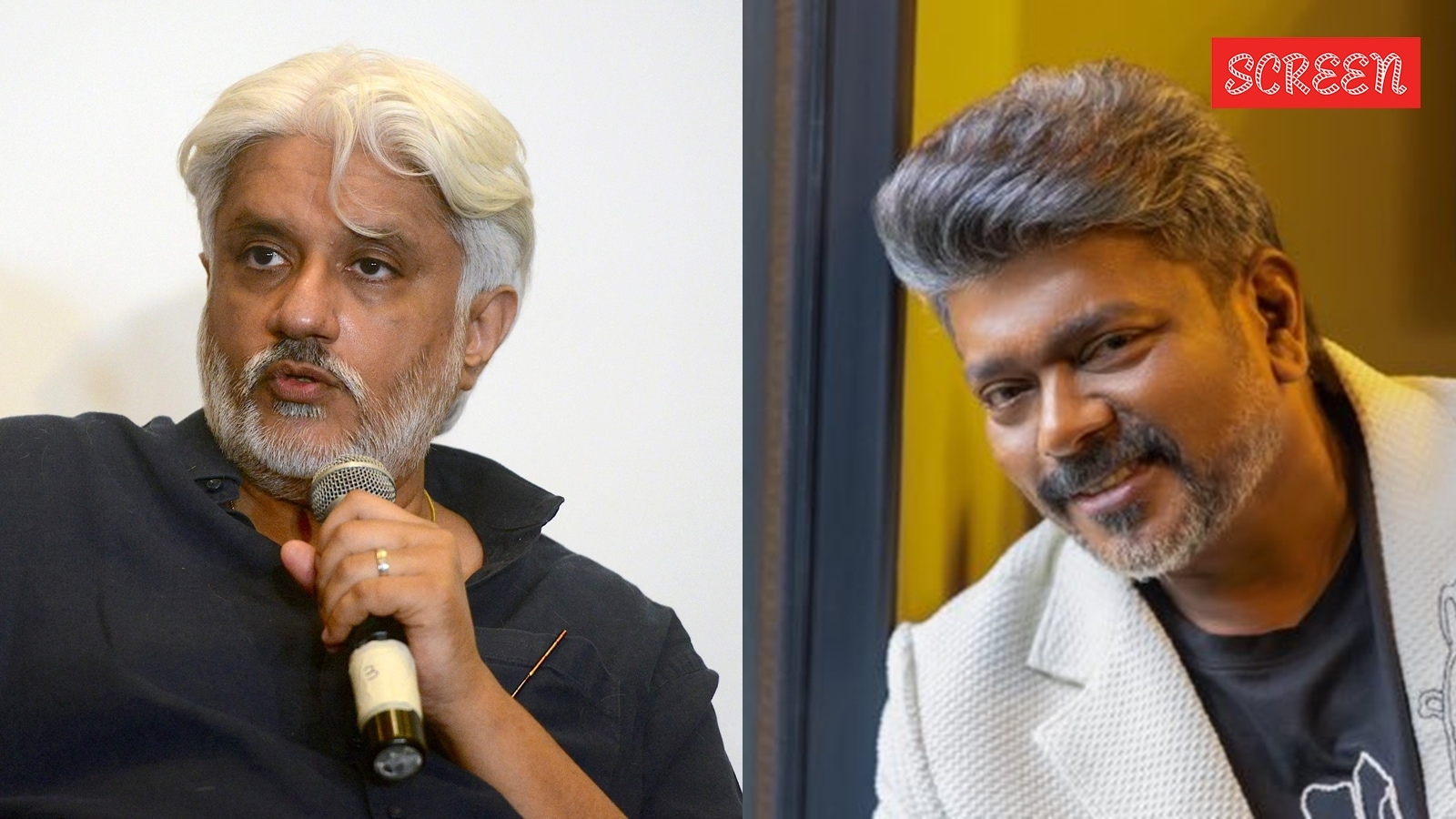 Bollywood filmmaker Vikram Bhatt, who posted a lengthy note on Instagram defending Vijay and Trisha's right to their personal lives, saying their films belong to the public but their personal lives do not.
A remark made at an awards ceremony on Sunday quickly turned into a public dispute between actor-director R. Parthiban and actress Trisha Krishnan, ending with Parthiban posting an apology on social media after Trisha called out what she described as “crude words” directed at her.
The incident occurred at the Galatta Awards in Chennai, during a segment where Parthiban was asked about actors he had previously worked with. When Trisha’s photograph appeared on screen during a rapid-fire style segment, Parthiban made a wordplay using her character name Kundavai from Ponniyin Selvan and the Tamil word “kunthavaikkirathu,” which means to make someone sit. He said it would be better to keep Kundavai at home so that problems do not arise.
The comment was read online as a reference to Trisha’s recent public appearance alongside actor-politician Vijay, which had already triggered widespread speculation after Vijay’s wife Sangeeta Sornalingam filed for divorce in Chennai.
What added fuel to the controversy was a detail Trisha herself brought up. She posted on her social media stating that she had been informed by the event organisers that her name and picture were included in the presentation at the last minute, at the request of an individual who conveyed it through his assistant. Without naming Parthiban, she made her position clear: “A microphone doesn’t make a comment intelligent or humorous. It just makes stupidity louder. Crude words without knowledge say more about the speaker than the person they’re aimed at.”
Parthiban responded the same day. In an audio clip posted on his X account, he explained that the comment was unintentional, made during a fast-paced segment where he was answering 20 questions on stage without much thought. The actor said that once he stepped off stage, his friend Rangaraj Pandey pointed out that he should have avoided the remark, after which he immediately asked the organisers not to publish that portion of the event. The clip had already been recorded by an audience member and shared online before he could do anything about it.
He also added that he has always spoken about women’s freedom at events, including college visits, and described women as the world’s biggest creative force.
Story continues below this ad
As the Parthiban episode played out, a separate voice entered the conversation from an unexpected quarter. Bollywood filmmaker Vikram Bhatt posted a lengthy note on Instagram addressing the speculation around Vijay and Trisha. He wrote, “There has been a great deal of noise about the personal lives of Vijay and Trisha Krishnan. I do not know whether the rumours online are true or not. But if they are, then I feel compelled to say a few things. My recent incarceration has made me understand the value of freedom. What it is to crave a cup of tea that is not going to come. What it is to hunt for a tube of toothpaste. What it is to wait for seven in the evening, when the bail applications come in.”
He added: “But there is a worse incarceration. It is the incarceration of the human soul. The incarceration of happiness. When two people remain trapped in a relationship that has run its course, but society insists that the relationship must continue; that too is a prison. I have been on both sides of that equation. I have been somebody’s fool, and I have been fooled. In other words, I have been there. Done that. Got the T-shirt. The human heart is fallible. It goes where it finds happiness. It came together to find happiness and its going away to find happiness”
Drawing on his own experience, Vikram Bhatt said he had been on both sides of the equation, having been fooled and having fooled someone, and that the human heart goes where it finds happiness. He said he found something admirable in the way Vijay and Trisha had conducted themselves, noting that there is dignity in not pretending something does not exist and dignity in not hiding love as though it were something sinful. He pointed to the kind of behaviour that rarely invites public scrutiny: men who run anonymous profiles on dating sites, men who delete messages before they get home, and men who spend afternoons with women they will never acknowledge publicly, yet sit in judgment over others. He closed by drawing a clear line: their films belong to us, their personal lives do not.



 English (US) ·